Loading...
Done
A photograph of a dog taken from underneath on December 2016 in VA, Canada. (Photo by The Underdogs Project/Barcroft Images)

A photograph of a dog taken from underneath on December 2016 in VA, Canada. Forget the cats, itÌs just raining dogs! A creative duo have come up with an innovative way to raise money for animal welfare; photographing dogs as youÌve never seen them before. Professional photographer Jason Kenzie and designer Tania Ryan have created a unique set of images from the underside of dogs, named The Underdogs Project. The project will be featured as a 2017 calendar, with each month belonging to a quirky canine. (Photo by The Underdogs Project/Barcroft Images)
Details
20 Dec 2016 12:32:00
Young children at a Bristol, Great Britain health centre unsure of the benefits of sun-lamps and the special glasses that must be worn, July 1948. The health centre was part of the newly introduced free National Health Service. (Photo by Popperfoto/Getty Images)

Young children at a Bristol, Great Britain health centre unsure of the benefits of sun-lamps and the special glasses that must be worn, July 1948. The health centre was part of the newly introduced free National Health Service. (Photo by Popperfoto/Getty Images)
Details
20 Jan 2017 08:22:00
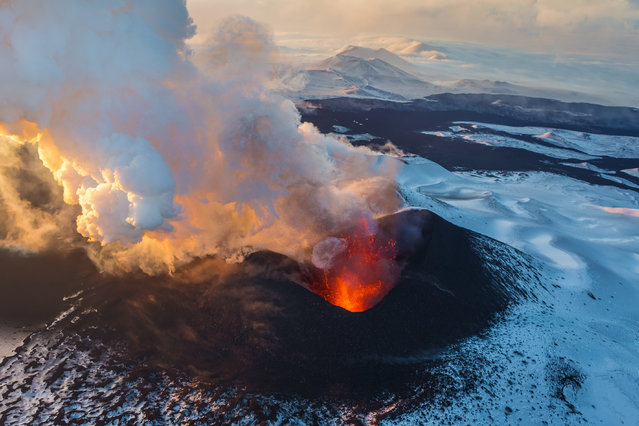
These are the explosive images of some of the world's most ASH-stonishing volcanic eruptions. Spectacular snaps capture lava spewing down the side of Kilauea, ash spitting from craters and plumes of smoke rising thousands of feet in the air. Here: Volcano Plosky Tolbachik, Kamchatcka, Russia. (Photo by Airpano/Caters News)

These are the explosive images of some of the world's most ASH-stonishing volcanic eruptions. Spectacular snaps capture lava spewing down the side of Kilauea, ash spitting from craters and plumes of smoke rising thousands of feet in the air. Russian non-profit AirPano travel the globe taking the breath-taking panoramic images, compiled in this series displaying their most stunning volcanic shoots. Included in the set – which spans four continents – are images from across the United States, Iceland, Russia, Ethiopia and Indonesia. To capture the 360-degree images, AirPano photographers spend around two hours in a helicopter, sending out drones to capture the action below. Here: Volcano Plosky Tolbachik, Kamchatcka, Russia. (Photo by Airpano/Caters News)
Details
15 Jul 2015 10:36:00
Republican Presidential Candidate Donald Trump kisses his wife Melania Trump as he introduces her during first day of the Republican National Convention in Cleveland, Monday, July 18, 2016. (Photo by Matt Rourke/AP Photo)

Republican Presidential Candidate Donald Trump kisses his wife Melania Trump as he introduces her during first day of the Republican National Convention in Cleveland, Monday, July 18, 2016. (Photo by Matt Rourke/AP Photo)
Details
20 Jul 2016 10:12:00
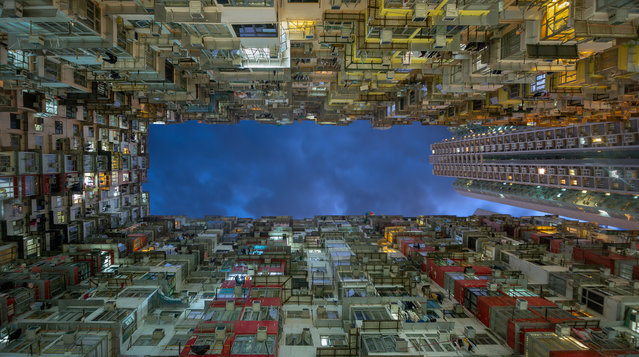
Winner. “I took this vertical image in the Quarry Bay district of Hong Kong during the dusk ‘blue hour’, when there was a perfect balance between the ambient light in the sky and the artificial lights of the high-rise residential buildings”. MICK RYAN, JUDGE: “Quarry Bay is a rich area for great shots and this is a particularly striking image of these old apartments, a unique perspective that was wisely taken as the light fades and the apartment lights come on”. (Photo by Jatinder Heer/The Guardian)

Winner. “I took this vertical image in the Quarry Bay district of Hong Kong during the dusk ‘blue hour’, when there was a perfect balance between the ambient light in the sky and the artificial lights of the high-rise residential buildings”. (Photo by Jatinder Heer/The Guardian)
Details
02 Nov 2018 00:05:00
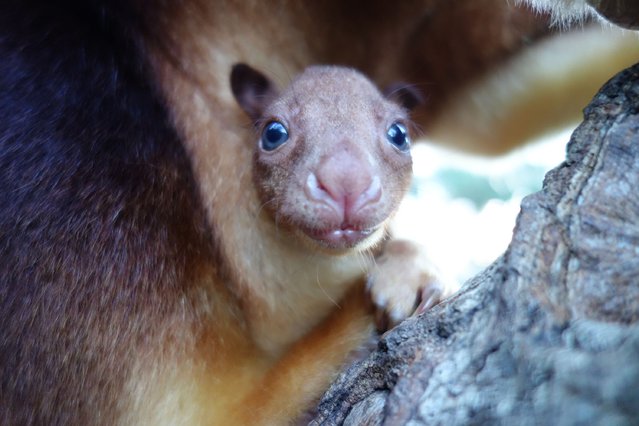
In this handout image provided by Taronga Zoo, an unnamed baby Goodfellows Tree Kangaroo joey is seen in it's mothers pouch on March 10, 2014 in Sydney, Australia. Taronga Zoo is celebrating the successful birth of its first Goodfellows Tree Kangaroo joey in more than 20 years. Zookeepers have only just begun seeing her peeking out from first-time mother, Qwikilas, pouch after she was born in September last year. (Photo by Taronga Zoo via Getty Images)

In this handout image provided by Taronga Zoo, an unnamed baby Goodfellows Tree Kangaroo joey is seen in it's mothers pouch on March 10, 2014 in Sydney, Australia. Taronga Zoo is celebrating the successful birth of its first Goodfellows Tree Kangaroo joey in more than 20 years. Zookeepers have only just begun seeing her peeking out from first-time mother, Qwikilas, pouch after she was born in September last year. (Photo by Taronga Zoo via Getty Images)
Details
19 Mar 2014 06:08:00
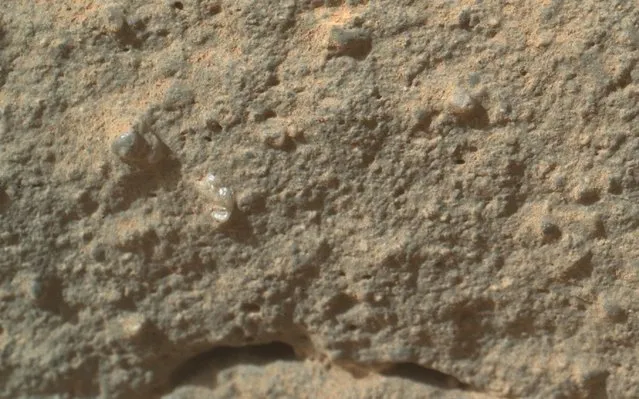
Scientists say that a “Martian flower”, seen here in an image from the Curiosity rover's Mars Hand Lens Imager, is a 2-millimeter-wide grain or pebble that's embedded in the surrounding rock. Another, darker-colored mineral grain can be seen above and to the left. (Photo by NASA)

“The scientists behind NASA's $2.5 billion Curiosity rover mission on Mars on Tuesday explained the nature of a tiny, gleaming "flower" embedded in Red Planet rock, and revealed where they'll be using the SUV-sized robot's drill for the first time”. – Alan Boyle via NBCNews.com

Photo: Scientists say that a “Martian flower”, seen here in an image from the Curiosity rover's Mars Hand Lens Imager, is a 2-millimeter-wide grain or pebble that's embedded in the surrounding rock. Another, darker-colored mineral grain can be seen above and to the left. (Photo by NASA)
Details
16 Jan 2013 11:12:00
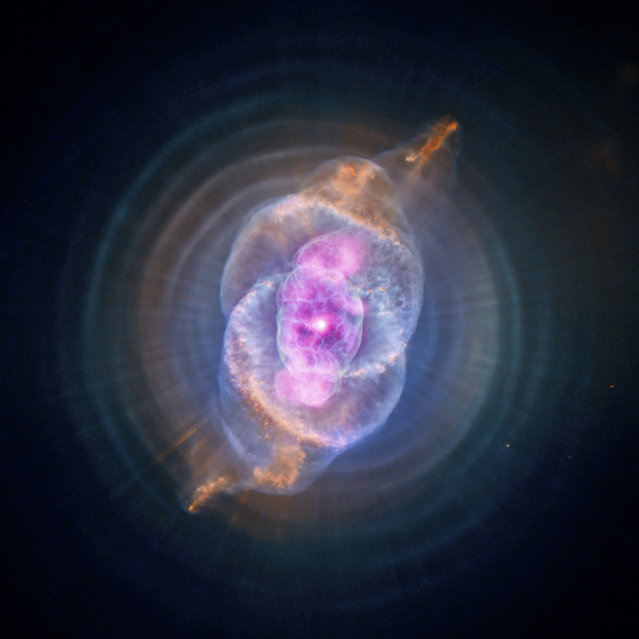
This image is NGC 6543 known as the Cat's Eye Nebula as it appears to the Chandra X-Ray Observatory and Hubble Telescope. A planetary nebula is a phase of stellar evolution that the sun should experience several billion years from now, when it expands to become a red giant and then sheds most of its outer layers, leaving behind a hot core that contracts to form a dense white dwarf star. This image was released October 10, 2012. (Photo by J. Kastner/NASA/CXC/RIT)

This image is NGC 6543 known as the Cat's Eye Nebula as it appears to the Chandra X-Ray Observatory and Hubble Telescope. A planetary nebula is a phase of stellar evolution that the sun should experience several billion years from now, when it expands to become a red giant and then sheds most of its outer layers, leaving behind a hot core that contracts to form a dense white dwarf star. This image was released October 10, 2012. (Photo by J. Kastner/NASA/CXC/RIT)
Details
15 Apr 2013 10:09:00