Loading...
Done
The President of the sushi restaurant chain Sushi Zanmai, Kiyoshi Kimura, cuts a blue fin tuna outside his main restaurant at the outer Tsukiji market in Tokyo January 5, 2015. The 180 kg blue fin tuna traded at a price of 4.5 million yen (37,500 USD) and was the most expensive fish at this year's New Year auction at the Tsukiji market, local media reported. (Photo by Thomas Peter/Reuters)

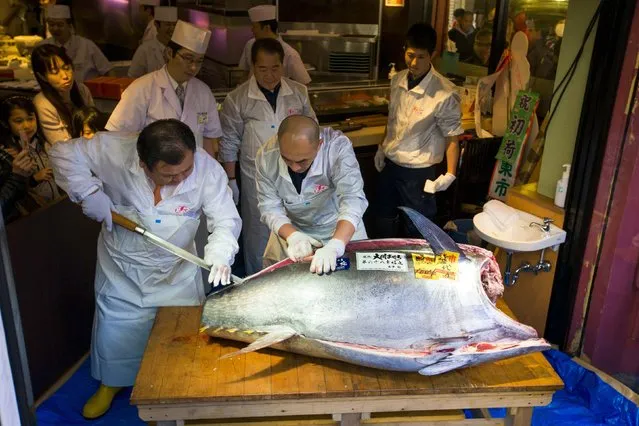
The President of the sushi restaurant chain Sushi Zanmai, Kiyoshi Kimura, cuts a blue fin tuna outside his main restaurant at the outer Tsukiji market in Tokyo January 5, 2015. The 180 kg blue fin tuna traded at a price of 4.5 million yen (37,500 USD) and was the most expensive fish at this year's New Year auction at the Tsukiji market, local media reported. (Photo by Thomas Peter/Reuters)
Details
06 Jan 2015 11:39:00
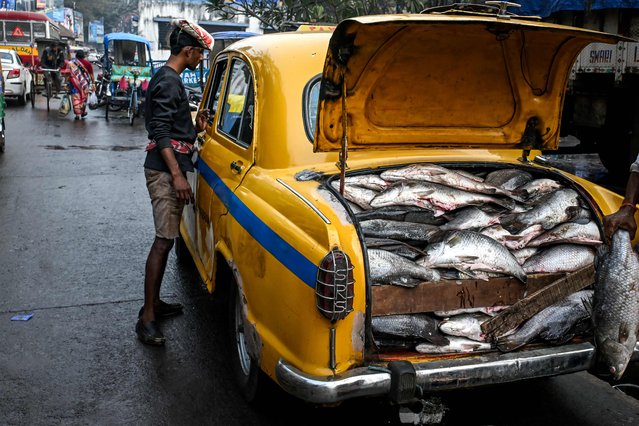
This photograph taken on January 30, 2025 shows a labourer looking into a Hindustan Ambassador yellow taxi, transporting fish at a wholesale market in Kolkata. Kolkata cherishes its past, which is why the one-time Indian capital is mourning a vanishing emblem of its faded grandeur: a hulking and noisy fleet of stately yellow taxis. (Photo by Dibyangshu Sarkar/AFP Photo)

This photograph taken on January 30, 2025 shows a labourer looking into a Hindustan Ambassador yellow taxi, transporting fish at a wholesale market in Kolkata. Kolkata cherishes its past, which is why the one-time Indian capital is mourning a vanishing emblem of its faded grandeur: a hulking and noisy fleet of stately yellow taxis. (Photo by Dibyangshu Sarkar/AFP Photo)
Details
06 Mar 2025 03:12:00
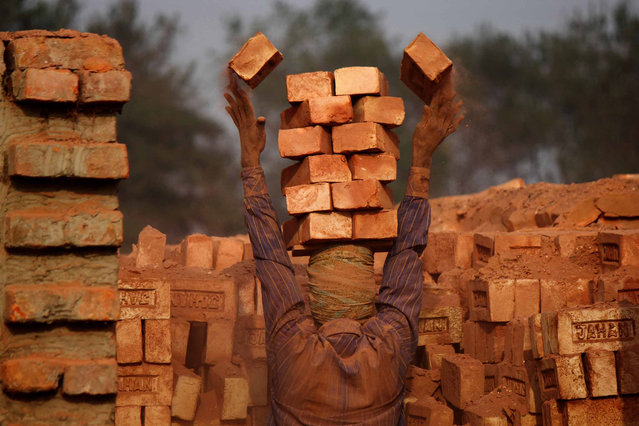
CGAP Photo Contest – South Asia Regional Winner: Bricks Worker, Bangladesh. A private enterprise worker is working at a brick field. These small businesses are creating new job opportunities for many poor people. (Photo by Moksumul Haque)

The shoemaker in Turkey, the potato seller in Vietnam, and the weaver in Bolivia are among the billions of low-income entrepreneurs who make the world go round. They are also the type of people who can benefit significantly from microfinance. Every year, the Consultative Group To Assist The Poor (or CGAP) hosts a photo contest asking entrants to submit photos based around the idea of microfinance.The purpose of the contest is to give amateur and professional photographers a chance to show the different ways that poor households manage their financial lives and make their lives better through financial inclusion. Photo: South Asia Regional Winner – “Bricks Worker”, Bangladesh. A private enterprise worker is working at a brick field. These small businesses are creating new job opportunities for many poor people. (Photo by Moksumul Haque)
Details
14 Aug 2014 10:58:00
Two styles of cleaned bird's nest, Yan Zhan (L) and Su Zhan (R) await repacking at a processing plant in Kuala Lumpur, February 17, 2015. Prized in China for is alleged health benefits for hundreds of years, nests made from swiftlets' saliva are being mixed into coffee and cereal as the Southeast Asian producers of the delicacy seek to broaden its appeal, and their profit margins. (Photo by Olivia Harris/Reuters)

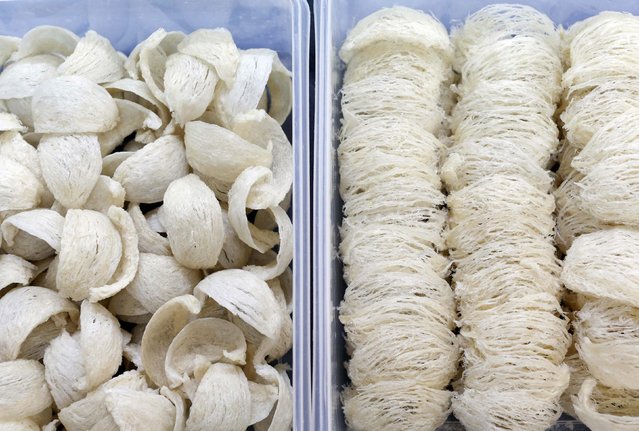
Two styles of cleaned bird's nest, Yan Zhan (L) and Su Zhan (R) await repacking at a processing plant in Kuala Lumpur, February 17, 2015. Prized in China for is alleged health benefits for hundreds of years, nests made from swiftlets' saliva are being mixed into coffee and cereal as the Southeast Asian producers of the delicacy seek to broaden its appeal, and their profit margins. The nests are among the world's most expensive foods, selling for up to $2,500 a kg and the swiftlets that weave them are indigenous to Indonesia, Malaysia, Thailand and Vietnam. (Photo by Olivia Harris/Reuters)
Details
24 Feb 2015 13:57:00
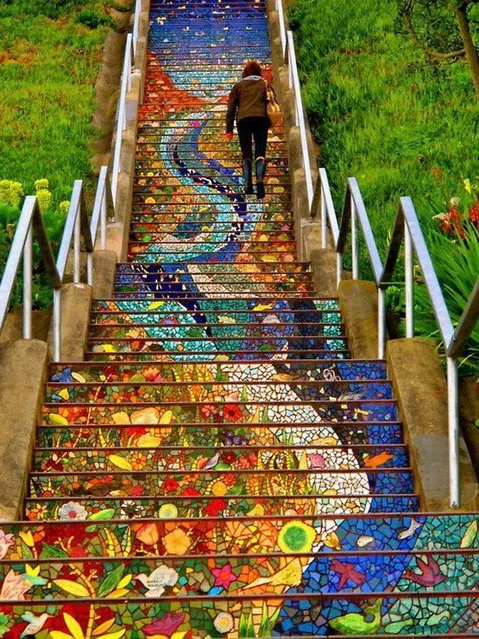
16th Avenue Tiled Step Project

The 16th Avenue Tiled Steps project is a wonderful display of community effort and artistic vision. 163 steps are tiled with mosaic panels set into the risers which were designed by artists Aileen Barr and Colette Crutcher. Over 300 neighbors helped in the making of the panels with over 220 neighbors sponsoring handmade animal, bird, and fish name tiles which are imbedded within the mosaics. KZ Tile, a major San Franciscan tile-setting company generously agreed to set the mosaic panels into the risers and to tile the step treads with rough, nonslip tile.
Details
03 Nov 2012 13:14:00
The giant fish helped to feed over 200 members of the local community. (Photo by Joey Polk/Barcroft Media)

A fisherman caught a record-breaking 805lb Mako shark – and then barbecued and ate it with his friends. Joey Polk, 29, and his two cousins Earnie Polk, 43, and Kenny Peterson, 21, battled the 11ft predator for more than an hour before finally hauling it onto the beach. They normally tag and release their catches for conservation but were unable to resuscitate this one and instead made it the main course at a jumbo-sized family barbecue. (Photo by Joey Polk/Barcroft Media)
Details
23 Apr 2014 09:34:00
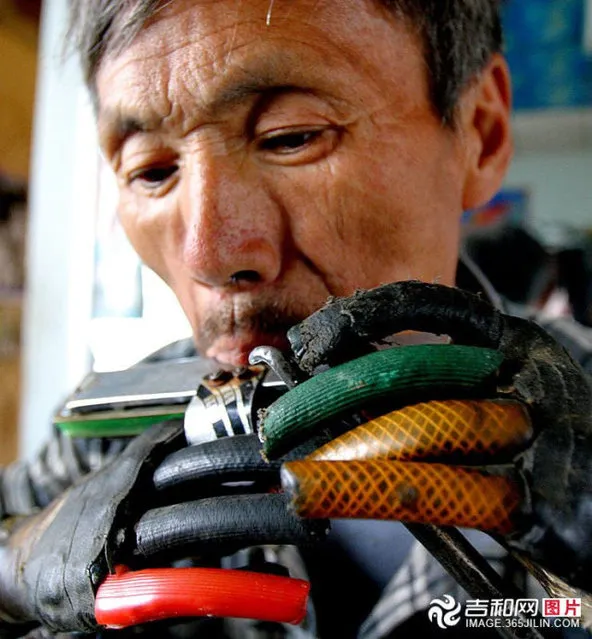
Farmer Builds Own Bionic Arms

Sun Jifa, a farmer in China, had his life changed forever when an explosive he planned on using for fishing went off prematurely. He lost his arms and when he couldn’t afford high-end, hospital-made prosthetics he opted for a cheaper set. Finding those to be less than acceptable, Sun started building his own pair of arms, which he currently wears. It’s an incredible story of ingenuity and personal strength.
Details
14 Jun 2013 10:02:00
Faruk, 17, a Rohingya refugee trader holds betel leaves which are on sale at a stall in Palong Khali refugee camp near Cox's Bazar, Bangladesh, November 3, 2017. He left his village in Myanmar when the military opened fire towards the Rohingya. “I buy this betel leaf from Palong Khali market, in one bundle there are 160 pieces, I buy it for 80 taka and I sell it for 100 taka. Bangladeshi's and I sell for the same rate in the camp. Outside in the local market it is 80 taka per bundle. My problem is that I don't have money so I can't buy anything to eat, I can't buy fish to eat”, he said. (Photo by Hannah McKay/Reuters)

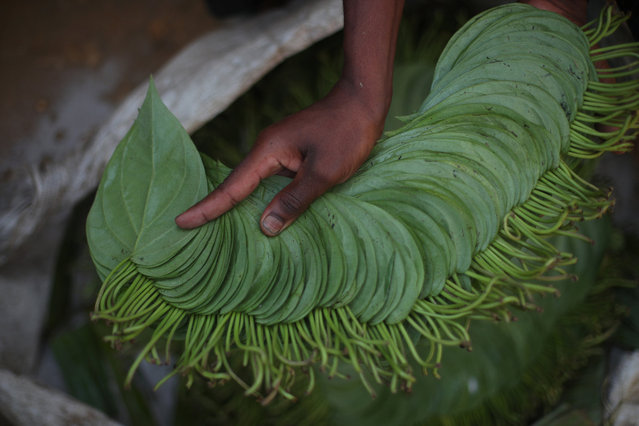
Faruk, 17, a Rohingya refugee trader holds betel leaves which are on sale at a stall in Palong Khali refugee camp near Cox's Bazar, Bangladesh, November 3, 2017. He left his village in Myanmar when the military opened fire towards the Rohingya. “I buy this betel leaf from Palong Khali market, in one bundle there are 160 pieces, I buy it for 80 taka and I sell it for 100 taka (1 Bangladeshi Taka = 0.012 US Dollar). Bangladeshi's and I sell for the same rate in the camp. Outside in the local market it is 80 taka per bundle. My problem is that I don't have money so I can't buy anything to eat, I can't buy fish to eat”, he said. (Photo by Hannah McKay/Reuters)
Details
27 Nov 2017 08:54:00