Loading...
Done
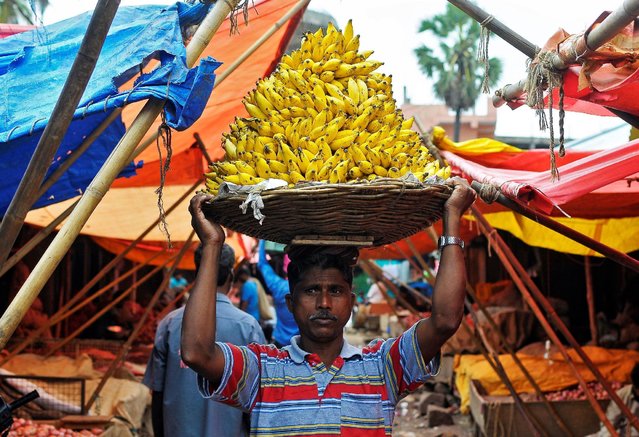
A labourer carries a basket of bananas inside a wholesale fruit and vegetable market in Bengaluru, India, August 22, 2016. (Photo by Abhishek N. Chinnappa/Reuters)

A labourer carries a basket of bananas inside a wholesale fruit and vegetable market in Bengaluru, India, August 22, 2016. (Photo by Abhishek N. Chinnappa/Reuters)
Details
03 Sep 2016 10:02:00
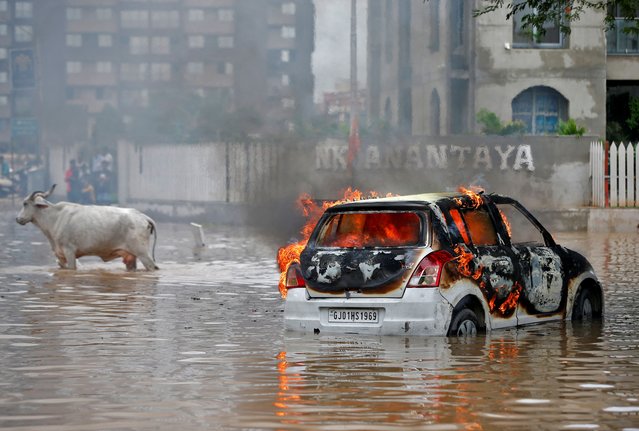
A cow moves past a burning car that, according to fire officials, caught fire by an electrical short circuit after it was stuck in a water-logged road following heavy rains in Ahmedabad, India, July 11, 2022. (Photo by Amit Dave/Reuters)

A cow moves past a burning car that, according to fire officials, caught fire by an electrical short circuit after it was stuck in a water-logged road following heavy rains in Ahmedabad, India, July 11, 2022. (Photo by Amit Dave/Reuters)
Details
19 Jul 2022 04:58:00
Satarupa Chakraborty, 5, dressed as a Kumari, yawns while she is worshipped by a Hindu priest during the religious festival of Durga Puja in Agartala October 2, 2014. (Photo by Jayanta Dey/Reuters)

Satarupa Chakraborty, 5, dressed as a Kumari, yawns while she is worshipped by a Hindu priest during the religious festival of Durga Puja in Agartala October 2, 2014. (Photo by Jayanta Dey/Reuters)
Details
19 Oct 2014 12:19:00
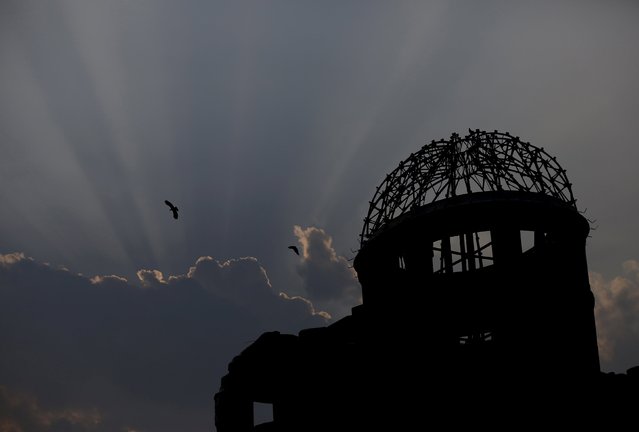
Birds fly over the Atomic Bomb Dome in Hiroshima, western Japan July 29, 2015. On August 6, 1945, the U.S. dropped the atomic bomb on Hiroshima, killing about 140,000 by the end of the year in a city of 350,000 residents, in the world's first nuclear attack. (Photo by Issei Kato/Reuters)

Birds fly over the Atomic Bomb Dome in Hiroshima, western Japan July 29, 2015. On August 6, 1945, the U.S. dropped the atomic bomb on Hiroshima, killing about 140,000 by the end of the year in a city of 350,000 residents, in the world's first nuclear attack. Three days later, a second atomic bomb was dropped on Nagasaki. Influenced by the shadows scorched into outdoor surfaces by the heat of the blasts 70 years ago, Reuters photographer Issei Kato pays homage to survivors, residents and historic buildings in both cities in a personal project that captures the shadows of today. (Photo by Issei Kato/Reuters)
Details
04 Aug 2015 12:01:00
French twins Thomas and Vincent (L) Seris take the tram in Bordeaux, November 12, 2014. Born with Xeroderma Pigmentosum (XP), the twins cannot be exposed to the sun and its ultraviolet (UV) light, which could provoke precocious cancers due to an autosomal recessive genetic disorder of DNA repair. (Photo by Regis Duvignau/Reuters)

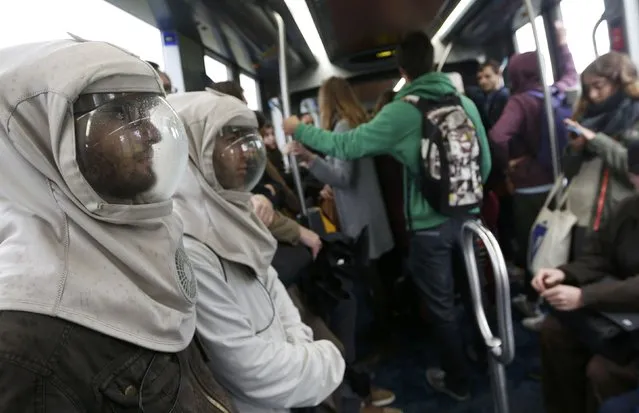
French twins Thomas and Vincent (L) Seris take the tram in Bordeaux, November 12, 2014. Born with Xeroderma Pigmentosum (XP), the twins cannot be exposed to the sun and its ultraviolet (UV) light, which could provoke precocious cancers due to an autosomal recessive genetic disorder of DNA repair. Colloquially referred to as Children of the Night (Les Enfants de la Lune) the Seris twins are among 70 to 80 people in France who suffer from the genetic defect. The French association “Les Enfants de la Lune” reports that there are between five and ten thousand such cases in the world. Thomas and Vincent have been testing a new protective mask for the last year which is transparent and ventilated and developed by several hospitals in France. (Photo by Regis Duvignau/Reuters)
Details
01 Feb 2015 10:27:00
This Monday, September 15, 2014 photo shows glazed bricks displayed at the Iraqi National Museum in Baghdad. The Islamic State militants seek to purge society of all influences that don't conform with their strict, puritanical version of Islam. That means destroying not only relics seen as pagan but also Muslim sites they see as contradicting their ideology, particularly Sunni Muslim shrines they see as idolatrous as well as mosques used by Shiites, a branch of Islam they consider heretical. (Photo by Hadi Mizban/AP Photo)

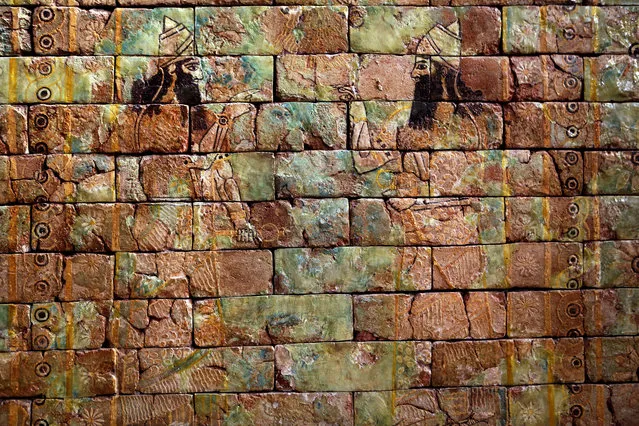
This Monday, September 15, 2014 photo shows glazed bricks displayed at the Iraqi National Museum in Baghdad. The Islamic State militants seek to purge society of all influences that don't conform with their strict, puritanical version of Islam. That means destroying not only relics seen as pagan but also Muslim sites they see as contradicting their ideology, particularly Sunni Muslim shrines they see as idolatrous as well as mosques used by Shiites, a branch of Islam they consider heretical. (Photo by Hadi Mizban/AP Photo)
Details
21 Sep 2014 10:31:00
Revelers dance at a Jacarezinho samba school practice session ahead of Carnival celebrations on February 16, 2014 in Rio de Janeiro, Brazil. The Jacarezinho “favela” was previously controlled by drug traffickers and is now occupied by the city's Police Pacification Unit (UPP). Carnival officially begins February 28, but pre-Carnival celebrations are already underway. (Photo by Mario Tama/Getty Images)

Revelers dance at a Jacarezinho samba school practice session ahead of Carnival celebrations on February 16, 2014 in Rio de Janeiro, Brazil. The Jacarezinho “favela” was previously controlled by drug traffickers and is now occupied by the city's Police Pacification Unit (UPP). Carnival officially begins February 28, but pre-Carnival celebrations are already underway. (Photo by Mario Tama/Getty Images)
Details
19 Feb 2014 11:01:00
People walk in the rainstorm as typhoon Lekima approaches in Shanghai, China on August 10, 2019. (Photo by Aly Song/Reuters)

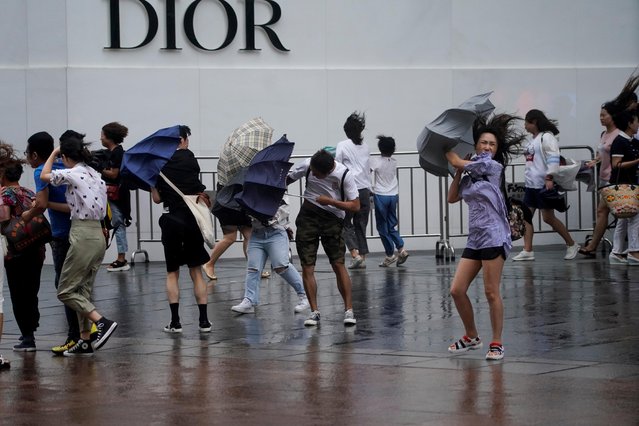
People walk in the rainstorm as typhoon Lekima approaches in Shanghai, China on August 10, 2019. The death toll from Typhoon Lekima rose to 49 on August 13 and 21 were still missing after the monster storm wreaked havoc on China's eastern coast, causing huge damage with strong gales and torrential rain. (Photo by Aly Song/Reuters)
Details
14 Aug 2019 00:01:00