Loading...
Done
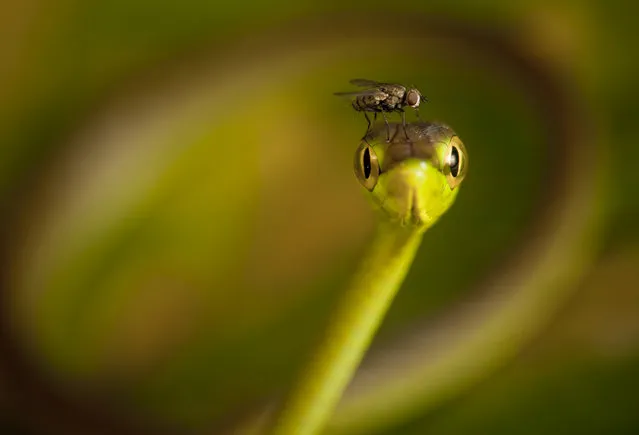
“Fly cap for a vine snake”. A fly lands on the head of a vine snake in the Choco of Colombia. (Photo and caption by Robin Moore/National Geographic Traveler Photo Contest)

“Fly cap for a vine snake”. A fly lands on the head of a vine snake in the Choco of Colombia. (Photo and caption by Robin Moore/National Geographic Traveler Photo Contest)

ATTENTION! All pictures are presented in high resolution. To see Hi-Res images – just TWICE click on any picture. In other words, click small picture – opens the BIG picture. Click BIG picture – opens VERY BIG picture.
Details
24 Jun 2013 11:36:00
An election poster calling for the legalisation of marijuana and featuring internet meme “Grumpy Cat” hangs outside the Pirate Party's campaign headquarters in Berlin on August 16, 2013. The Pirates, who to everyone's surprise were elected into Berlin's regional parliament in September 2011, are trying to capitalise on their recent electoral gains in upcoming parliamentary elections, running on a platform of transparency in government. Germany goes to the polls on September 22, 2013. Placard reads: “Hurry up, my dope is everything”. (Photo by John Macdougall/AFP Photo)

An election poster calling for the legalisation of marijuana and featuring internet meme “Grumpy Cat” hangs outside the Pirate Party's campaign headquarters in Berlin on August 16, 2013. The Pirates, who to everyone's surprise were elected into Berlin's regional parliament in September 2011, are trying to capitalise on their recent electoral gains in upcoming parliamentary elections, running on a platform of transparency in government. Germany goes to the polls on September 22, 2013. Placard reads: “Hurry up, my dope is everything”. (Photo by John Macdougall/AFP Photo)
Details
31 Aug 2013 13:59:00
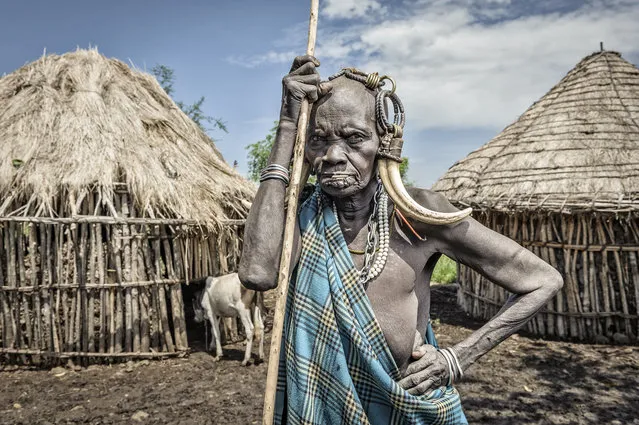
“Old Mursi woman”. Old woman by the huts of her village. Location: Marenke, Omo valley, Ethiopia. (Photo and caption by Jorge Fernandez/National Geographic Traveler Photo Contest)

“Old Mursi woman”. Old woman by the huts of her village. Location: Marenke, Omo valley, Ethiopia. (Photo and caption by Jorge Fernandez/National Geographic Traveler Photo Contest)

ATTENTION! All pictures are presented in high resolution. To see Hi-Res images – just TWICE click on any picture. In other words, click small picture – opens the BIG picture. Click BIG picture – opens VERY BIG picture.
Details
24 Jun 2013 09:55:00
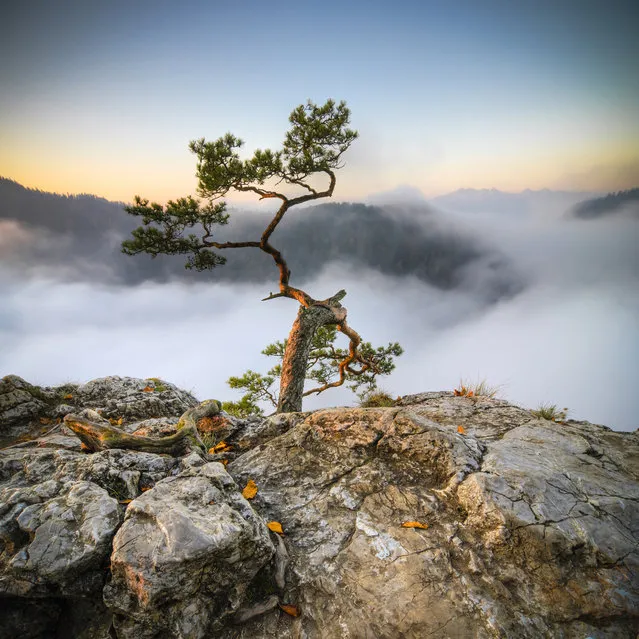
“Sokolica”. Sokolica, Poland. (Photo and caption by Marcin Kęsek/National Geographic Traveler Photo Contest)

“Sokolica”. Sokolica, Poland. (Photo and caption by Marcin Kęsek/National Geographic Traveler Photo Contest)

ATTENTION! All pictures are presented in high resolution. To see Hi-Res images – just TWICE click on any picture. In other words, click small picture – opens the BIG picture. Click BIG picture – opens VERY BIG picture.
Details
25 Jun 2013 09:13:00
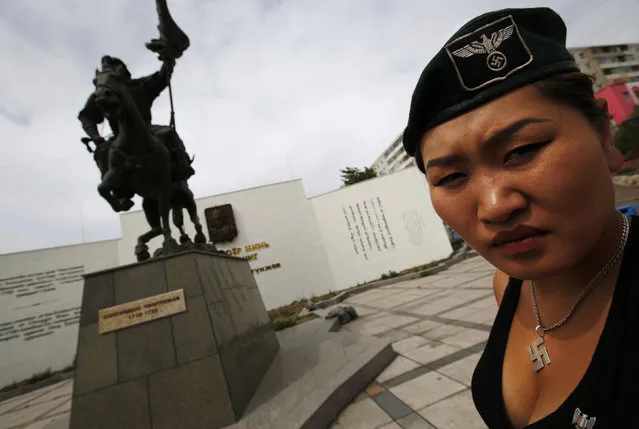
Uranjargal, a leader of the Mongolian neo-Nazi group Tsagaan Khass, stands next to a statue of Chingunjav, a Mongolian national hero, in Ulan Bator June 22, 2013. (Photo by Carlos Barria/Reuters)

Uranjargal, a leader of the Mongolian neo-Nazi group Tsagaan Khass, stands next to a statue of Chingunjav, a Mongolian national hero, in Ulan Bator June 22, 2013. The group has rebranded itself as an environmentalist organisation fighting pollution by foreign-owned mines, seeking legitimacy as it sends Swastika-wearing members to check mining permits. Over the past years, ultra-nationalist groups have expanded in the country and among those garnering attention is Tsagaan Khass, which has recently shifted its focus from activities such as attacks on women it accuses of consorting with foreign men to environmental issues, with the stated goal of protecting Mongolia from foreign mining interests. This ultra-nationalist group was founded in the 1990s and currently has 100-plus members. (Photo by Carlos Barria/Reuters)
Details
09 Jul 2013 07:23:00
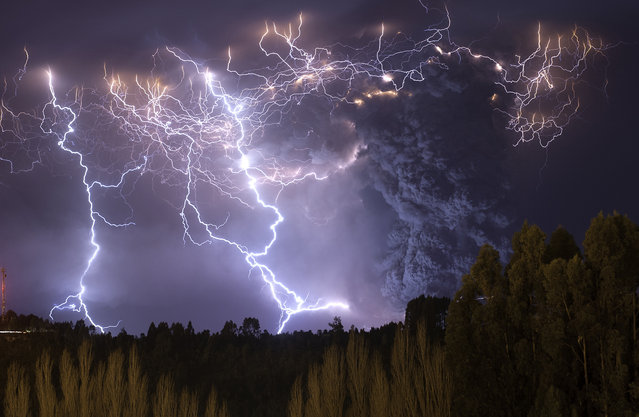
The eruption of Cordon Caulle began on June 4, 2011, located in the Region of Los Rios in Chile. For about 12 months, people and animals became accustomed to living with the daily fall of ash, which also caused problems in the air traffic in South America. The explosions and lightning during first days of the eruption could be seen from hundreds of miles around. This photograph was taken on the second night of eruption from the town of Lago Ranco. (Photo and caption by Francisco Negroni/National Geographic Traveler Photo Contest)

The eruption of Cordon Caulle began on June 4, 2011, located in the Region of Los Rios in Chile. For about 12 months, people and animals became accustomed to living with the daily fall of ash, which also caused problems in the air traffic in South America. The explosions and lightning during first days of the eruption could be seen from hundreds of miles around. This photograph was taken on the second night of eruption from the town of Lago Ranco. (Photo and caption by Francisco Negroni/National Geographic Traveler Photo Contest)

ATTENTION! All pictures are presented in high resolution. To see Hi-Res images – just TWICE click on any picture. In other words, click small picture – opens the BIG picture. Click BIG picture – opens VERY BIG picture.
Details
23 Jun 2013 11:24:00
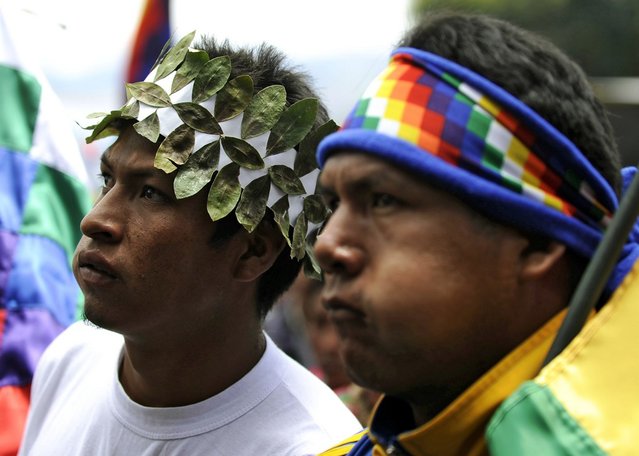
Coca growers chew coca leaves during a celebration for the reincorporation of Bolivia to the UN Convention Against Illicit Traffic in Narcotic Drugs in La Paz on January 14, 2013. "The coca leaf is not any more seen as cocaine (..), it is a victory of our identity" said Bolivian President Evo Morales. AFP PHOTO/Jorge Bernal        (Photo credit should read JORGE BERNAL/AFP/Getty Images)

Coca growers chew coca leaves during a celebration for the reincorporation of Bolivia to the UN Convention Against Illicit Traffic in Narcotic Drugs in La Paz on January 14, 2013. “The coca leaf is not any more seen as cocaine (...), it is a victory of our identity” said Bolivian President Evo Morales. (Photo by Jorge Bernal/AFP Photo)
Details
15 Jan 2013 10:16:00
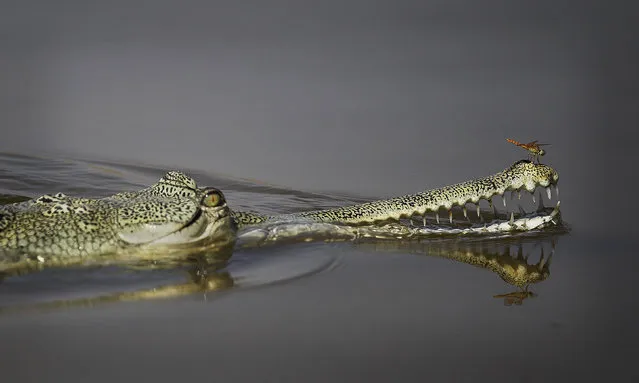
In this photo taken Wednesday, April 30, 2014, a dragonfly sits on the nose of a Gharial, rare crocodile-like creatures, in the River Chambal near Bhopepura village in the northern Indian state of Uttar Pradesh. The narrow 250-mile stretch of the Chambal is a place of crocodiles and jackals, of river dolphins and the occasional wolf. Hundreds of species of birds, storks, geese, babblers, larks, falcons and so many more, nest along the river. (Photo by Altaf Qadri/AP Photo)

In this photo taken Wednesday, April 30, 2014, a dragonfly sits on the nose of a Gharial, rare crocodile-like creatures, in the River Chambal near Bhopepura village in the northern Indian state of Uttar Pradesh. The narrow 250-mile stretch of the Chambal is a place of crocodiles and jackals, of river dolphins and the occasional wolf. Hundreds of species of birds, storks, geese, babblers, larks, falcons and so many more, nest along the river. Endangered birds lay small speckled eggs in tiny pits they dig in the sandbars. Gharials, rare crocodile-like creatures that look like they swaggered out of the Mesozoic Era, are commonplace here and nowhere else. (Photo by Altaf Qadri/AP Photo)
Details
23 Feb 2015 12:55:00