Loading...
Done
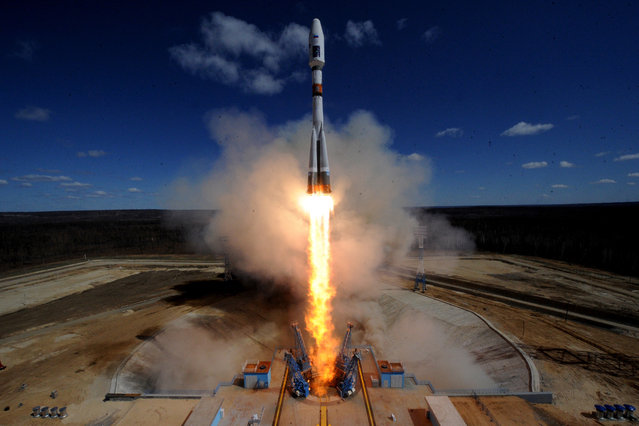
A Russian Soyuz 2.1a rocket carrying Lomonosov, Aist-2D and SamSat-218 satellites lifts off from the launch pad at the new Vostochny Cosmodrome outside the city of Uglegorsk, about 200 kilometers (125 miles) from the city of Blagoveshchensk in the far eastern Amur region Thursday, April 28, 2016. (Photo by Kirill Kudryavtsev/Pool Photo via AP Photo)

A Russian Soyuz 2.1a rocket carrying Lomonosov, Aist-2D and SamSat-218 satellites lifts off from the launch pad at the new Vostochny Cosmodrome outside the city of Uglegorsk, about 200 kilometers (125 miles) from the city of Blagoveshchensk in the far eastern Amur region Thursday, April 28, 2016. The launch of the first rocket from Russia's new space facility has been delayed after a last-minute problem. (Photo by Kirill Kudryavtsev/Pool Photo via AP Photo)
Details
28 Apr 2016 12:20:00
 Refractions In Water Drops By Markus Reugels

German photographer Markus Reugels. Using large satellite photos as a backdrop and a high speed camera he captures the background’s refraction through water drops. The perfectly timed shots result in these spherical representations of the Earth, Moon and Jupiter. See much more of his work here and also here. Thanks Markus for sharing your work with Colossal!
Details
21 Feb 2013 11:00:00
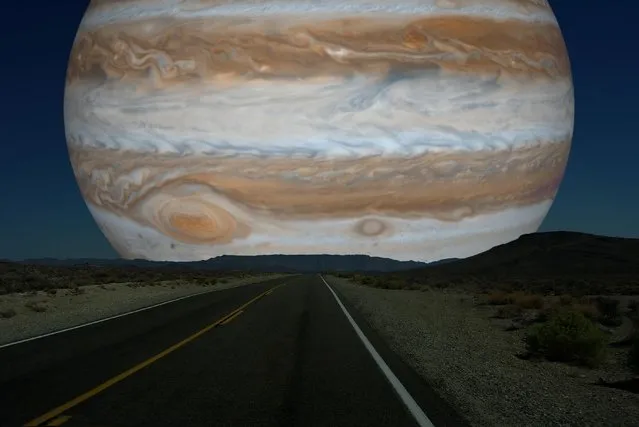
If The Moon Were Replaced With Some Of Our Planets

Our moon is a pretty big object. It's big enough to be a respectable planet in its own right, if it were orbiting the sun instead of the Earth. (Actually, it is orbiting the sun in a nearly perfectly circular orbit, that the Earth only slightly perturbs... but that's a topic for another day.) The Moon is a quarter the diameter of the Earth. Only Pluto has a satellite that is larger, in proportion to the size of the planet it orbits.

Details
29 Mar 2013 10:12:00
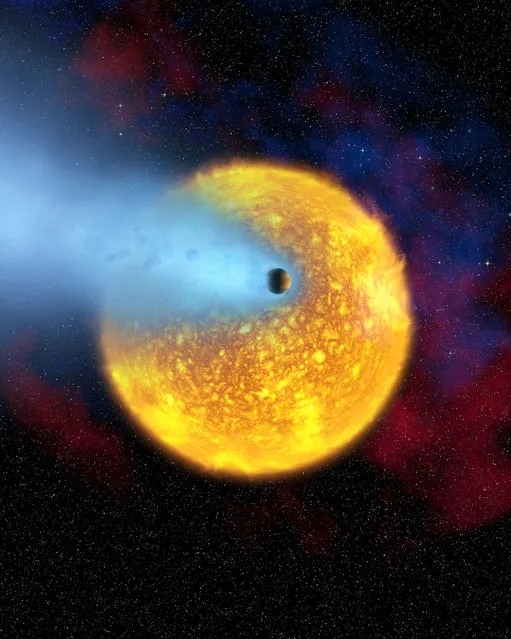
Dramatic changes spotted in HD 189733b exoplanet atmosphere

This artist's rendering illustrates the evaporation of HD 189733b's atmosphere in response to a powerful eruption from its host star. NASA's Hubble Space Telescope detected the escaping gases and NASA's Swift satellite caught the stellar flare. (Credit: NASA's Goddard Space Flight Center)
Details
29 Jun 2012 09:45:00
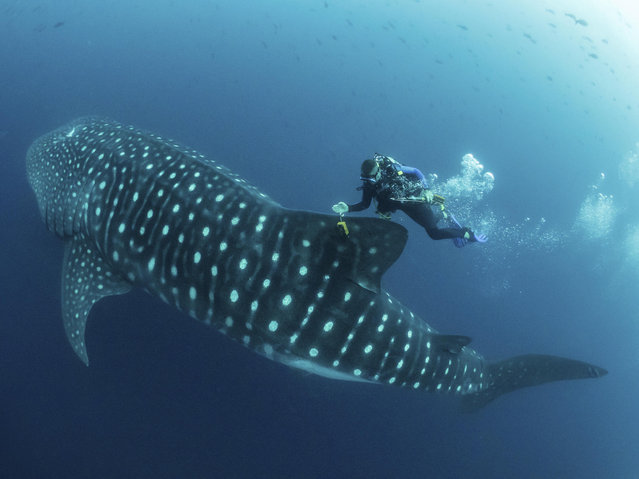
In this 2017 photo provided by Simon Pierce, Jonathan Green checks on a fin-mounted satellite tag on a whale shark in the Galapagos Islands area of Ecuador.  Despite typically being bigger than a double-decker bus, the elusive whale shark has only tiny, almost useless teeth. It's also one of the least understood animals in the ocean. (Photo by Simonjpierce.com via AP Photo)

In this 2017 photo provided by Simon Pierce, Jonathan Green checks on a fin-mounted satellite tag on a whale shark in the Galapagos Islands area of Ecuador. Despite typically being bigger than a double-decker bus, the elusive whale shark has only tiny, almost useless teeth. It's also one of the least understood animals in the ocean. (Photo by Simonjpierce.com via AP Photo)
Details
02 Mar 2018 00:03:00
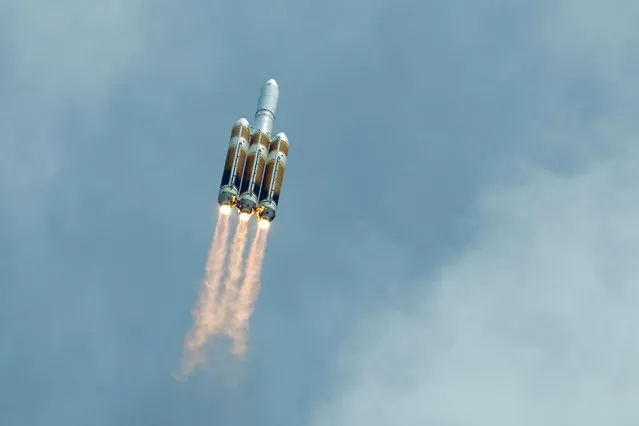
A United Launch Alliance Delta IV heavy rocket carrying classified spy satellite cargo for the U.S. National Reconnaissance Office lifts off from Space Launch Complex 37B at the Cape Canaveral Space Force Station, Tuesday, April 9, 2024, in Cape Canaveral, Fla. This is the final flight of a Delta IV heavy rocket. (Photo by John Raoux/AP Photo)

A United Launch Alliance Delta IV heavy rocket carrying classified spy satellite cargo for the U.S. National Reconnaissance Office lifts off from Space Launch Complex 37B at the Cape Canaveral Space Force Station, Tuesday, April 9, 2024, in Cape Canaveral, Fla. This is the final flight of a Delta IV heavy rocket. (Photo by John Raoux/AP Photo)
Details
21 Apr 2024 02:50:00
Batmobile Replica Spotted in Sweden

A Swedish guy built it from a 1973 Lincoln Continental. It took him over $1 million USD and 3.5 years to complete, or some 20.000 hours of work.
It features a lot of gadgets like satellite navigation, voice recognition, reversing cameras, a DVD player, a plasma TV...
Details
21 Dec 2012 13:27:00
Plus Fours Routefinder - Worlds First Navigation System

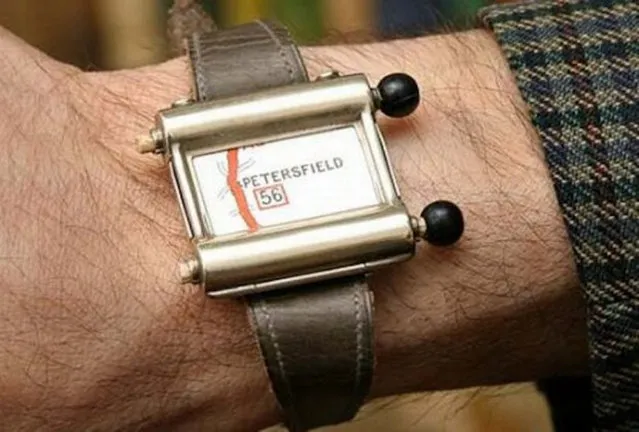
Invented in 1920′s this could be world’s first navigation system. No satellites or digital screens were used in the making of this portable navigation system. Called Plus Fours Routefinder, this little invention was designed to be worn on your wrist, and the “maps” were printed on little wooden rollers which you would turn manually as you drove along.
Details
19 Mar 2014 15:14:00