Loading...
Done
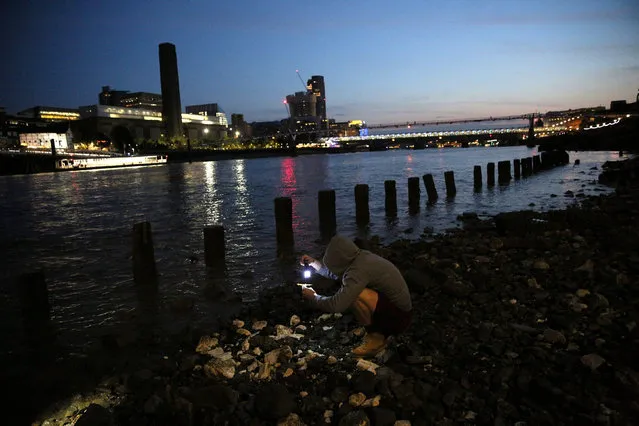
A mudlark uses a torch to look for items on the bank of the River Thames in London, Britain June 06, 2016. Mudlarking is believed to trace its origins to the 18th and 19th century, when scavengers searched the Thames' shores for items to sell. These days, history and archaeology fans are the ones hoping to find old relics such as coins, ceramics, artifacts or everyday items from across centuries. They wait for the low tide and then scour specific areas of exposed shores. "If you're in a field you could be out all day long, with the river you're restricted to about two or three hours," mudlark Nick Stevens said. While many just use the naked eye for their searches, others rely on metal detectors for which a permit from the Port of London Authority is needed. Digging also requires consent. (Photo by Neil Hall/Reuters)

A mudlark uses a torch to look for items on the bank of the River Thames in London, Britain June 06, 2016. Mudlarking is believed to trace its origins to the 18th and 19th century, when scavengers searched the Thames' shores for items to sell. These days, history and archaeology fans are the ones hoping to find old relics such as coins, ceramics, artifacts or everyday items from across centuries. their finds with the Portable Antiquities Scheme. Any item over 300 years old must be recorded. (Photo by Neil Hall/Reuters)
Details
27 Aug 2016 10:43:00
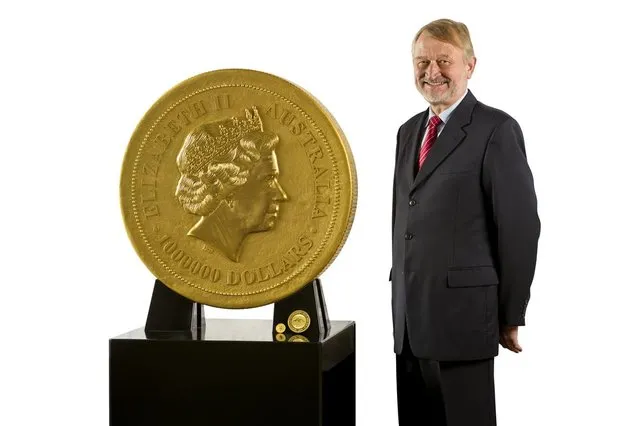
1 Tonne Gold Kangaroo Coin

The first Australian Kangaroo gold coin issued by The Perth Mint in 1989 featured an iconic bounding Red Kangaroo. Designed by Dr Stuart Devlin AO CMG, goldsmith and jeweller to Her Majesty Queen Elizabeth II, this classic creation has since been featured on the kilo release each year in the highly sought-after bullion series.
Details
31 Aug 2014 15:21:00
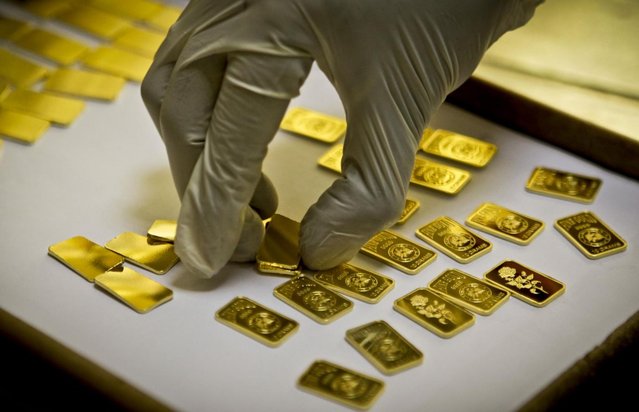
A gold press operator collects 10 gram gold blanks to press them with the logo of the Emirates Gold company in Dubai, United Arab Emirates. Gold prices remained relatively steady in 2012, close to $1,700 an ounce. (Photo by Kamran Jebreili/AP Photo)

“Dubai is sometimes called the “City of Gold” because of its stunning growth from a sleepy Gulf port to a world-famous business crossroads in the space of a single generation. Its nickname has a literal meaning for traders in the precious metal. The city is building itself up as a center for the gold trade, between sources in Africa and consumers in the rising economies of China and India”. – Kamran Jebreili via Associated Press

Photo: A gold press operator collects 10 gram gold blanks to press them with the logo of the Emirates Gold company in Dubai, United Arab Emirates. Gold prices remained relatively steady in 2012, close to $1,700 an ounce. (Photo by Kamran Jebreili/AP Photo)
Details
06 Jan 2013 12:38:00
How To Make Gold In Russia (Video)

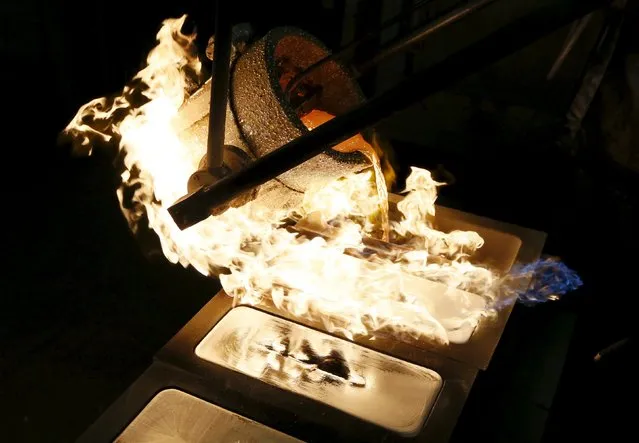
Krastsvetmet, located beside the beautiful Yensei river in the metropolis of Krasnoyarsk, Russia, is a refinery of all types of precious metals on an industrial scale.

Please Subscribe To: Our Youtube Channel
Details
18 Nov 2016 23:26:00
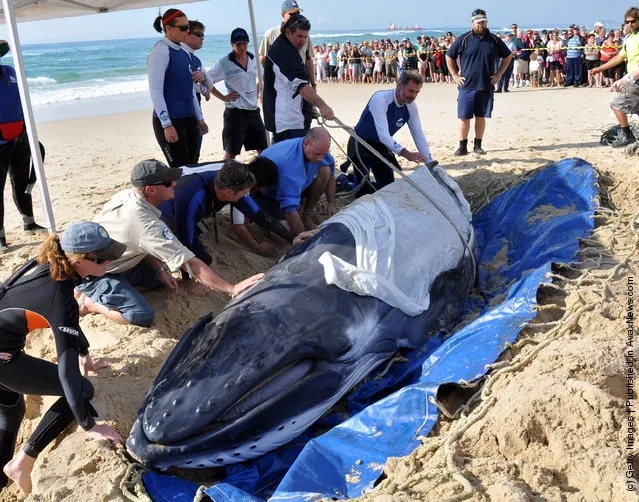
Volunteer rescue a beached humpback calf to sea at Surfers Paradise Beach on the Gold Coast, Australi

Volunteer rescuers prepare to drag a beached humpback calf to sea at Surfers Paradise Beach on August 8, 2011 on the Gold Coast, Australia. The humpback calf was stranded on the beach yesterday for hours before volunteer rescuers were able to drag it back to the sea. SeaWorld Australia says a mother and calf humpback were sighted near where the calf was released and are hoping to get photos to verify it is the same calf and that it has been reunited with it's mother. (Photo by 2011 SeaWorld Australia via Getty Images)
Details
09 Aug 2011 12:26:00
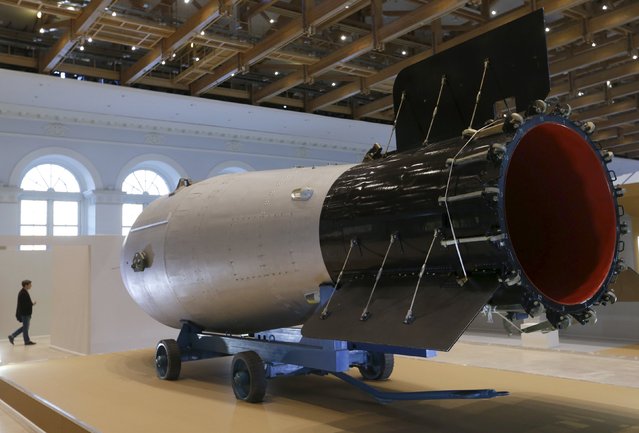
Shell, which is the replica of the biggest detonated Soviet nuclear bomb AN-602 (Tsar-Bomb), is on display in Moscow, Russia, August 31, 2015. (Photo by Maxim Zmeyev/Reuters)

Shell, which is the replica of the biggest detonated Soviet nuclear bomb AN-602 (Tsar-Bomb), is on display in Moscow, Russia, August 31, 2015. The shell is part of an exhibition organized by the state nuclear corporation Rosatom. (Photo by Maxim Zmeyev/Reuters)
Details
01 Sep 2015 13:24:00
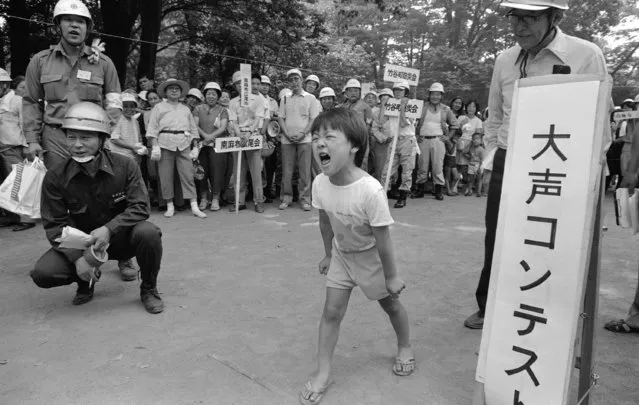
A little boy shouts “Earthquake!” during a shouting contest, part of the annual evacuation drill on the National Disaster Prevention Day on September 1, 1986. The contest was aimed at teaching youngsters the importance of telling neighbors quickly and loudly of a disaster when it hits. The drill is annually conducted through out the country on the day marking the anniversary of the Great Kanto Earthquake that hit the Japanese capital and its vicinity on September 1, 1923, killing more than 104,000 people. (Photo by Sadayuki Mikami/AP Photo)

A little boy shouts “Earthquake!” during a shouting contest, part of the annual evacuation drill on the National Disaster Prevention Day on September 1, 1986. The contest was aimed at teaching youngsters the importance of telling neighbors quickly and loudly of a disaster when it hits. The drill is annually conducted through out the country on the day marking the anniversary of the Great Kanto Earthquake that hit the Japanese capital and its vicinity on September 1, 1923, killing more than 104,000 people. (Photo by Sadayuki Mikami/AP Photo)
Details
02 Sep 2015 11:58:00
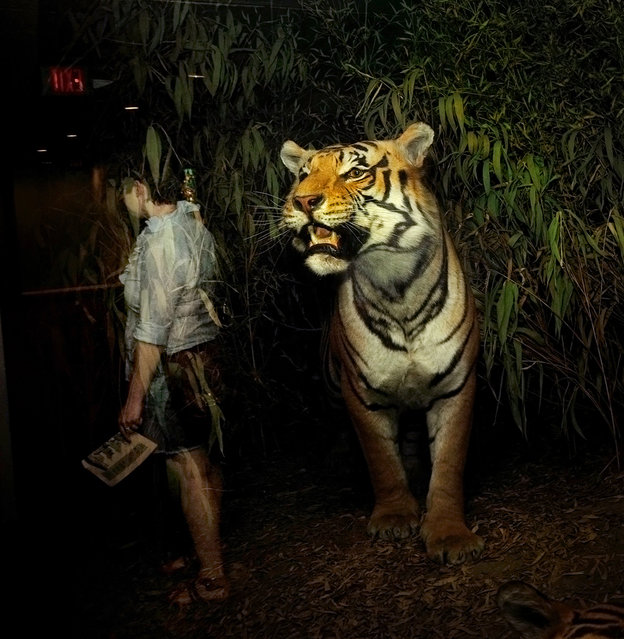
“Natural History”: Tiger. (Photo by Traer Scott)

“Natural History” is a series of completely candid single exposure images that merge the living and the dead to create allegorical narratives of our troubled co-existence with nature. Ghost-like reflections of modern visitors viewing wildlife dioramas are juxtaposed against the antique taxidermied subjects housed behind thick glass, their faces molded into permanent expressions of fear, aggression or fleeting passivity. After decades of over-hunting, climate change, poaching and destruction of habitat, many of these long dead diorama specimens now represent endangered or completely extinct species”. – Traer Scott. (Photo by Traer Scott)
Details
27 Oct 2014 11:39:00