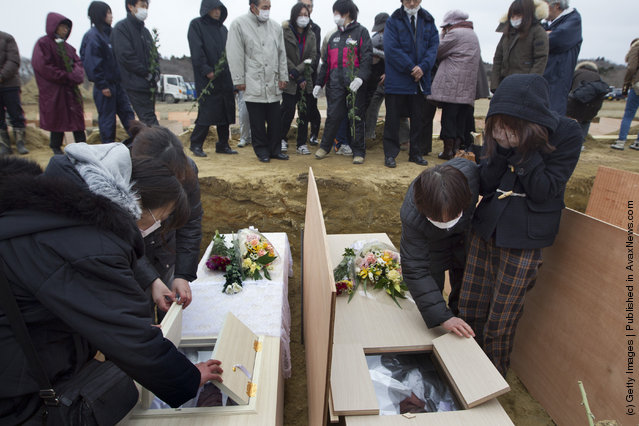
Families and relatives of the dead cry as they identify their family members at a temporary burial ground March 25, 2011 in Higashi Matsushima , Japan. (Photo by Paula Bronstein /Getty Images)
Arctic treasure by Sergey Gorshkov (Russia). An arctic fox carries its egg trophy from a raid on a snow goose nest and heads for a suitable burial spot. Finalist 2017, Animal Portraits. (Photo by Sergey Gorshkov/2017 Wildlife Photographer of the Year)
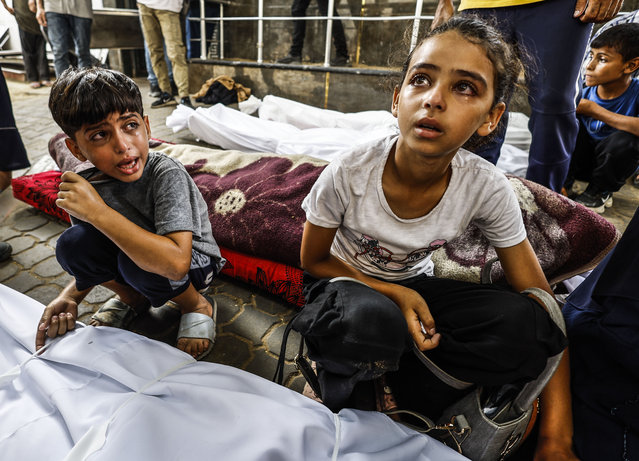
Mother Nesrin Mehre, mourns near the body of Muhammad Mehre was killed in an Israeli attack on al-Nasr neighborhood in northwestern Gaza, on September 23, 2025. His body was taken from al-Shifa Hospital for burial. (Photo by Khames Alrefi/Anadolu via Getty Images)
The Potala Palace in Lhasa, Tibet Autonomous Region, China, was the chief residence of the Dalai Lama until the 14th Dalai Lama fled to India during the 1959 Tibetan uprising. It is now a museum and UNESCO World Heritage Site.
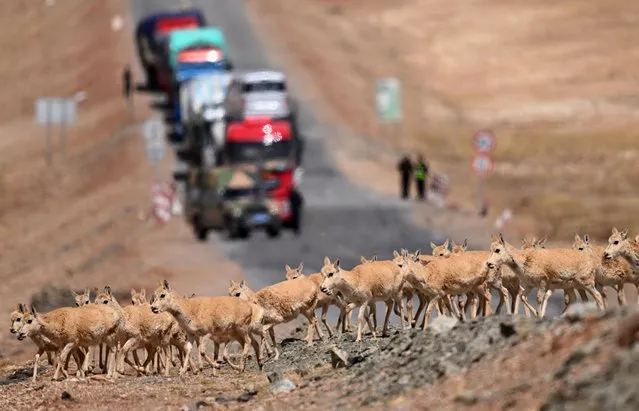
Pregnant Tibetan antelopes move across the Qinghai-Tibet highway in Hoh Xil, northwest China's Qinghai Province, May 29, 2023. A growing number of pregnant Tibetan antelopes are migrating to the heart of northwest China's Hoh Xil National Nature Reserve to give birth, according to the reserve's management office. Every year, tens of thousands of pregnant Tibetan antelopes start their migration to Hoh Xil in around May to give birth and leave with their offspring in late July. (Photo by Xinhua News Agency/Rex Features/Shutterstock)
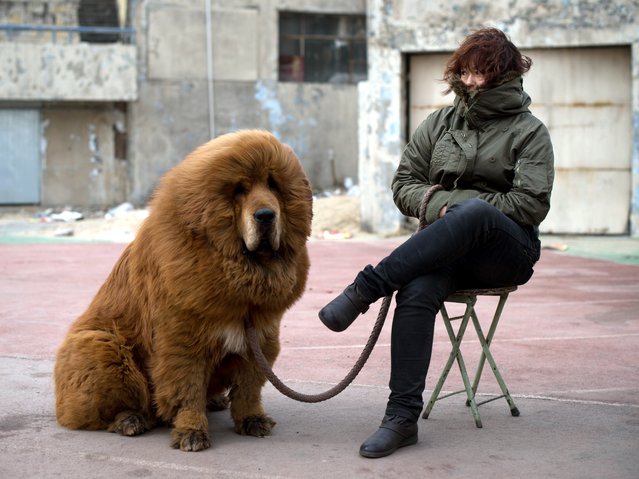
A Tibetan mastiff dog is displayed for sale at a mastiff show in Baoding, Hebei province, south of Beijing on March 9, 2013. Fetching prices up to around 750,000 USD, mastiffs have become a prized status-symbol amongst China's wealthy, with rich buyers across the country sending prices skyrocketing. Owners say the mastiffs, descendents of dogs used for hunting by nomadic tribes in central Asia and Tibet are fiercely loyal and protective. Breeders still travel to the Himalayan plateau to collect young puppies, although many are unable to adjust to the low altitudes and die during the journey. (Photo by Ed Jones/AFP Photo)
Yak near Yamdrok lake, Tibet. It is a long-haired bovinae found throughout the Himalayan region of south Central Asia, the Tibetan Plateau and as far north as Mongolia and Russia. The Tibetan economy is dominated by subsistence agriculture. Due to limited arable land, the primary occupation of the Tibetan Plateau is raising livestock, such as sheep, cattle, goats, camels, yaks, dzo, and horses. The Tibetan yak is an integral part of Tibetan life. (Photo by Dennis Jarvis)
A Tibetan living-in-exile in India attends a peace march during the 62nd Tibetan National Uprising Day in the suburb of McLeod Ganj, the seat of the Central Tibetan Administration in exile, near Dharamsala, India, 10 March 2021. Tibetan Uprising Day is held annually on 10 March and commemorates the Tibetan uprising against the presence of the People's Republic of China in Tibet in 1959. (Photo by Sanjay Baid/EPA/EFE)