Loading...
Done
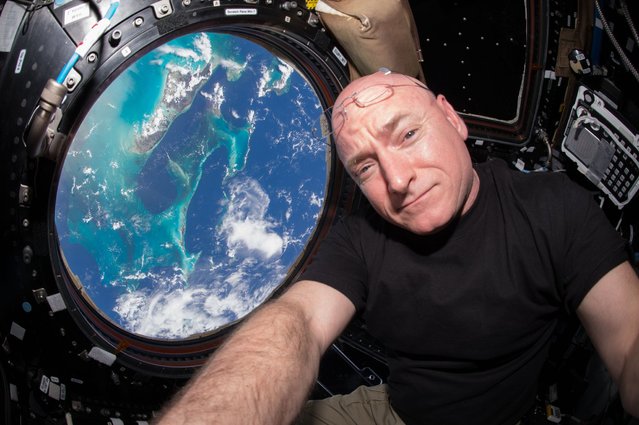
Expedition 44 flight engineer and NASA astronaut Scott Kelly seen inside the Cupola, a special module which provides a 360-degree viewing of the Earth and the International Space Station. Kelly is one of two crew members spending an entire year in space. (Photo by Scott Kelly/NASA)

Expedition 44 flight engineer and NASA astronaut Scott Kelly seen inside the Cupola, a special module which provides a 360-degree viewing of the Earth and the International Space Station. Kelly is one of two crew members spending an entire year in space. (Photo by Scott Kelly/NASA)
Details
25 Feb 2016 12:05:00
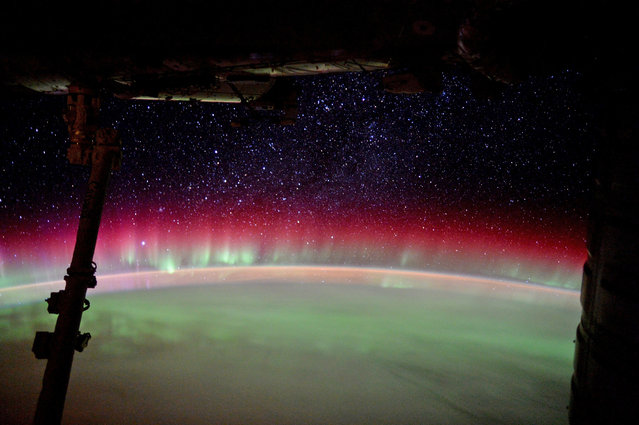
ESA astronaut Tim Peake posted this stunning image on his social media channels, commenting: “Station passed through magnificent aurora Australis last night”. Tim is set to return to Earth on 18 June 2016, bringing his six-month Principia mission to the ISS to an end. During his stay he performed more than 30 scientific experiments for ESA and taking part in numerous others from ESA's international partners. ESA and the UK Space Agency have partnered to develop many exciting educational activities around the Principia mission, aimed at sparking the interest of young children in science and space. (Photo by Tim Peake/ESA/NASA)

ESA astronaut Tim Peake posted this stunning image on his social media channels, commenting: “Station passed through magnificent aurora Australis last night”. Tim is set to return to Earth on 18 June 2016, bringing his six-month Principia mission to the ISS to an end. During his stay he performed more than 30 scientific experiments for ESA and taking part in numerous others from ESA's international partners. ESA and the UK Space Agency have partnered to develop many exciting educational activities around the Principia mission, aimed at sparking the interest of young children in science and space. (Photo by Tim Peake/ESA/NASA)
Details
31 Dec 2016 10:21:00
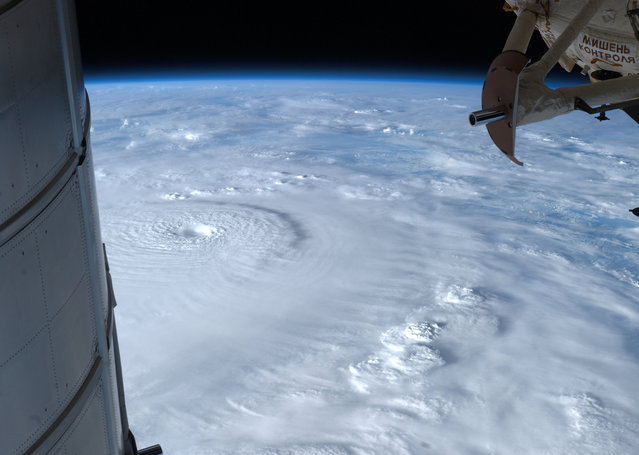
Typhoon Bopha moves toward the Philippines, observed from the ISS, on December 2, 2012. (Photo by AP Photo/NASA/The Atlantic)

Typhoon Bopha moves toward the Philippines, observed from the ISS, on December 2, 2012. (Photo by AP Photo/NASA via The Atlantic)
Details
02 Apr 2013 12:22:00
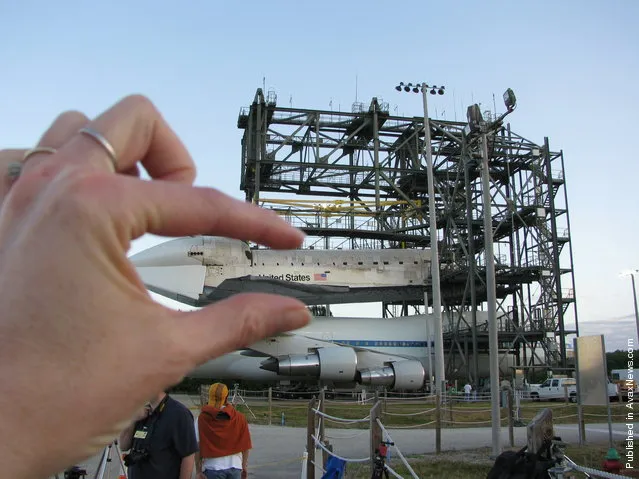
Space shuttle Discovery sits atop NASA's 747 Shuttle Carrier Aircraft (SCA) ready to transport it from Kennedy Space Center to the Washington D.C.

Space shuttle Discovery sits atop NASA's 747 Shuttle Carrier Aircraft (SCA) ready to transport it from Kennedy Space Center to the Washington D.C., on April 17, 2012 in Cape Canaveral, Florida. Following the retirement of the shuttle fleet, Discovery will fly to Washington for display at the Smithsonian's National Air and Space Museum. (Photo by Lofty Ambitions)
Details
19 Apr 2012 12:39:00


Soviet cosmonaut and the first man to travel in space, Yury Alekseyvich Gagarin (1934–1968) arriving in London for a Russian trade fair. (Photo by Douglas Miller/Getty Images)
Details
11 Apr 2011 10:24:00
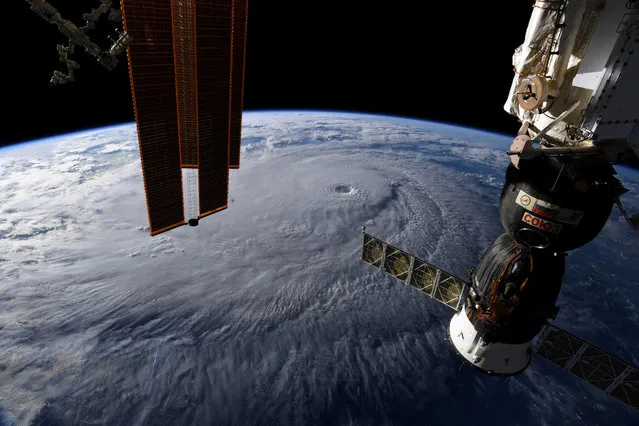
A photo taken from the International Space Station shows Hurricane Lane in the early morning hours near Hawaii, August 22, 2018. (Photo by Courtesy @astro_ricky/NASA/Handout via Reuters)

A photo taken from the International Space Station shows Hurricane Lane in the early morning hours near Hawaii, August 22, 2018. (Photo by Courtesy @astro_ricky/NASA/Handout via Reuters)
Details
01 Jan 2019 00:01:00
A Sign in Space by The photography of Lennart Nilsson

Stars are printed in the sand by a tractor as it drags a giant roller back and forth across the beach, then left to fade at the mercy of footsteps and the tide in this installation by Swedish artist Gunilla Klingberg.
Details
09 Oct 2012 14:15:00
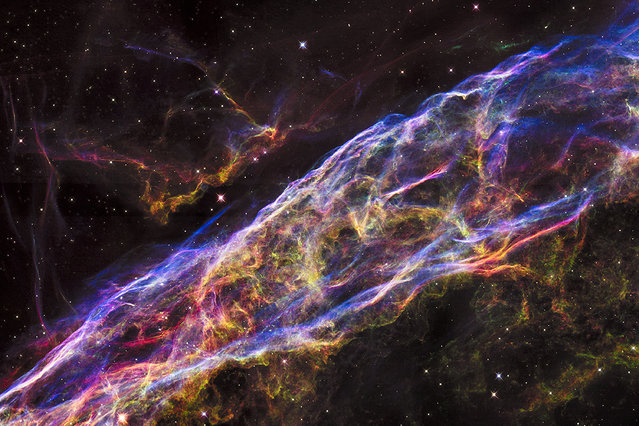
A small section of the expanding remains of the Veil Nebula, a massive star that exploded about 8,000 years ago. The entire nebula is 110 light-years across, covering six full moons on the sky as seen from Earth, and resides about 2,100 light-years away in the constellation Cygnus, the Swan. Image taken by NASA's Hubble Space Telescope. Released September 24, 2015. (Photo by Reuters/NASA/ESA/Hubble Heritage Team)

A small section of the expanding remains of the Veil Nebula, a massive star that exploded about 8,000 years ago. The entire nebula is 110 light-years across, covering six full moons on the sky as seen from Earth, and resides about 2,100 light-years away in the constellation Cygnus, the Swan. Image taken by NASA's Hubble Space Telescope. Released September 24, 2015. (Photo by Reuters/NASA/ESA/Hubble Heritage Team)
Details
10 Dec 2015 08:01:00