Loading...
Done
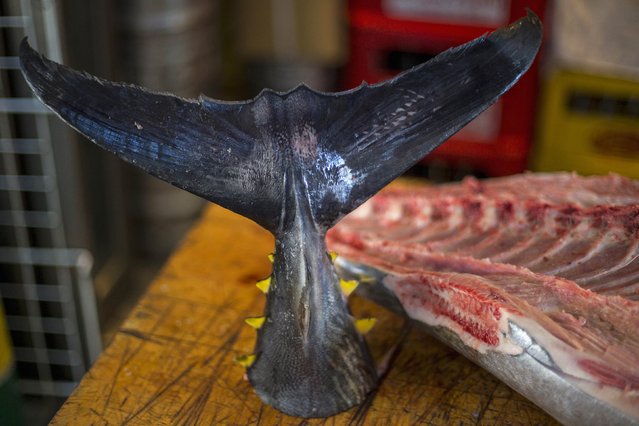
The fin of a tuna is seen on display in the outer part of the Tsukiji fish market, the Jogai Shijo, in Tokyo January 4, 2015. The famous Tsukiji wholesale fish and seafood market, is scheduled to leave its fabled 80-year-old halls to move into bigger, more modern facilities next year ahead of the 2020 Tokyo Olympics. (Photo by Thomas Peter/Reuters)

The fin of a tuna is seen on display in the outer part of the Tsukiji fish market, the Jogai Shijo, in Tokyo January 4, 2015. The famous Tsukiji wholesale fish and seafood market, is scheduled to leave its fabled 80-year-old halls to move into bigger, more modern facilities next year ahead of the 2020 Tokyo Olympics. The outer part of the market, the Jogai Shijo, that caters to the public will stay in its old place, but critics wonder about its chances for survival without the world's biggest fish trading place at its doorsteps. (Photo by Thomas Peter/Reuters)
Details
08 Jan 2015 14:50:00
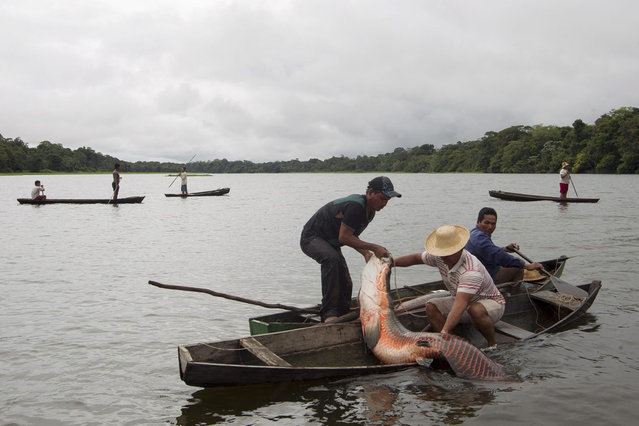
Villagers from the Porto Novo community load into their canoes arapaima or pirarucu, the largest freshwater fish species in South America and one of the largest in the world, while fishing in Poco Fundo lake along a branch of the Solimoes river, one of the main tributaries of the Amazon, in the Mamiraua nature reserve near Fonte Boa about 600 km (373 miles) west of Manaus, November 26, 2013. (Photo by Bruno Kelly/Reuters)

Villagers from the Porto Novo community load into their canoes arapaima or pirarucu, the largest freshwater fish species in South America and one of the largest in the world, while fishing in Poco Fundo lake along a branch of the Solimoes river, one of the main tributaries of the Amazon, in the Mamiraua nature reserve near Fonte Boa about 600 km (373 miles) west of Manaus, November 26, 2013. Catching the arapaima, a fish that is sought after for its meat and is considered by biologists to be a living fossil, is only allowed once a year by Brazil's environmental protection agency. The minimum size allowed for a fisherman to keep an arapaima is 1.5 meters (4.9 feet). (Photo by Bruno Kelly/Reuters)
Details
17 Dec 2013 08:03:00
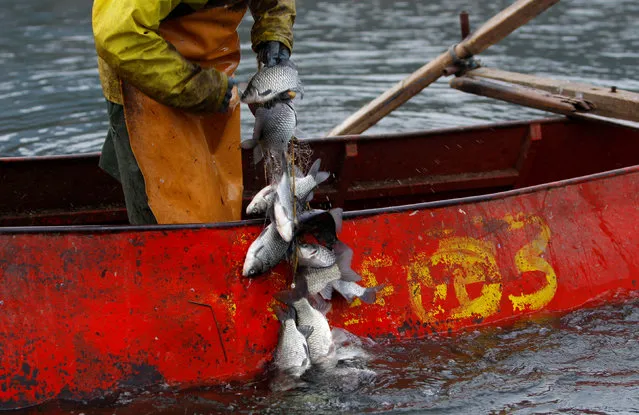
Fishermen collect their catch from a net at Dojran Lake, Macedonia, January 4, 2017. (Photo by Ognen Teofilovski/Reuters)

Fishermen collect their catch from a net at Dojran Lake, Macedonia, January 4, 2017. Fish from the lake is a traditional food for locals for orthodox Christmas eve, which falls on January 6. The lake faced sustainability issues during the 1990s due to drought and excessive use of its water but has since recovered after measures were taken to replenish and sustain water levels, according to local media. Dojran Lake is one of the three natural lakes in Macedonia, and also the warmest. It is said it is also the richest lake in fish in Europe. (Photo by Ognen Teofilovski/Reuters)
Details
05 Jan 2017 13:41:00
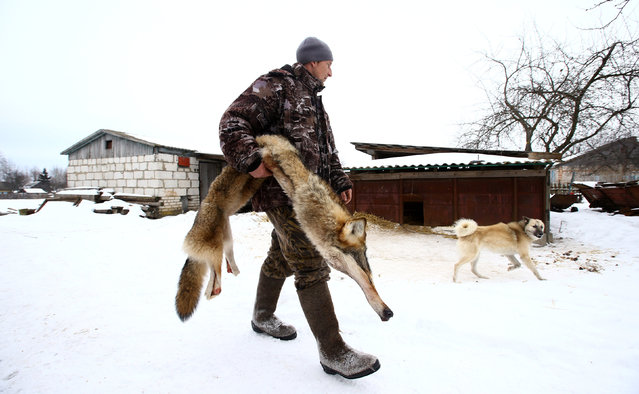
Nikolay Skidan, a hunter, carries the skin of a wolf in the village of Khrapkovo, Belarus February 1, 2017. (Photo by Vasily Fedosenko/Reuters)

Nikolay Skidan, a hunter, carries the skin of a wolf in the village of Khrapkovo, Belarus February 1, 2017. Wolf fur grows thickest in winter, so Belarussian hunter Vladimir Krivenchik only sets his traps once snow is on the ground. He and his wife live on the edge of the Chernobyl exclusion zone – 2,600 square km of land on the Belarus-Ukraine border that was contaminated by a nuclear disaster in 1986. (Photo by Vasily Fedosenko/Reuters)
Details
16 Feb 2017 00:04:00
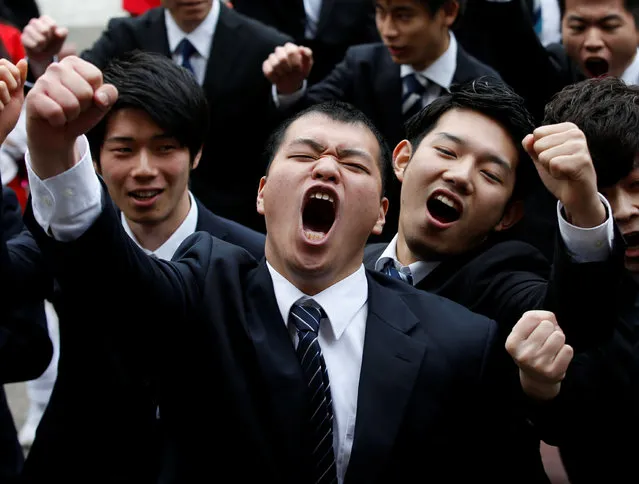
College students shout slogans during a pep rally organised to boost their morale ahead of their job hunting in Tokyo, Japan March 1, 2017. (Photo by Kim Kyung-Hoon/Reuters)

College students shout slogans during a pep rally organised to boost their morale ahead of their job hunting in Tokyo, Japan March 1, 2017. (Photo by Kim Kyung-Hoon/Reuters)
Details
03 Mar 2017 00:03:00
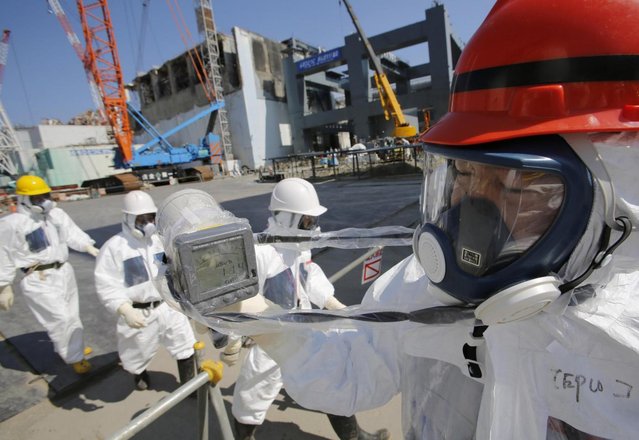
A radiation monitor indicates 114.00 microsieverts per hour near the building housing the plant's No. 4 reactor, center, and an under construction foundation, right, which will store the reactor's melted fuel rods at Tokyo Electric Power Co.'s tsunami-crippled Fukushima Dai-ichi nuclear power plant in Okuma, Fukushima prefecture, Wednesday, March 6, 2013, ahead of the second anniversary of the March 11, 2011 tsunami and earthquake. (Photo by Issei Kato/AP Photo/Pool)

A radiation monitor indicates 114.00 microsieverts per hour near the building housing the plant's No. 4 reactor, center, and an under construction foundation, right, which will store the reactor's melted fuel rods at Tokyo Electric Power Co.'s tsunami-crippled Fukushima Dai-ichi nuclear power plant in Okuma, Fukushima prefecture, Wednesday, March 6, 2013, ahead of the second anniversary of the March 11, 2011 tsunami and earthquake. Some 110,000 people living around the nuclear plant were evacuated after the massive March 11, 2011, earthquake and tsunami knocked out the plant's power and cooling systems, causing meltdowns in three reactors and spewing radiation into the surrounding air, soil and water. (Photo by Issei Kato/AP Photo/Pool)
Details
06 Mar 2013 13:19:00
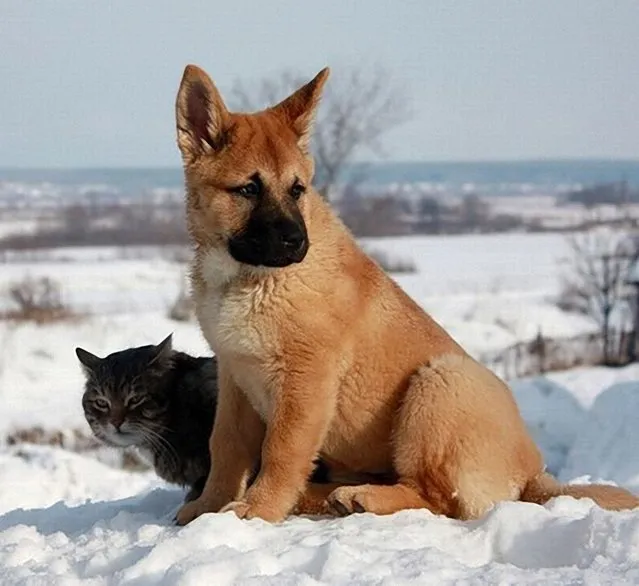
True Friendship Pat Two

Russian cat and Russian dog are true friends, just look at them.


SEE ALSO:True Friendship
Details
22 Oct 2012 09:53:00
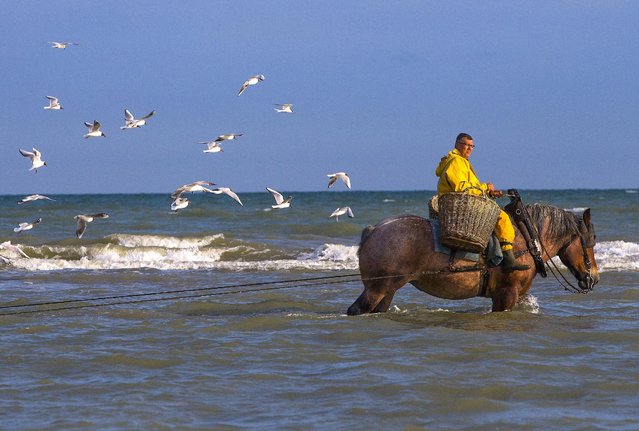
A Belgian shrimp fisherman rides a carthorse to haul a net out in the sea to catch shrimps during low tide at the coastal town of Oostduinkerke, Belgium July 3, 2015. (Photo by Yves Herman/Reuters)

A Belgian shrimp fisherman rides a carthorse to haul a net out in the sea to catch shrimps during low tide at the coastal town of Oostduinkerke, Belgium July 3, 2015. At the end of each fishing session, the fishermen and their mounts leave the water to empty the net's contents into two wicker baskets fixed on each side of the horse. This traditional method of catching shrimps along the North Sea coast, which dates back to some 500 years, attracts tourists every summer. In 2013, Unesco recognized shrimp fishing on horseback as an intangible cultural heritage. (Photo by Yves Herman/Reuters)
Details
04 Jul 2015 11:29:00