Loading...
Done
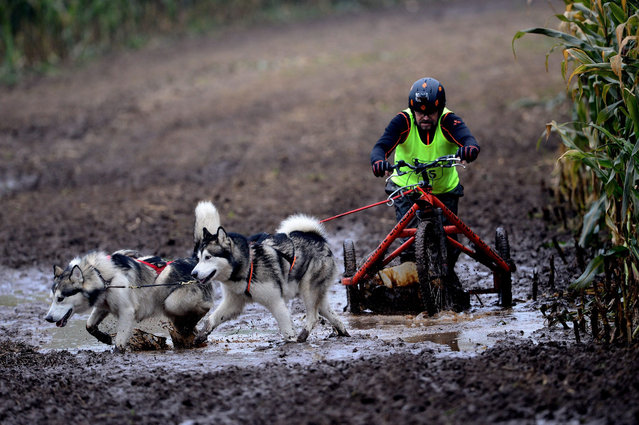
A participant of the sled dogs race in action with the dogs in Stroehen (Lower Saxony), Germany, 18 October 2015. It is the first round of the North German Championship. (Photo by Peter Steffen/EPA)

A participant of the sled dogs race in action with the dogs in Stroehen (Lower Saxony), Germany, 18 October 2015. It is the first round of the North German Championship. (Photo by Peter Steffen/EPA)
Details
21 Oct 2015 08:08:00
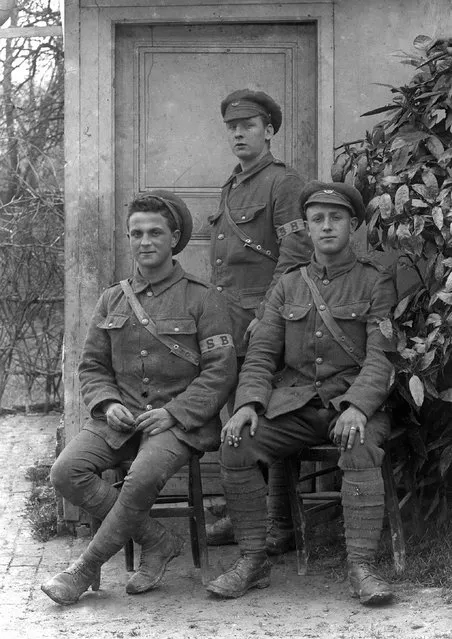
These images, scanned from old glass negatives which had surfaced in northern France, were believed to have been taken by a local amateur photographer in 1916. They showed British and a few Australian soldiers, in formal or informal poses, during or just before the most murderous battle in the history of the British Empire – Battle of the Somme. Who are these British and British Empire soldiers? The identity of the soldiers is, and may always remain, a mystery. (Property of Bernard Gardin/Dominique Zanardi/Joel Scribe/The Independent Magazine)

These images, scanned from old glass negatives which had surfaced in northern France, were believed to have been taken by a local amateur photographer in 1916. They showed British and a few Australian soldiers, in formal or informal poses, during or just before the most murderous battle in the history of the British Empire – Battle of the Somme. Who are these British and British Empire soldiers? The identity of the soldiers is, and may always remain, a mystery... (Property of Bernard Gardin/Dominique Zanardi/Joel Scribe/The Independent Magazine)
Details
04 Aug 2014 14:06:00
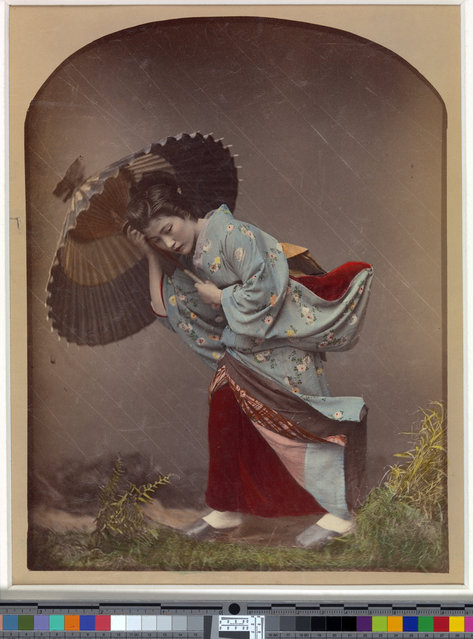
“Woman with Umbrella in Rain” by Raimund von Stillfried. Artist: Kusakabe Kimbei (Japanese, 1841–1934), 1870s. (Photo courtesy of The Metropolitan Museum of Art)

“Woman with Umbrella in Rain” by Raimund von Stillfried. Artist: Kusakabe Kimbei (Japanese, 1841–1934), 1870s. Commercial photography studios in Meiji-era Japan were renowned for the subtlety and refinement of their coloring techniques. This hand-tinted image of a young woman caught in a heavy rainstorm achieved its naturalistic effect by knitting together multiple strands of artifice: the greenery in the foreground was a studio prop; the flaps of the kimono were suspended by thin wires to create the impression of a strong wind; and long, diagonal marks were made on the negative to suggest streaks of rain. (Photo courtesy of The Metropolitan Museum of Art)
Details
12 May 2013 10:13:00