Loading...
Done
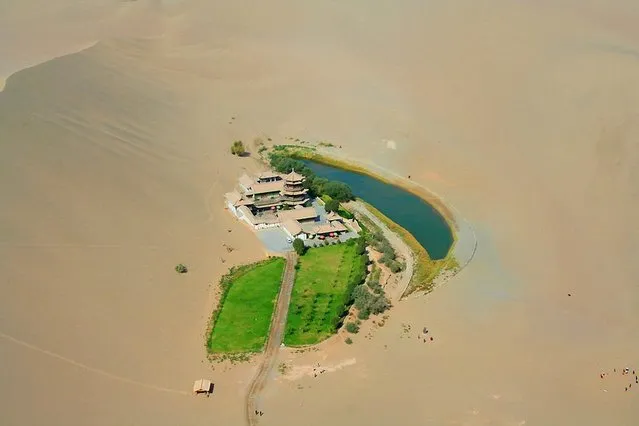
Crescent Lake In China

Yueyaquan is a crescent-shaped lake in an oasis, 6 km south of the city of Dunhuang in Gansu Province, China. It was named Yueyaquan in the Qing Dynasty. According to measurements made in 1960, the average depth of the lake was 4 to 5 meters, with a maximum depth of 7.5 metres In the following 40 years, the depth of the lake continually declined. In the early 1990s, its area had shrunk to only 5,500 m2 with an average depth of 0.9 meter (maximum 1.3 meter). In 2006, the local government with help of the central government started to fill the lake and restore its depth; its depth and size have been growing yearly since then. The lake and the surrounding deserts are very popular with tourists, who are offered camel and 4x4 rides.
Details
25 Jun 2013 10:29:00
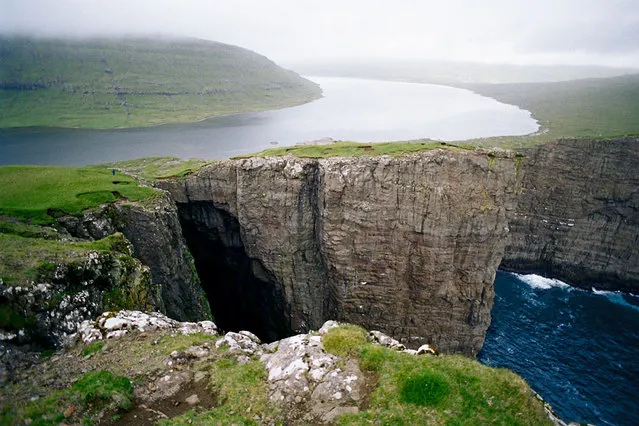
The Two Level Lake Sorvagsvatn

Located on the island of Vagar, in the Faroe Islands, Lake Sorvagsvatn (also known as Leitisvatn) is an amazing lake. What makes the lake interesting is its two different levels. Covering an area of 3.4 square kilometers, it is the biggest lake of the Faroe Islands. Faroe Islands is a group of 18 islands that make Faroe Islands Archipelago in the North Atlantic Ocean. The lake is located about 30 meters above the sea level.
Details
19 Aug 2013 11:27:00
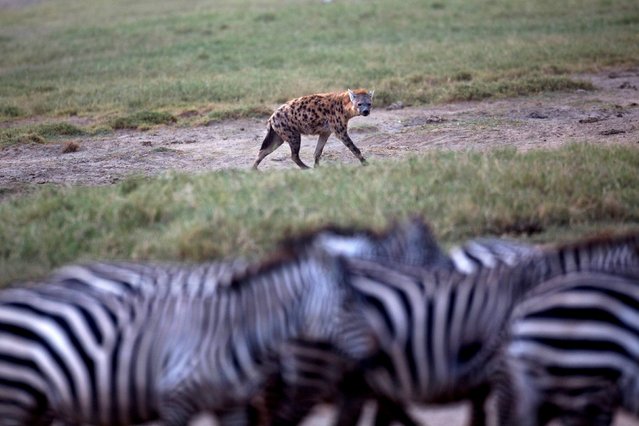
A hyena eyes a herd of zebra at Lake Nakuru National Park, Kenya, August 19, 2015. (Photo by Joe Penney/Reuters)

A hyena eyes a herd of zebra at Lake Nakuru National Park, Kenya, August 19, 2015. The Park is home to some of the world's most majestic wildlife including lions, rhinos, zebras and flamingos. The scenery is stunning, from forests of acacia trees to animals congregating at the shores to drink. UNESCO says that with rapid population growth nearby, the area is under "considerable threat from surrounding pressures," particularly deforestation, a contributing factor in floods. (Photo by Joe Penney/Reuters)
Details
28 Oct 2015 08:00:00
North Korean leader Kim Jong Il inspects a military unit in North Korea

“Kim Jong-il, also written as Kim Jong Il, birth name Yuri Irsenovich Kim (according to Soviet records) (16 February 1941/2 – 17 December 2011), was the supreme Leader of the Democratic People's Republic of Korea (North Korea). He was the General Secretary of the Workers' Party of Korea, the ruling party since 1948, Chairman of the the National Defence Commission of North Korea, and the Supreme Commander of the Korean People's Army, the fourth-largest standing army in the world”. – Wikipedia

Photo: North Korean leader Kim Jong Il inspects a military unit in North Korea. (Photo by Korean Central Television/Yonhap)
Details
19 Dec 2011 10:38:00
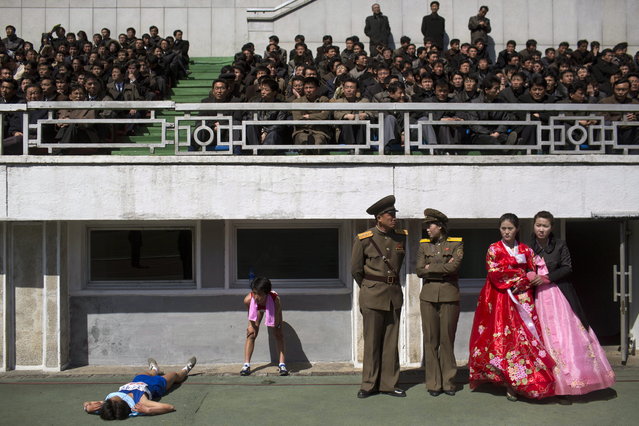
Runners rest inside Kim Il Sung Stadium in Pyongyang, North Korea on Sunday, April 14, 2013. North Korea hosted the 26th Mangyongdae Prize Marathon to mark the upcoming April 15, 2013 birthday of the late leader Kim Il Sung. (Photo by Alexander F. Yuan/AP Photo)

Runners rest inside Kim Il Sung Stadium in Pyongyang, North Korea on Sunday, April 14, 2013. North Korea hosted the 26th Mangyongdae Prize Marathon to mark the upcoming April 15, 2013 birthday of the late leader Kim Il Sung. (Photo by Alexander F. Yuan/AP Photo)
Details
14 Apr 2013 11:27:00
The Imperial Russian Ballet members wait to perform Tchaikovsky's “Swan Lake” at Arena hall in central Bosnian town of Zenica December 7, 2014. (Photo by Dado Ruvic/Reuters)

The Imperial Russian Ballet members wait to perform Tchaikovsky's “Swan Lake” at Arena hall in central Bosnian town of Zenica December 7, 2014. (Photo by Dado Ruvic/Reuters)
Details
09 Dec 2014 09:35:00
Kaindy Lake in Kazakhstan

Kaindy Lake (Kazakh: Қайыңды көлі, Qayındı köli) is a 400 metre long lake in Kazakhstan that reaches depths near 30 metres in some areas. It is located 129 km ESE of the city of Almaty and is 2,000 metres above sea level. It was created by the result of an enormous limestone landslide, triggered by the 1911 Kebin earthquake. The track to Kaindy lake has many scenic views to the Saty Gorge, the Chilik River valley and the Kaindy Gorge. Dried-out trunks of submerged Picea schrenkiana trees rise above the surface.
Details
06 Aug 2012 09:58:00
A Turkana man and a boy carrying a gun look on as a G3 battle rifle hangs from a structure used to dry fish at a fishing camp on the shores of Lake Turkana, some kilometres from Todonyang near the Kenya-Ethiopia border in northwestern Kenya October 12, 2013. (Photo by Siegfried Modola/Reuters)

A Turkana man and a boy carrying a gun look on as a G3 battle rifle hangs from a structure used to dry fish at a fishing camp on the shores of Lake Turkana, some kilometres from Todonyang near the Kenya-Ethiopia border in northwestern Kenya October 12, 2013The Turkana are traditionally nomadic pastoralists, but they have seen the pasture that they need to feed their herds suffer from recurring droughts and many have turned to fishing. However, Lake Turkana is overfished, and scarcity of food and pastureland is fuelling long-standing conflict with Ethiopian indigenous Dhaasanac, who have seen grazing grounds squeezed by large-scale government agricultural schemes in southern Ethiopia. The Dhaasanac now venture ever deeper into Kenyan territory in search of fish and grass, clashing with neighbours. Fighting between the communities has a long history, but the conflict has become ever more fatal as automatic weapons from other regional conflicts seep into the area. While the Turkana region is short of basics like grass and ground-water, it contains other resources including oil reserves and massive, newly discovered underground aquifers. (Photo by Siegfried Modola/Reuters)
Details
05 Dec 2013 12:08:00