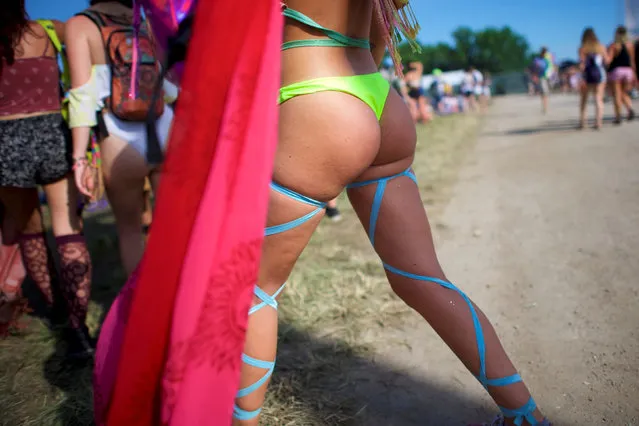
Lizzy Huggler, 20 ,wears blue ties on her legs on the third day of the Firefly Music Festival in Dover, Delaware U.S., June 16, 2018. (Photo by Mark Makela/Reuters)
A man reacts as he tries to extinguish a burning Christmas tree at Festival Walk mall in Kowloon Tong, Hong Kong, November 12, 2019. Anti-government protesters smashed windows and set fires in the mall on Tuesday, including to a big Christmas tree. (Photo by Thomas Peter/Reuters)
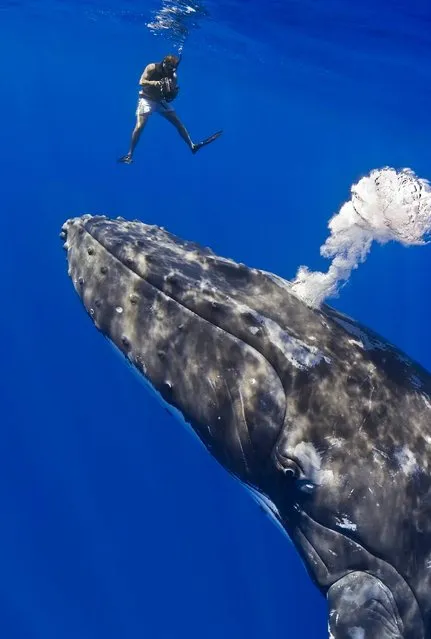
This is the moment a diver appears to shake hands with a giant 52ft whale. The divers were just metres away when one humpback whale – which weighs 36,000kg – extends its giant flipper in a peaceful manner. (Photo by Masa Ushioda/SeaPics/Solent News & Photo Agency)
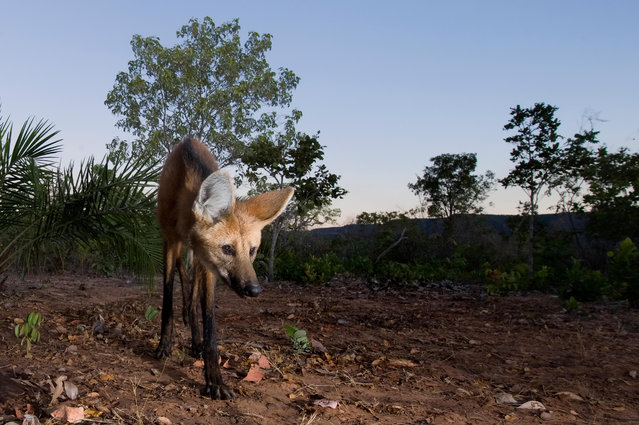
Global wildlife populations will decline by 67% by 2020 unless urgent action is taken to reduce human impact on species and ecosystems, warns the biennial Living Planet Index report from WWF (World Wide Fund for Nature) and ZSL (Zoological Society of London). From elephants to eels, here are some of the wildlife populations most affected by human activity. Here: The maned wolf is among the large mammals in the Brazilian Cerrado that are threatened by the increasing conversion of grasslands into farmland for grazing and growing crops. (Photo by Ben Cranke/Nature Picture Library/Alamy Stock Photo)
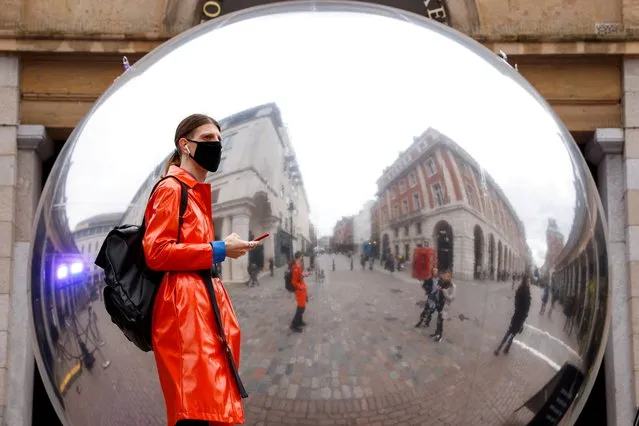
A person wearing a face mask is reflected in an art work entitled “A=V” by Ben Cullen Williams, amid the coronavirus disease (COVID-19) outbreak, in Covent Garden, London, Britain on October 16, 2020. (Photo by John Sibley/Reuters)
In this image released on November 22, English singer and songwriter Dua Lipa poses for the 2020 American Music Awards, broadcast on November 22, 2020 in London, England. (Photo by Gareth Cattermole/Getty Images for dcp)