Loading...
Done
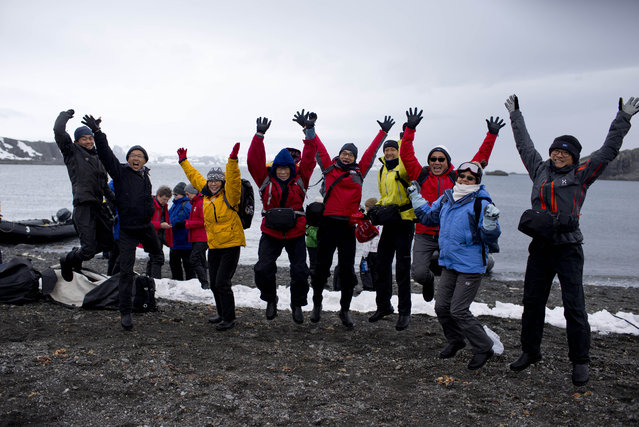
In this February 2, 2015 photo, tourists jump as they pose for a picture, after disembarking from the Ocean Nova cruise ship, on King George Island, Antarctica. This tourist season, which runs November through March, more than 37,000 visitors are expected to walk on the coldest continent on Earth, about 10 percent more than the year before. (Photo by Natacha Pisarenko/AP Photo)

In this February 2, 2015 photo, tourists jump as they pose for a picture, after disembarking from the Ocean Nova cruise ship, on King George Island, Antarctica. This tourist season, which runs November through March, more than 37,000 visitors are expected to walk on the coldest continent on Earth, about 10 percent more than the year before. (Photo by Natacha Pisarenko/AP Photo)
Details
22 Mar 2015 11:31:00
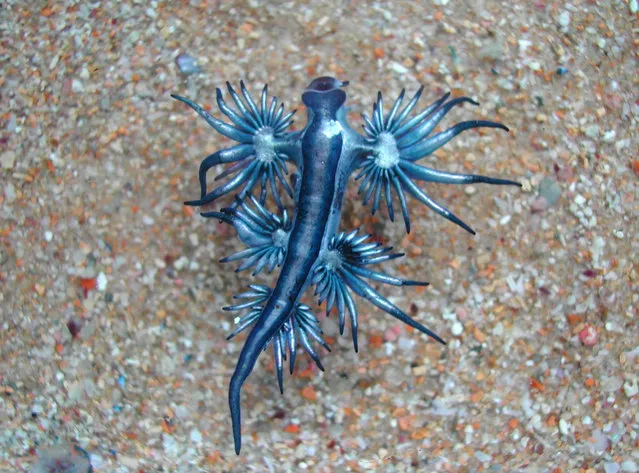
Blue Dragon

Glaucus atlanticus (common names sea swallow, blue glaucus, blue sea slug and blue ocean slug) is a species of small-sized blue sea slug, a pelagic aeolid nudibranch, a marine gastropod mollusk in the family Glaucidae. This is the only species in the genus Glaucus, but is closely related to Glaucilla marginata, which sometimes is included in Glaucus.
Details
12 Sep 2012 08:21:00
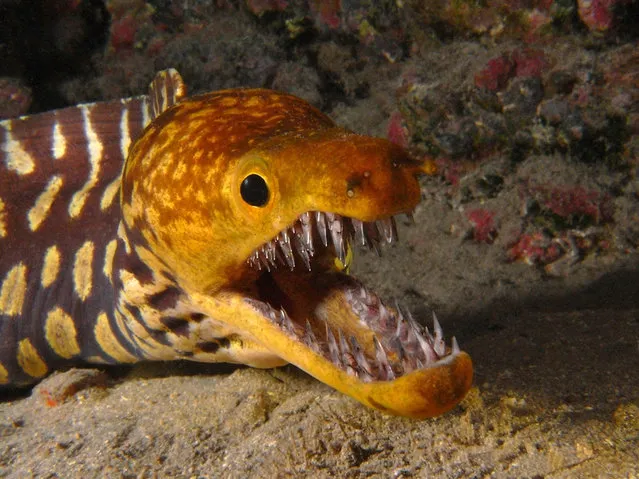
Fangtooth Moray

The Fangtooth Moray (sometimes Tiger Moray) is a moray eel of the family Muraenidae found throughout the eastern Atlantic Ocean, including the Canary Islands and Madeira. The Fangtooth Moray is distinctive for its bright yellow colouring and elongated jaw, which is filled with a large number of long "glasslike" teeth. It can reach up to 120 cm in length.
Details
06 Jun 2014 10:36:00
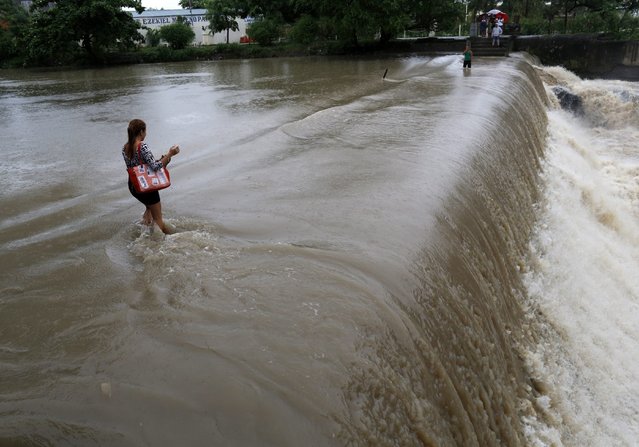
Filipinos cross a swelling river in Las Pinas city, south of Manila, Philippines, 09 July 2015. According to the Philippines State weather forecast, heavy rainfall is expected in Metro Manila and nearby provinces due to an enhanced Southwest Monsoon and Tropical Storm Linfa, Typhoon Chan-hom and Typhoon Nangka which are lining up across the Pacific Ocean. (Photo by Francis R. Malasig/EPA)

Filipinos cross a swelling river in Las Pinas city, south of Manila, Philippines, 09 July 2015. According to the Philippines State weather forecast, heavy rainfall is expected in Metro Manila and nearby provinces due to an enhanced Southwest Monsoon and Tropical Storm Linfa, Typhoon Chan-hom and Typhoon Nangka which are lining up across the Pacific Ocean. (Photo by Francis R. Malasig/EPA)
Details
10 Jul 2015 12:52:00
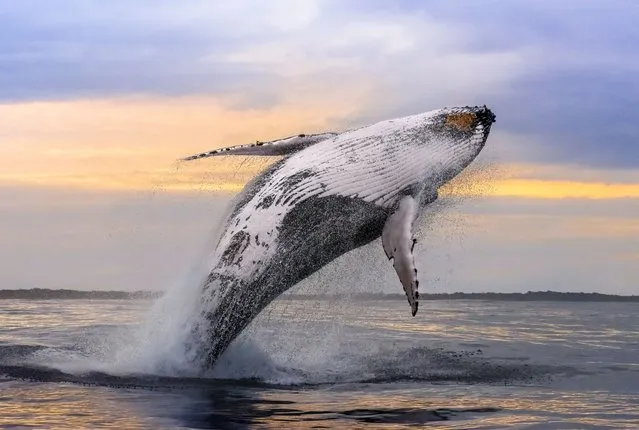
A 40-tonne humpback launching out of the water in an incredible breach in New South Wales, Australia on October 2022 in front of a sunset. The humpback whale can grow up to 56 feet long and typically covers 9,900 miles a year as it travels through the oceans of the world. Humpback whales are a species of Baleen whale, meaning they don't have teeth. Instead, they have baleen which helps them to filter feed. Their main source of food is krill or tiny bait fish. (Photo by Jodie Lowe/Media Drum Images)

A 40-tonne humpback launching out of the water in an incredible breach in New South Wales, Australia on October 2022 in front of a sunset. The humpback whale can grow up to 56 feet long and typically covers 9,900 miles a year as it travels through the oceans of the world. Humpback whales are a species of Baleen whale, meaning they don't have teeth. Instead, they have baleen which helps them to filter feed. Their main source of food is krill or tiny bait fish. (Photo by Jodie Lowe/Media Drum Images)
Details
30 Oct 2022 04:28:00
A model is photographed as she gets her make up done backstage prior to Dino Alves's runway show during the 51st Lisbon Fashion Week, in Lisbon, Portugal, 14 October 2018. (Photo by Jose Sena Goulao/EPA/EFE)

A model is photographed as she gets her make up done backstage prior to Dino Alves's runway show during the 51st Lisbon Fashion Week, in Lisbon, Portugal, 14 October 2018. (Photo by Jose Sena Goulao/EPA/EFE)
Details
23 Oct 2018 21:45:00
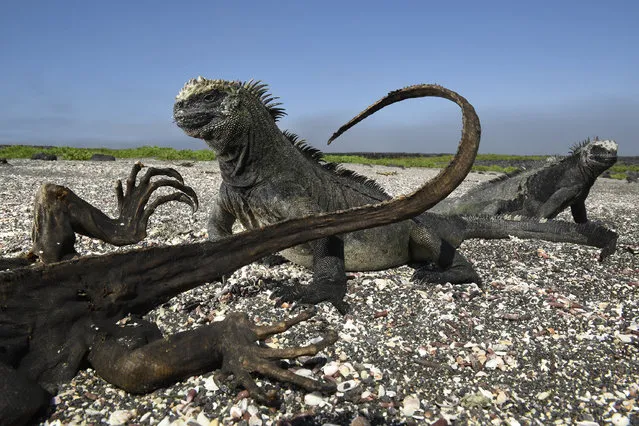
Galapagos – Rocking the Cradle: Four major ocean currents converge along the Galapagos archipelago, creating the conditions for an extraordinary diversity of animal life, April 25, 2016. The islands are home to at least 7,000 flora and fauna species, of which 97 percent of the reptiles, 80 percent of the land birds, 50 percent of the insects and 30 percent of the plants are endemic. The local ecosystem is highly sensitive to the changes in temperature, rainfall and ocean currents that characterize the climatic events known as El Niño and La Niña. These changes cause marked fluctuations in weather and food availability. Many scientists expect the frequency of El Niño and La Niña to increase as a result of climate change, making the Galapagos a possible early-warning location for its effects. (Photo by Thomas P. Peschak for National Geographic/World Press Photo)

Galapagos – Rocking the Cradle: Four major ocean currents converge along the Galapagos archipelago, creating the conditions for an extraordinary diversity of animal life, April 25, 2016. The islands are home to at least 7,000 flora and fauna species, of which 97 percent of the reptiles, 80 percent of the land birds, 50 percent of the insects and 30 percent of the plants are endemic. (Photo by Thomas P. Peschak for National Geographic/World Press Photo)
Details
16 Apr 2018 00:01:00
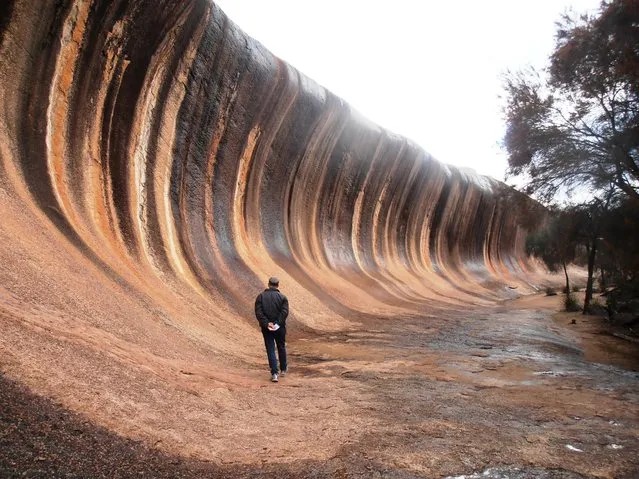
Wave Rock, Arizona

Wave Rock is a natural rock formation that is shaped like a tall breaking ocean wave. The "wave" is about 14 m (46 ft) high and around 110 m (360 ft) long. It forms the north side of a solitary hill, which is known as “Hyden Rock”. This hill, which is a granite inselberg, lies about 3 km (2 mi) east of the small town of Hyden and 296 km (184 mi) east-southeast of Perth, Western Australia. Wave Rock and Hyden Rock are part of a 160 ha (395-acre) nature reserve, Hyden Wildlife Park.
Details
12 Aug 2014 10:21:00