Loading...
Done
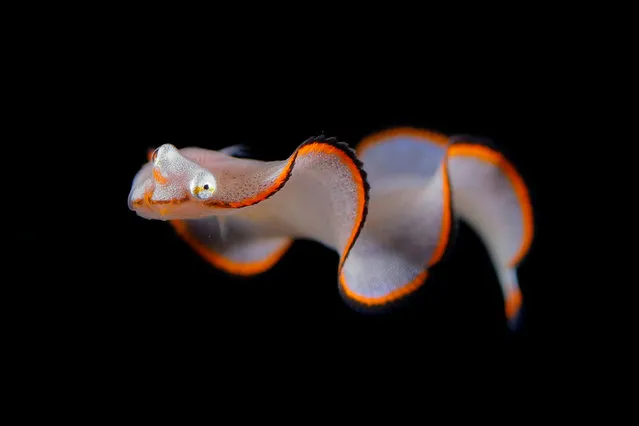
Batesian mimicry by a Soleichthys fish larva. (Photo by Ryo Minemizu/The Guardian)

Ryo Minemizu, one of Japan’s emerging stars in the field of marine life photography and the 2017 winner of the Nikkei National Geographic photography prize, captures the beauty and complexity of plankton that drift in our planet’s oceans and other bodies of water in meticulous detail. Here: Batesian mimicry by a Soleichthys fish larva. (Photo by Ryo Minemizu/The Guardian)
Details
21 Aug 2018 00:05:00
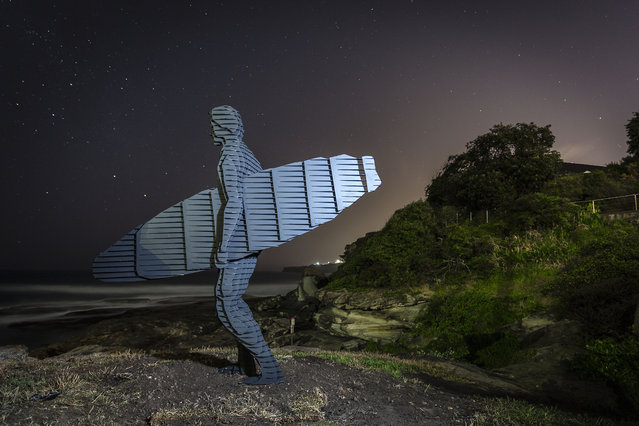
The work entitled “Trip 1, Trip II, Trip III” by April Pine is pictured before dawn at Sculpture By The Sea at Bondi Beach on October 19, 2017 in Sydney, Australia. “Three figures meander their way across the rocks on their journey towards the surf. Each figure independent in their moment whilst paused in motion”. (Photo by Brook Mitchell/Getty Images)

The work entitled “Trip 1, Trip II, Trip III” by April Pine is pictured before dawn at Sculpture By The Sea at Bondi Beach on October 19, 2017 in Sydney, Australia. This year the outdoor exhibition celebrates its 21st birthday with 104 exhibiting artists from Australia and around the world and runs from the 19th October-5th November 2017. (Photo by Brook Mitchell/Getty Images)
Details
21 Oct 2017 07:39:00
Using clever low exposure techinques, photographer Rolf Maeder managed to capture multiple strikes hitting the canyon under atmospheric stormy skies. (Photo by Rolf Maeder)

Using clever low exposure techinques, photographer Rolf Maeder managed to capture multiple strikes hitting the canyon under atmospheric stormy skies. (Photo by Rolf Maeder)
Details
19 Sep 2013 11:01:00
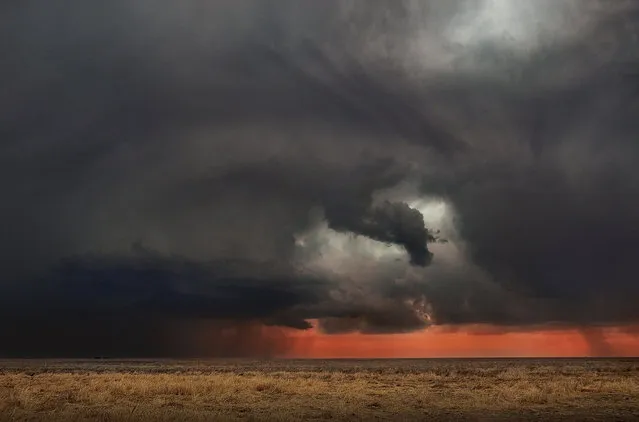
Colorado Instability

Colorado Instability”. (Photo and caption by Matt Granz)
Details
22 Nov 2013 12:56:00
Men carry others, so they do not soil their shoes and clothes, through a mudslide caused by Tropical Storm Erika in Carries, Haiti, August 29, 2015. (Photo by Andres Martinez Casares/Reuters)

Men carry others, so they do not soil their shoes and clothes, through a mudslide caused by Tropical Storm Erika in Carries, Haiti, August 29, 2015. Erika, a tropical storm that killed 20 people on the Caribbean island of Dominica and at least one person in Haiti, fell apart on Saturday over eastern Cuba, the U.S. National Hurricane Center said. (Photo by Andres Martinez Casares/Reuters)
Details
30 Aug 2015 11:47:00
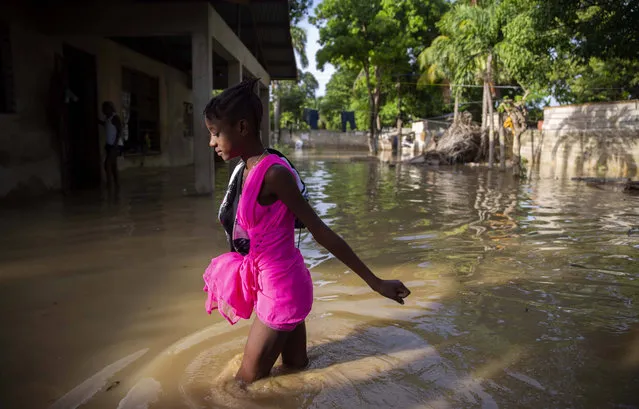
A girl wades towards her flooded home the day after the passing of Tropical Storm Laura in Port-au-Prince, Haiti, Monday, August 24, 2020. Laura battered the Dominican Republic and Haiti on it's way to the U.S. Gulf Coast, where forecaster fear it could become a major hurricane. (Photo by Dieu Nalio Chery/AP Photo)

A girl wades towards her flooded home the day after the passing of Tropical Storm Laura in Port-au-Prince, Haiti, Monday, August 24, 2020. Laura battered the Dominican Republic and Haiti on it's way to the U.S. Gulf Coast, where forecaster fear it could become a major hurricane. (Photo by Dieu Nalio Chery/AP Photo)
Details
28 Aug 2020 00:01:00
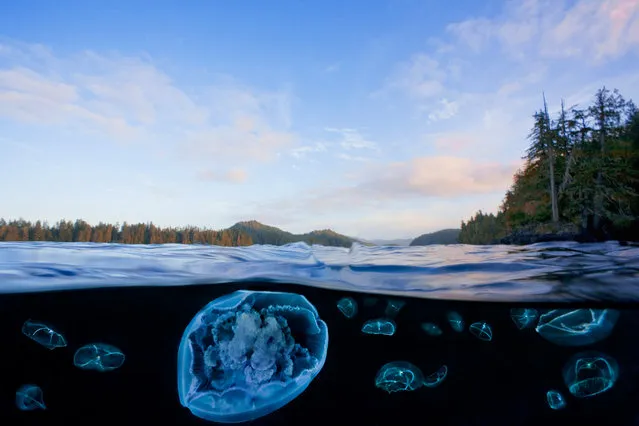
Moon jellyfish and cross jellies. (Photo by David Hall)

David Hall’s photographs of scenery and creatures off the coast of Canada in the Pacific Northwest portray serenity under the water, which belie the extreme challenges he faces to get his images. For each shoot, Hall wears a dry suit, a neoprene body suit that covers all of his body but his head and traps air inside to keep him warm. Water temperature in Canada’s British Columbia typically ranges between 45 and 50 degrees Fahrenheit. Photo: Moon jellyfish and cross jellies. (Photo by David Hall)
Details
16 Sep 2014 12:57:00
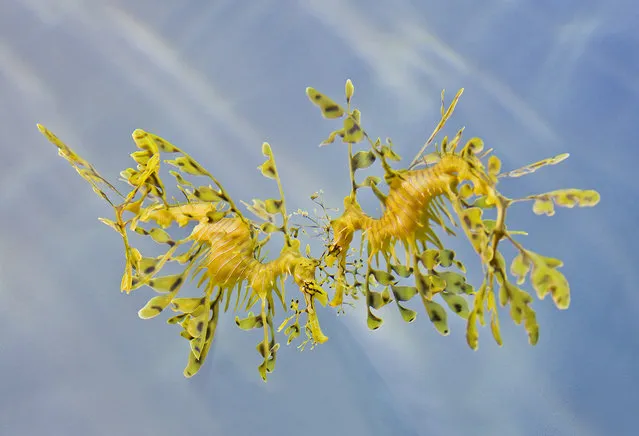
Leafy sea dragon

The leafy seadragon or Glauert's seadragon, Phycodurus eques, is a marine fish in the family Syngnathidae, which also includes the seahorses. It is the only member of the genus Phycodurus. It is found along the southern and western coasts of Australia. The name is derived from the appearance, with long leaf-like protrusions coming from all over the body. These protrusions are not used for propulsion; they serve only as camouflage. The leafy seadragon propels itself by means of a pectoral fin on the ridge of its neck and a dorsal fin on its back closer to the tail end. These small fins are almost completely transparent and difficult to see as they undulate minutely to move the creature sedately through the water, completing the illusion of floating seaweed.
Details
05 Sep 2012 08:51:00