Loading...
Done
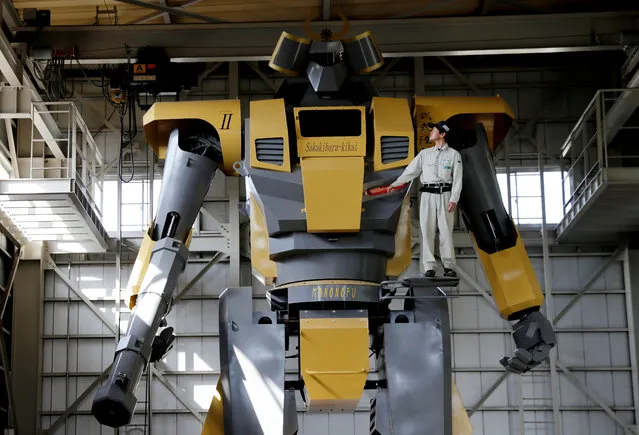
Sakakibara Kikai's engineer Go Sakakibara poses with the bipedal robot Mononofu during its demonstration at its factory in Shinto Village, Gunma Prefecture, Japan on April 12, 2018. Developed at Sakakibara Kikai, a maker of farming machinery, LW-Mononofu is a 28-feet tall, two-legged robot weighing in at more than 7 tonnes. It contains a cockpit with monitors and levers for the pilot to control the robot's arms and legs. (Photo by Kim Kyung-Hoon/Reuters)

Sakakibara Kikai's engineer Go Sakakibara poses with the bipedal robot Mononofu during its demonstration at its factory in Shinto Village, Gunma Prefecture, Japan on April 12, 2018. Developed at Sakakibara Kikai, a maker of farming machinery, LW-Mononofu is a 28-feet tall, two-legged robot weighing in at more than 7 tonnes. It contains a cockpit with monitors and levers for the pilot to control the robot's arms and legs. (Photo by Kim Kyung-Hoon/Reuters)
Details
17 Apr 2018 00:01:00
Buddhist novice poses for a picture while monks gather to receive alms at Wat Phra Dhammakaya temple, in what organizers said was a meeting of over 100,000 monks, in Pathum Thani, outside Bangkok April 22, 2016. (Photo by Jorge Silva/Reuters)

Buddhist novice poses for a picture while monks gather to receive alms at Wat Phra Dhammakaya temple, in what organizers said was a meeting of over 100,000 monks, in Pathum Thani, outside Bangkok April 22, 2016. (Photo by Jorge Silva/Reuters)
Details
23 Apr 2016 13:27:00
Wat Rong Khun Temple In Chiang Rai Thailand

Wat Rong Khun (Thai: วัดร่องขุ่น), more well-known among foreigners as the White Temple, is a contemporary unconventional Buddhist temple in Chiang Rai Province, Thailand. It was designed by Chalermchai Kositpipat in 1997.
Details
17 Aug 2014 08:29:00
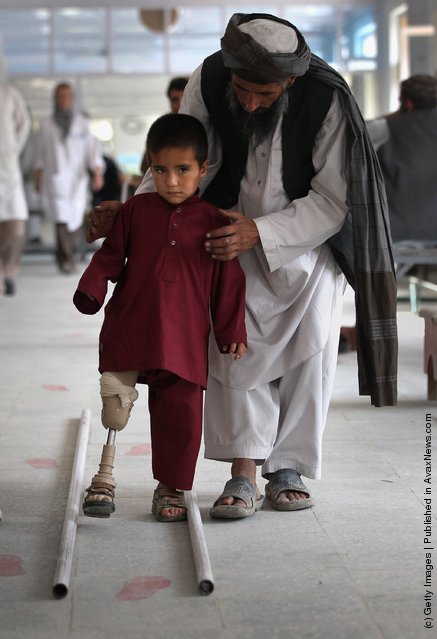
Afghan war amputees

An Afghan child practices walking with his new prosthesis at the International Committee of the Red Cross (ICRC), orthopedic center on September 10, 2011 in Kabul, Afghanistan. After more than 30 years of war and a decade since the 9/11 attacks in the United States, thousands of Afghans, both military and civilian, continue to pay a heavy price from the conflict. The ICRC center makes prosthetics for amputees and helps them, as well as Afghans with spinal injuries and children with congenital birth defects, to learn to walk. (Photo by John Moore/Getty Images)
Details
11 Sep 2011 09:56:00
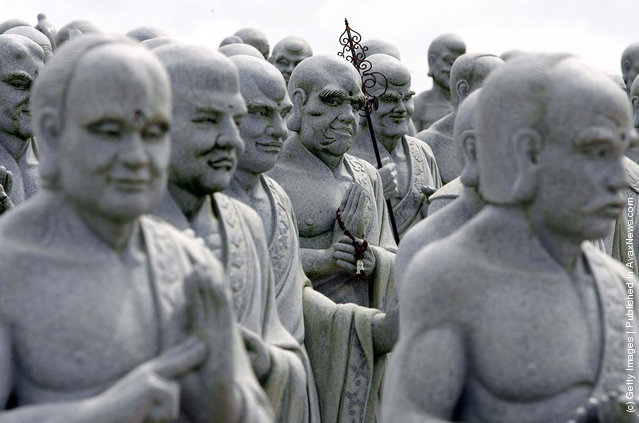
Buddha Statues Feature At Bintan Chinese Temple

Buddha statues with a variety of faces shapes and unique characters at Ksitigarbha Bodhisattva Temple on January 11, 2012 in Bintan Island, Indonesia. 500 statues are situated inside the temple featuring Ksitigarbha Hodhisattva, known as the Bodhisattva of Hell because of his vow not to achieve Buddha-hood until “all the hells are empty”. (Photo by Yuli Seperi/Getty Images)
Details
12 Jan 2012 12:25:00


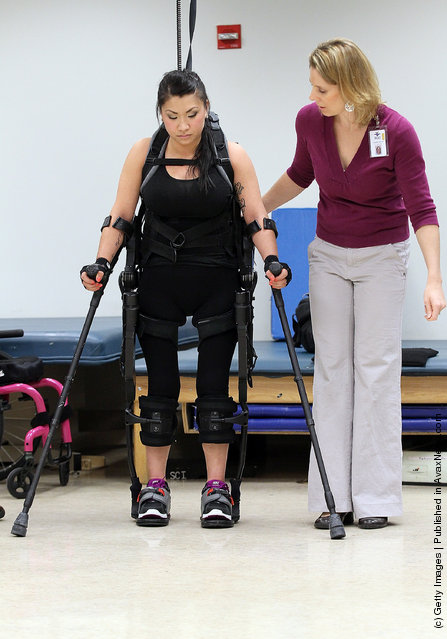
“eLEGS is a wearable, artificially intelligent, bionic device that enables people with paralysis to stand up and walk again. The exoskeleton is battery-powered and rechargeable, fitting comfortably and securely over clothing. Initially, eLEGS will be used under medical supervision for rehabilitation and training”. – BerkeleyBionics.com

Photo: Paralysis victim Stephanie Sablan (L) is helped by physical therapist Shonna Moran as she walks using eLEGS robotic legs at Santa Clara Valley Medical Center on May 25, 2011 in San Jose, California. Sablan, 24, was paralyzed from the waist down earlier this year when she was in a car accident and has begun using the newly developed eLEGS made by Berkeley Bionics. The robot-like battery powered eLEGS fit over clothing and enables people with paralysis to stand up and walk again. (Photo by Justin Sullivan/Getty Images)
Details
26 May 2011 09:56:00


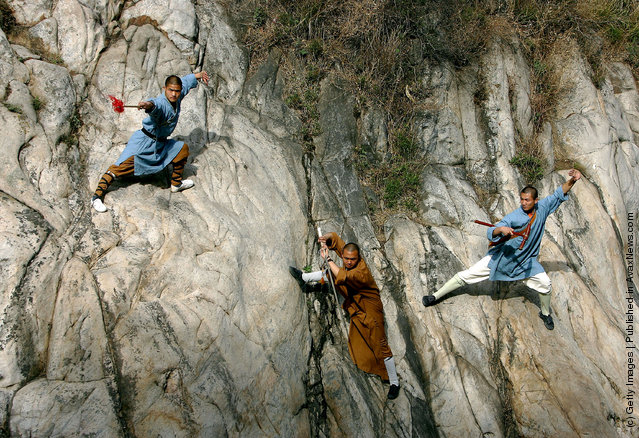
Warrior monks of the Shaolin Temple display their Kung Fu skills at the Songshan Mountain near the temple April 12, 2005 in Dengfeng, Henan Province, China. Shaolin Temple, built in AD 495 in the period of the Northern and Southern Dynasties (420–581) and located in the Songshan Mountain area, is the birthplace of Shaolin Kung Fu. (Photo by Cancan Chu/Getty Images)
Details
17 Jun 2011 11:25:00
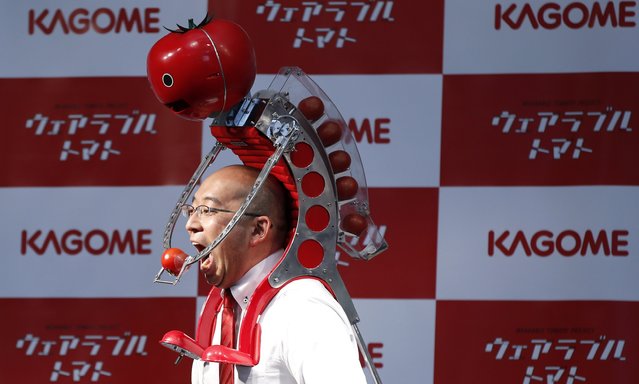
Kagome Co's employee Shigenori Suzuki tries to eat a tomato which is fed to him by the newly-developed “Wearable Tomato” device for runners, during its unveiling event ahead of the weekend's Tokyo Marathon in Tokyo February 19, 2015. (Photo by Toru Hanai/Reuters)

Kagome Co's employee Shigenori Suzuki tries to eat a tomato which is fed to him by the newly-developed “Wearable Tomato” device for runners, during its unveiling event ahead of the weekend's Tokyo Marathon in Tokyo February 19, 2015. The eight-kilo (17.6-pound) contraption fits on a runner like a rucksack. It can distribute a total of seven medium-sized tomatoes, one by one, at the click of a button and supplies the runner with much needed nutrients during a long jog or race. (Photo by Toru Hanai/Reuters)
Details
20 Feb 2015 13:23:00