Loading...
Done
As the sun sets on the Malecon in Havana on Friday January 23, 2015, Surenis Angulo de la Paz, 24, center, dances as group of locals play music around her.  Behind her is Fidel Lopez, 55. (Photo by Sarah L. Voisin/The Washington Post)

As the sun sets on the Malecon in Havana on Friday January 23, 2015, Surenis Angulo de la Paz, 24, center, dances as group of locals play music around her. Behind her is Fidel Lopez, 55. (Photo by Sarah L. Voisin/The Washington Post)
Details
16 Sep 2015 14:04:00
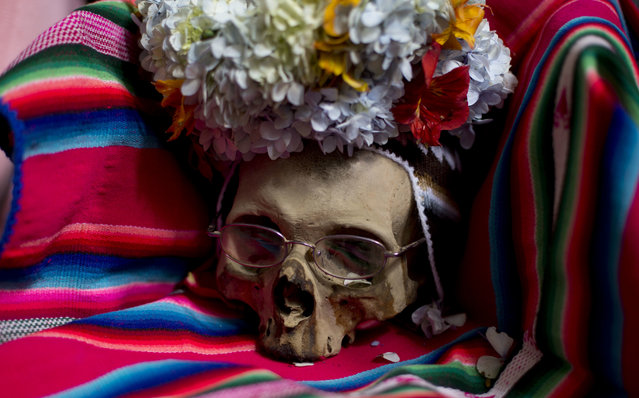
A  decorated human skull or “natitas”, sits on a blanket inside the Cementerio General chapel, during the Natitas Festival celebrations, in La Paz, Bolivia, Tuesday, November 8, 2016. (Photo by Juan Karita/AP Photo)

A decorated human skull or “natitas”, sits on a blanket inside the Cementerio General chapel, during the Natitas Festival celebrations, in La Paz, Bolivia, Tuesday, November 8, 2016. The “natitas” are cared for and decorated by faithful who use them as amulets believing they serve as protection, the tradition marks the end of the Catholic All Saints holiday, but is not recognized by the Catholic church. (Photo by Juan Karita/AP Photo)
Details
09 Nov 2016 06:25:00
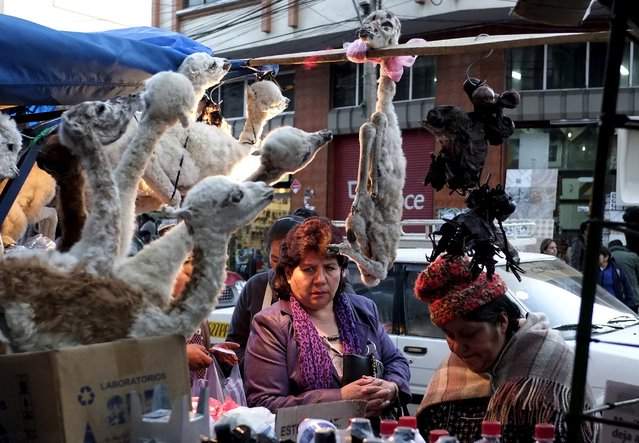
A woman (C) shops for an offering at the witch doctor's street in La Paz, July 31, 2015. (Photo by David Mercado/Reuters)

A woman (C) shops for an offering at the witch doctor's street in La Paz, July 31, 2015. According to Andean culture, the all the month of August is a time to give offerings to “Pachamama” to give thanks for their farms and health. The Aymaras use coca leaves, candies, animal fat, llama fetuses, some dried fruits, powdered minerals and alcohol during these rituals. (Photo by David Mercado/Reuters)
Details
02 Aug 2015 12:27:00
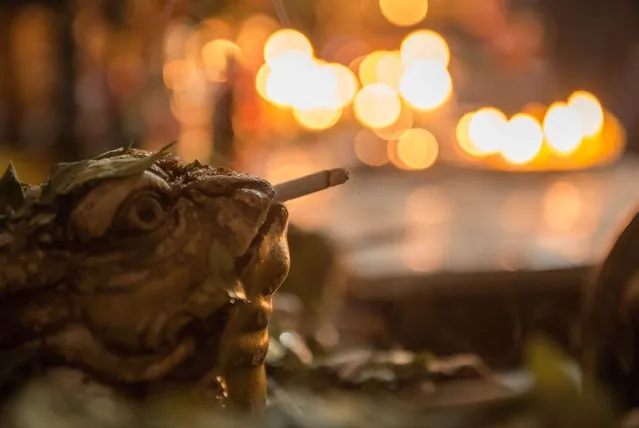
Ceremonial skulls La Paz, Bolivia on November 6, 2020. Toads are in Bolivia symbols of the soil and of luck. They complement the Ñatitas, skulls of deceased people that are believed to have special powers. People ask them for different favours. The tradition is related to All Saints´ Day. (Photo by Radoslaw Czajkowski/Rex Features/Shutterstock)

Ceremonial skulls La Paz, Bolivia on November 6, 2020. Toads are in Bolivia symbols of the soil and of luck. They complement the Ñatitas, skulls of deceased people that are believed to have special powers. People ask them for different favours. The tradition is related to All Saints´ Day. (Photo by Radoslaw Czajkowski/Rex Features/Shutterstock)
Details
21 Feb 2021 08:30:00
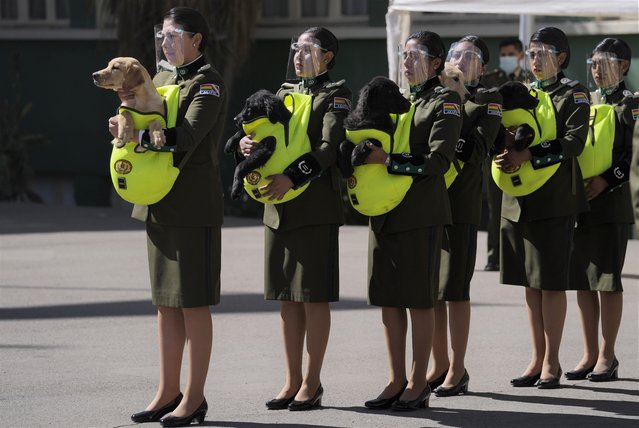
Police officers introduce a litter of golden retriever puppies to be trained as police dogs during a ceremony at the National Police Academy in La Paz, Bolivia, Monday, August 16, 2021, the date of the feast day for Saint Roch, considered the patron saint of dogs, among other things. (Photo by Juan Karita/AP Photo)

Police officers introduce a litter of golden retriever puppies to be trained as police dogs during a ceremony at the National Police Academy in La Paz, Bolivia, Monday, August 16, 2021, the date of the feast day for Saint Roch, considered the patron saint of dogs, among other things. (Photo by Juan Karita/AP Photo)
Details
21 Apr 2022 06:13:00
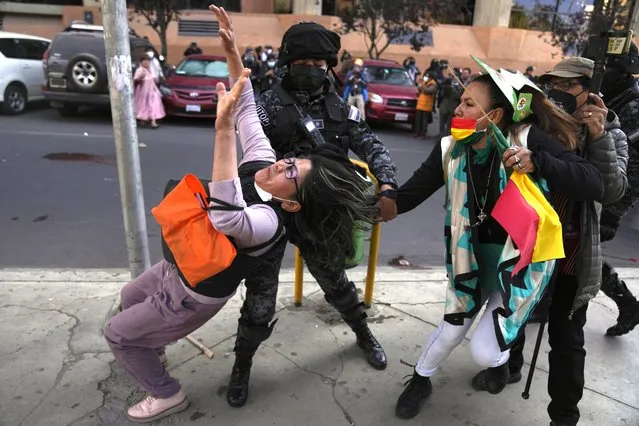
A police officer tries to prevent an anti-government protester from pulling the hair of a woman who is part of group that appeared to show their support for the government during a march of healthcare workers critical of the government, in La Paz, Bolivia, on July 21, 2022. (Photo by Juan Karita/AP Photo)

A police officer tries to prevent an anti-government protester from pulling the hair of a woman who is part of group that appeared to show their support for the government during a march of healthcare workers critical of the government, in La Paz, Bolivia, on July 21, 2022. (Photo by Juan Karita/AP Photo)
Details
06 Oct 2023 04:41:00
A Cucumber and a Chuta Cholero hug during the traditional festival “Desentierro del Pepino” (unearthing the Cucumber) to mark the beginning of carnival on January 21, 2024 in La Paz, Bolivia. People dug up the cucumber from the cemetery and walk through the streets with two characters, the Ch'uta and the Chola. (Photo by Gaston Brito/Getty Images)

A Cucumber and a Chuta Cholero hug during the traditional festival “Desentierro del Pepino” (unearthing the Cucumber) to mark the beginning of carnival on January 21, 2024 in La Paz, Bolivia. People dug up the cucumber from the cemetery and walk through the streets with two characters, the Ch'uta and the Chola. (Photo by Gaston Brito/Getty Images)
Details
29 Mar 2025 04:24:00
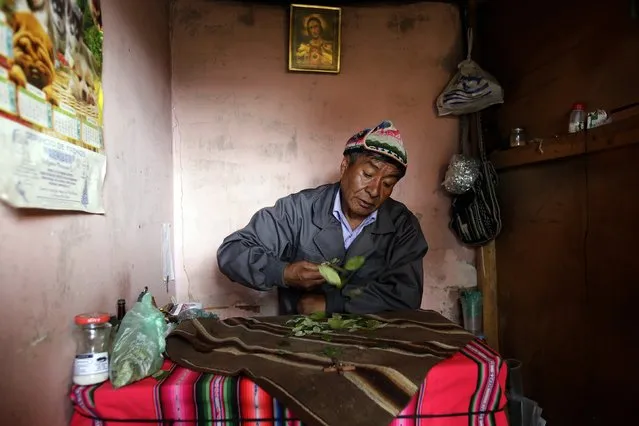
Aymara witchdoctor Ricardo Quispe, also called “Lord of the Lake”, throws coca leaves during a ritual to predict the future, at the witches market of El Alto, on the outskirts of La Paz, December 31, 2014. Dozens of witch doctors tend to a warren of stalls in El Alto, making offerings to give thanks, to promise luck at work or in love, or to call up spirits and banish curses at the end of the year. (Photo by David Mercado/Reuters)

Aymara witchdoctor Ricardo Quispe, also called “Lord of the Lake”, throws coca leaves during a ritual to predict the future, at the witches market of El Alto, on the outskirts of La Paz, December 31, 2014. Dozens of witch doctors tend to a warren of stalls in El Alto, making offerings to give thanks, to promise luck at work or in love, or to call up spirits and banish curses at the end of the year. (Photo by David Mercado/Reuters)
Details
01 Jan 2015 14:05:00