Loading...
Done
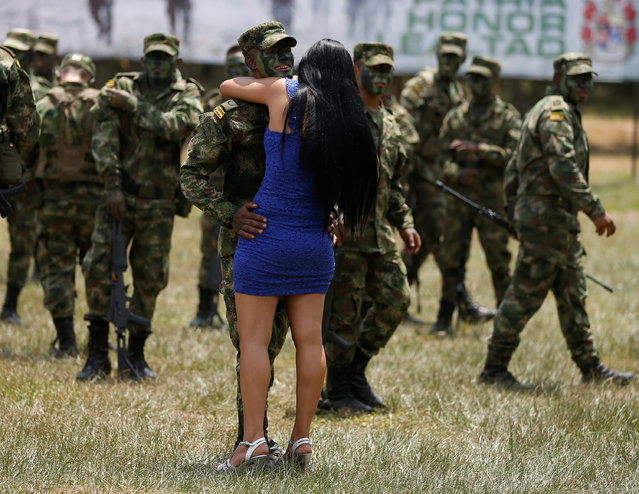
A Colombian soldier hugs his girlfriend during the graduation ceremony of soldiers in Nilo, Colombia, February 17, 2017. The soldiers will be deployed to occupy territories formerly controlled by FARC rebels. (Photo by Jaime Saldarriaga/Reuters)

A Colombian soldier hugs his girlfriend during the graduation ceremony of soldiers in Nilo, Colombia, February 17, 2017. The soldiers will be deployed to occupy territories formerly controlled by FARC rebels. (Photo by Jaime Saldarriaga/Reuters)
Details
18 Feb 2017 10:03:00
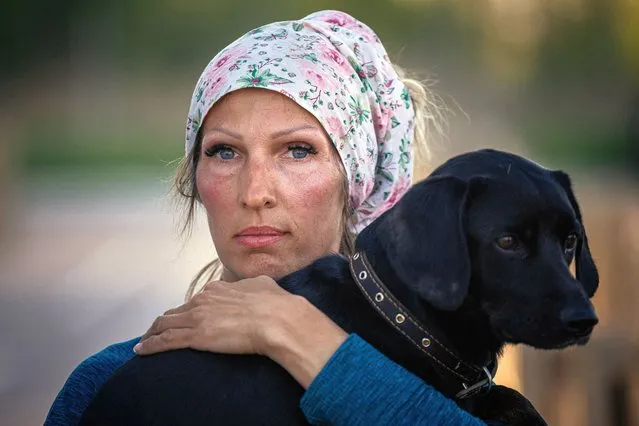
A woman holds her dog after arriving from Russian-occupied territory at a registration and processing area for internally displaced people in Zaporizhzhia, in Ukraine, on May 8, 2022. (Photo by Dimitar Dilkoff/AFP Photo)

A woman holds her dog after arriving from Russian-occupied territory at a registration and processing area for internally displaced people in Zaporizhzhia, in Ukraine, on May 8, 2022. (Photo by Dimitar Dilkoff/AFP Photo)
Details
16 May 2022 04:58:00
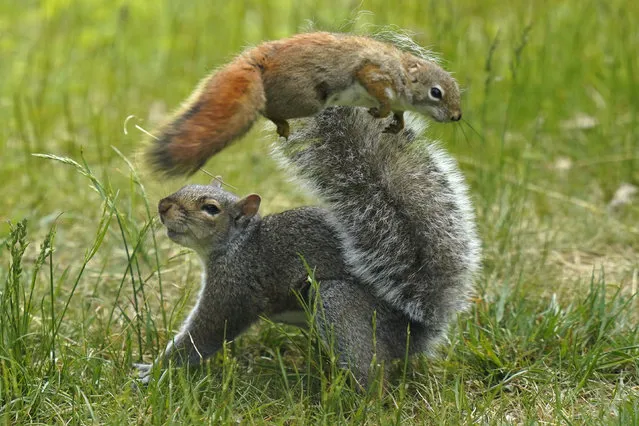
A red squirrel leaps over a gray squirrel after the larger squirrel became annoyed with its territory being encroached upon, Saturday, May 28, 2022, in Freeport, Maine. (Photo by Robert F. Bukaty/AP Photo)

A red squirrel leaps over a gray squirrel after the larger squirrel became annoyed with its territory being encroached upon, Saturday, May 28, 2022, in Freeport, Maine. (Photo by Robert F. Bukaty/AP Photo)
Details
12 Jun 2022 04:01:00
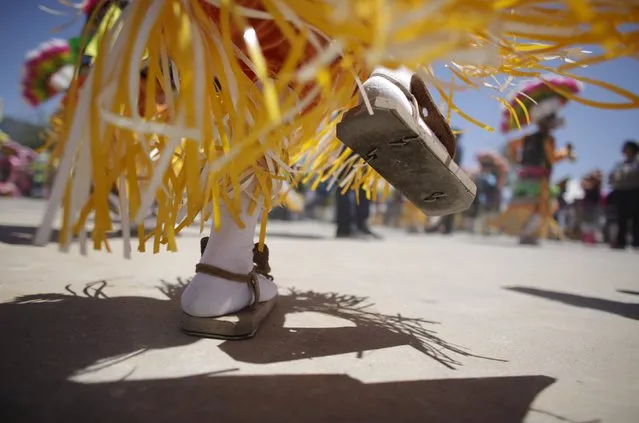
Matachines dancers participate in a religious festival in Saltillo, Mexico, April 17, 2016. Matachines dancing is a masked dance introduced by Spanish missionaries, and has been adopted by cultures from Peru to northern Mexico. It is performed to show respect to Mother Mary or the Guadalupe Virgin, a saint, or to simply worship God. (Photo by Daniel Becerril/Reuters)

Matachines dancers participate in a religious festival in Saltillo, Mexico, April 17, 2016. Matachines dancing is a masked dance introduced by Spanish missionaries, and has been adopted by cultures from Peru to northern Mexico. It is performed to show respect to Mother Mary or the Guadalupe Virgin, a saint, or to simply worship God. (Photo by Daniel Becerril/Reuters)
Details
19 Apr 2016 13:27:00
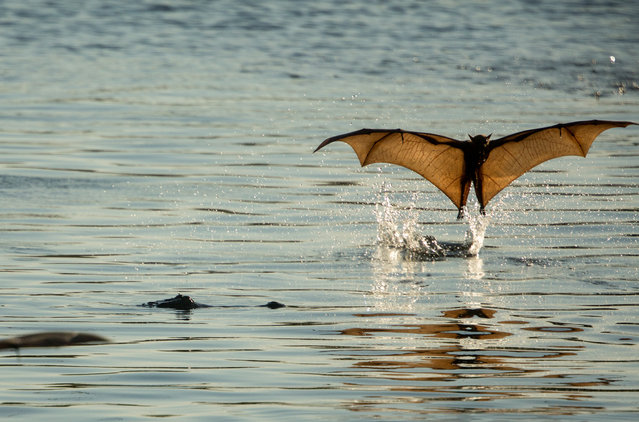
A little red flying fox dips a toe in a lake at the mouth of Katherine gorge in the Northern Territory, Nitmiluk national park, Australia on September 20, 2017. (Photo by Glenn Campbell/AAP)

A little red flying fox dips a toe in a lake at the mouth of Katherine gorge in the Northern Territory, Nitmiluk national park, Australia on September 20, 2017. (Photo by Glenn Campbell/AAP)
Details
24 Sep 2017 06:28:00
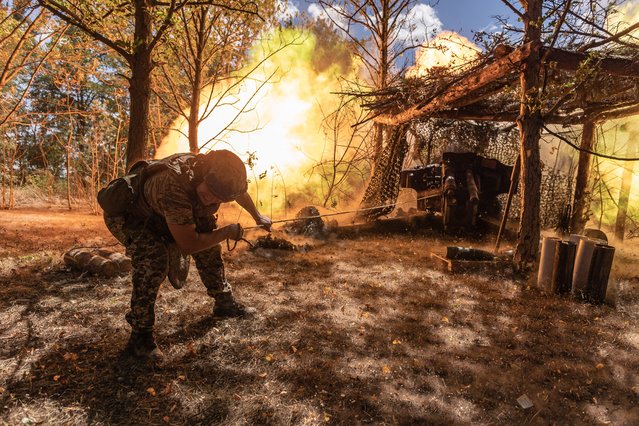
Ukrainian territorial defence soldiers from the Donetsk Oblast fire D-20 artillery in the direction of Toretsk, Ukraine, 24 July 2025. (Photo by Diego Herrera Carcedo/Anadolu via Getty Images)

Ukrainian territorial defence soldiers from the Donetsk Oblast fire D-20 artillery in the direction of Toretsk, Ukraine, 24 July 2025. (Photo by Diego Herrera Carcedo/Anadolu via Getty Images)
Details
29 Oct 2025 03:50:00
Auxiliary Territorial Service (ATS) plotters at work at Coastal Artillery Headquarters in Dover, December 1942. (Photo by Ted Dearberg/IWM/PA Wire)

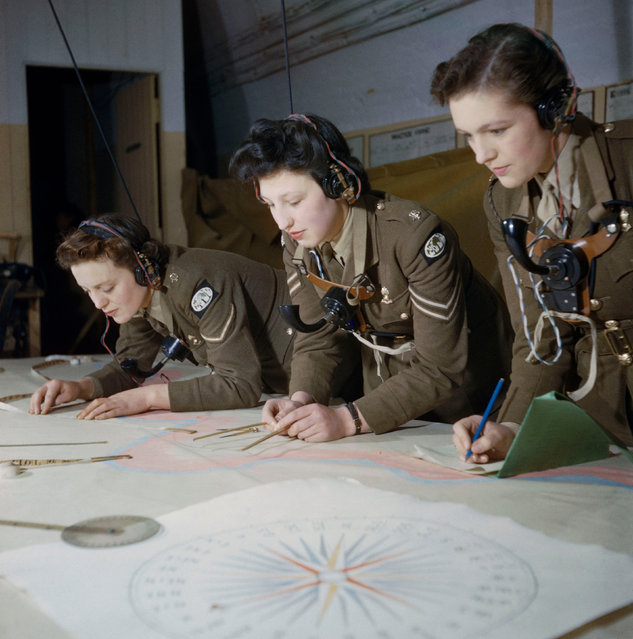
Auxiliary Territorial Service (ATS) plotters at work at Coastal Artillery Headquarters in Dover, December 1942. The Auxiliary Territorial Service was the women's branch of the British Army during the Second World War. It was formed on 9 September 1938, initially as a women's voluntary service, and existed until 1 February 1949, when it was merged into the Women's Royal Army Corps. The ATS had its roots in the Women's Auxiliary Army Corps (WAAC), which was formed in 1917 as a voluntary service. During the First World War its members served in a number of jobs including clerks, cooks, telephonists and waitresses. The WAAC was disbanded after four years in 1921. (Photo by Ted Dearberg/IWM/PA Wire)

Details
13 Jul 2017 07:52:00
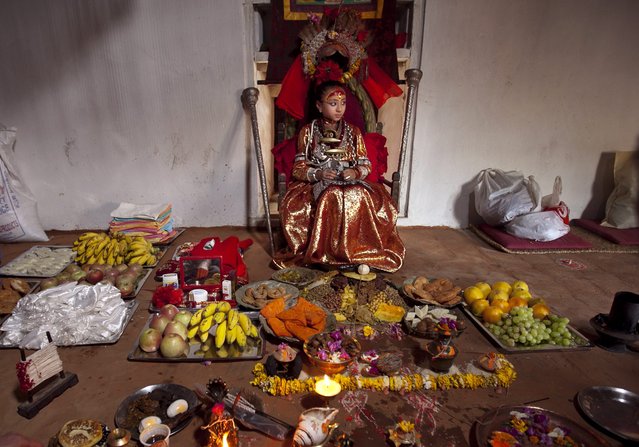
Kumari Samita Bajracharya sits in front of devotees offers during a special puja at Kumari Ghar in Patan, Nepal, 09 April 2011. It is believed that worshipping Kumari and receiving tika from her reduces illness and avoid problems. Kumari, or Kumari Devi, is a “living goddess”. The word literally means virgin in Nepali. The Living Goddesses are young pre-pubescent girls that are considered to be incarnations of the Hindu Goddess of Power, Kali. The Kumari retires when she reaches puberty. (Photo by Narendra Shrestha/EPA)

Kumari Samita Bajracharya sits in front of devotees offers during a special puja at Kumari Ghar in Patan, Nepal, 09 April 2011. It is believed that worshipping Kumari and receiving tika from her reduces illness and avoid problems. Kumari, or Kumari Devi, is a “living goddess”. The word literally means virgin in Nepali. The Living Goddesses are young pre-pubescent girls that are considered to be incarnations of the Hindu Goddess of Power, Kali. The Kumari retires when she reaches puberty. (Photo by Narendra Shrestha/EPA)
Details
18 Jun 2014 12:31:00