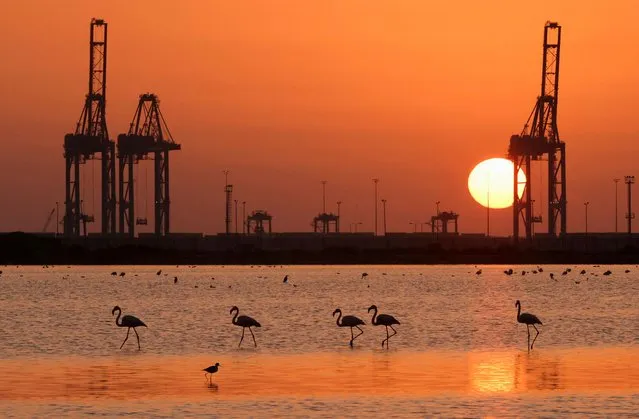
Migratory flamingos arriving from Europe are seen in Port Fouad Nature Reserve, on the outskirts of Port Said Governorate, Egypt on December 12, 2022. (Photo by Mohamed Abd El Ghany/Reuters)
On August 31, 2012, a long filament of solar material that had been hovering in the sun's atmosphere, the corona, erupted out into space at 4:36 p.m. EDT. The coronal mass ejection, or CME, traveled at over 900 miles per second. The CME did not travel directly toward Earth, but did connect with Earth's magnetic environment, or magnetosphere, causing aurora to appear on the night of Monday, September 3. (Photo by NASA/GSFC/SDO via The Atlantic)
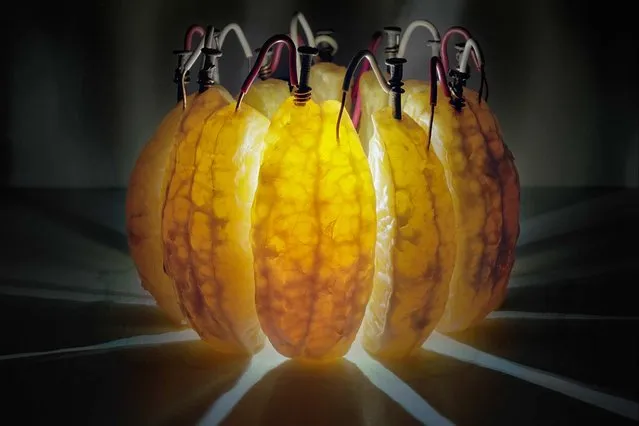
Wedges of an orange generate enough current and electrical juice – 3.5 volts – to power an LED. The fruit’s citric acid helps electrons flow from galvanized nails to copper wire in this 14-hour exposure. This image was published in September’s Visions of Earth, a trio of photos that appear in each issue of National Geographic. (Photo by Caleb Charland/National Geographic)
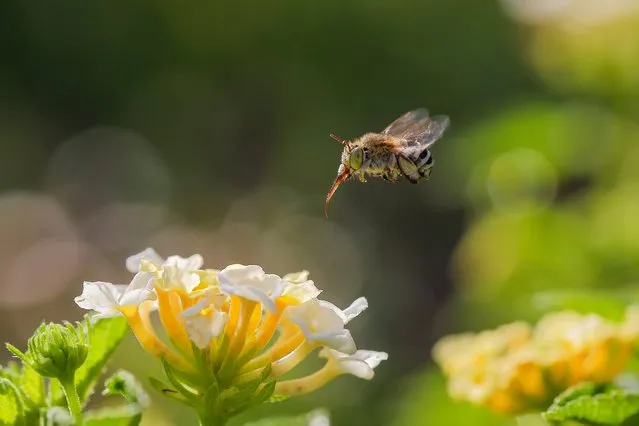
“Tasty Nature” by Dipesh Bhatt. “The blue banded bee (Amegilla cingulata) is pointing this sheath towards the flowers in preparation for sipping nectar”. Taken in Gujarat, India. (Photo by Dipesh Bhatt/2016 Royal Society of Biology Photographer of the Year competition)
Dog walkers enjoy the early morning sunrise at Tynemouth Beach in North Tyneside, on the north east coast of England on Monday, February 7, 2022. (Photo by Owen Humphreys/PA Images via Getty Images)
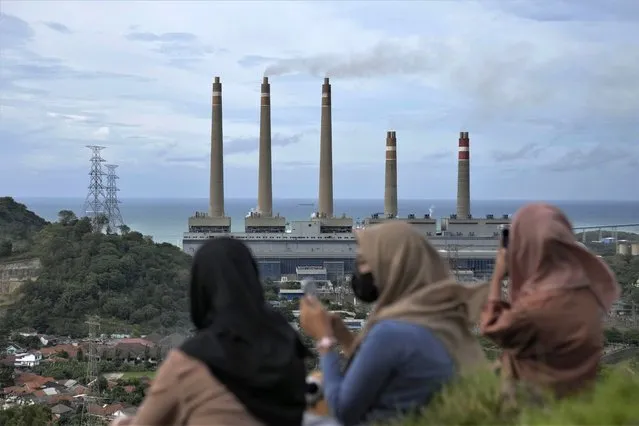
Indonesian women sit on a hill as the Suralaya coal power plant looms in the background in Cilegon, Indonesia, on January 8, 2023. A plan for how Indonesia will spend $20 billion to transition to cleaner energy was submitted Wednesday, Aug. 16, to the government and its financing partners, the planners said. (Photo by Dita Alangkara/AP Photo)