Loading...
Done
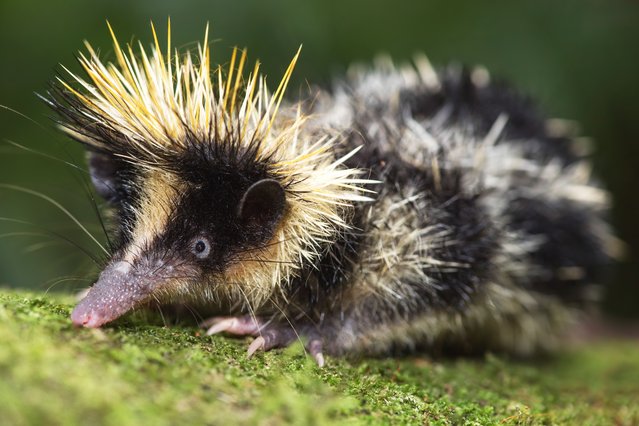
This spiky tenrec was spotted in Madagascar’s Mantadia National Park in the last decade of September 2025. Mostly nocturnal and rarely seen, it puffs out its spines when threatened. Spiky tenrecs are excellent swimmers — unlike most spiny mammals, some species of tenrec can forage in streams and rivers, using their spines for protection while hunting aquatic insects and small prey. (Photo by Dale Morris/Solent News & Photo Agency)

This spiky tenrec was spotted in Madagascar’s Mantadia National Park in the last decade of September 2025. Mostly nocturnal and rarely seen, it puffs out its spines when threatened. Spiky tenrecs are excellent swimmers — unlike most spiny mammals, some species of tenrec can forage in streams and rivers, using their spines for protection while hunting aquatic insects and small prey. (Photo by Dale Morris/Solent News & Photo Agency)
Details
05 Oct 2025 04:02:00
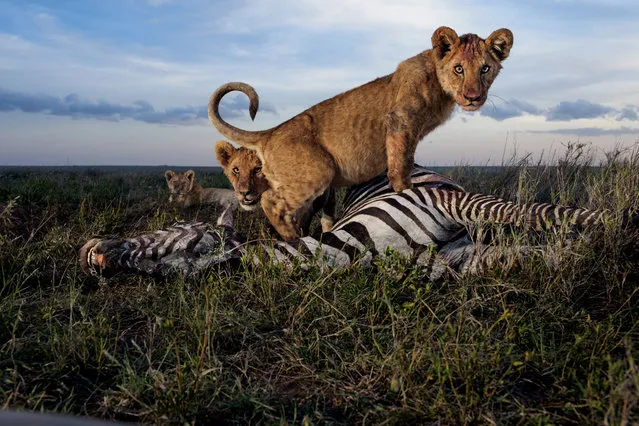
Cubs of the Simba East pride: too young to kill but old enough to crave meat. Adult females, and sometimes males, do the hunting. Zebras and wildebeests rank high as chosen prey in the rainy season. (Photo by Michael Nichols/National Geographic via The Atlantic)

“Serengeti National Park encompasses 5,700 square miles of grassy plains and woodlands near the northern border of Tanzania, and is home to more than 3,500 lions grouped into a couple dozen prides. Photographer Nick Nichols and videographer Nathan Williamson made several extended trips to the Serengeti between July 2011 and January 2013, determined to break new visual ground in their coverage of the Serengeti Lions”. Photo: Cubs of the Simba East pride: too young to kill but old enough to crave meat. Adult females, and sometimes males, do the hunting. Zebras and wildebeests rank high as chosen prey in the rainy season. (Photo by Michael Nichols/National Geographic via The Atlantic)
Details
09 Aug 2013 08:15:00
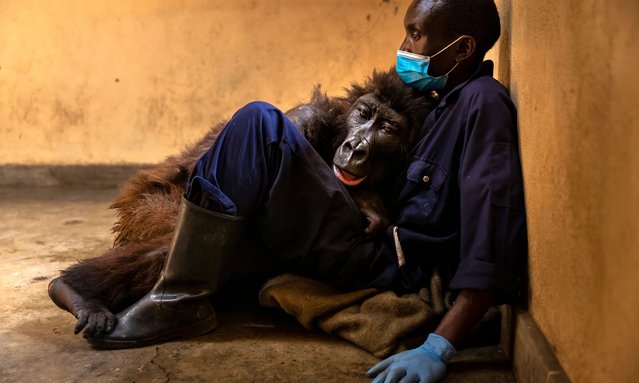
Orphaned mountain gorilla, Ndakasi, lies in the arms of her caregiver, Andre Bauma, on September 21, 2021 shortly before her death, which the park confirmed on September 26. Mr Bauma and others at the Senkwekwe Mountain Gorilla Center had cared for Ndakasi and other orphans for 13 years. Ndakasi had suffered a prolonged illness prior to her death. This is the only mountain gorilla orphanage in the world and takes in mountain gorilla orphans who have lost their families to poaching or conflict. A number of the orphans here were rescued from sales by poachers in sting operations carried out by Congolese National Park Authority (ICCN) rangers. (Photo by Brent Stirton/Getty Images)

Orphaned mountain gorilla, Ndakasi, lies in the arms of her caregiver, Andre Bauma, on September 21, 2021 shortly before her death, which the park confirmed on September 26. Mr Bauma and others at the Senkwekwe Mountain Gorilla Center had cared for Ndakasi and other orphans for 13 years. Ndakasi had suffered a prolonged illness prior to her death. This is the only mountain gorilla orphanage in the world and takes in mountain gorilla orphans who have lost their families to poaching or conflict. A number of the orphans here were rescued from sales by poachers in sting operations carried out by Congolese National Park Authority (ICCN) rangers. (Photo by Brent Stirton/Getty Images)
Details
17 Oct 2021 08:04:00
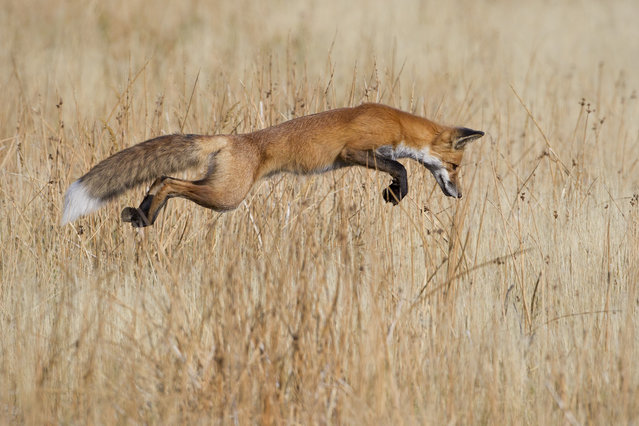
Canada: “Lucky pounce”. (Photo by Connor Stefanison/Wildlife Photographer of the Year 2013)

The winners of The London’s Natural History Museum's prestigious Wildlife Photographer of the Year for 2013 have finally been unveiled. Selected from almost 43,000 entries from 96 countries, the winners offer a glimpse of the stunning array of natural beauty on our planet. Photo: Canada: “Lucky pounce”. “Anticipating the pounce – that was the hardest part”, says Connor, who had come to Yellowstone National Park, Wyoming, USA, in search of wildlife as much as the spectacular landscape. He had found this fox, his first ever, on his last day in the park. It was so absorbed in hunting that Connor had plenty of time to get out of the car and settle behind a rock. It quartered the grassland, back and forth, and then started staring intently at a patch of ground, giving Connor just enough warning of the action to come. When it sprung up, Connor got his shot. And when it landed, the fox got his mouse. (Photo by Connor Stefanison/Wildlife Photographer of the Year 2013)

Details
17 Oct 2013 08:12:00
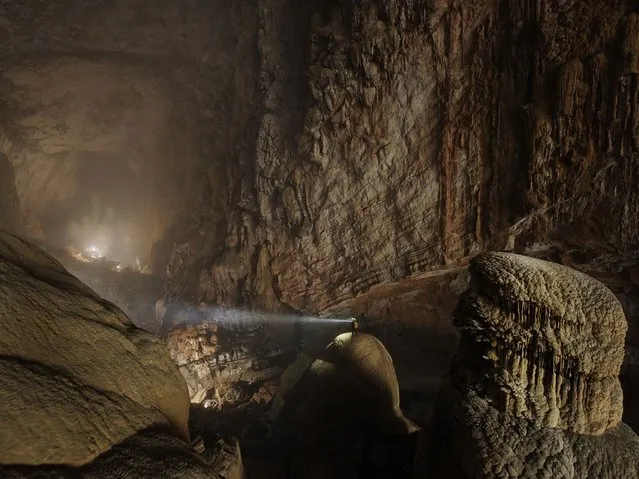
Son Doong Cave

Son doong cave is a cave in Phong Nha-Kẻ Bàng National Park, Bố Trạch district, Quảng Bình Province, Vietnam. Currently the biggest known cave in the world, the cave is located near the Laos-Vietnam border. Inside is a large, fast-flowing underground river.
In early August 2013, the first tourist group explored the cave on a guided tour at a cost of US$3,000 each. The group had six members from Australia, Norway, Russia and USA and spent 7 days and 6 nights for the tour. Next exploration trips will be arranged.
Details
22 Sep 2013 12:30:00
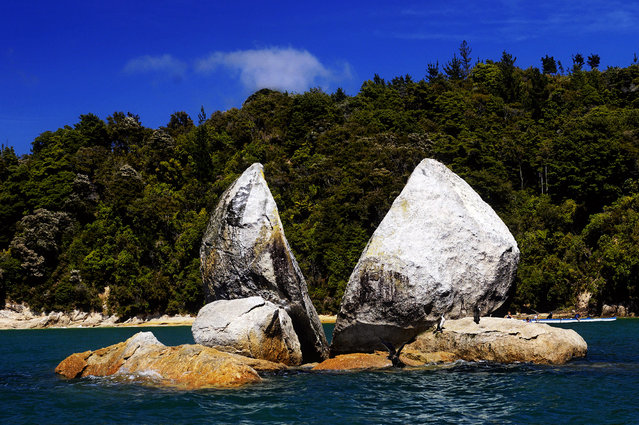
Split Apple Rock

Split Apple Rock is a geological rock formation in The Tasman Bay off the northern coast of the South Island of New Zealand. Made of granite, it is in the shape of an apple which has been cut in half. It is a popular tourist attraction in the waters of the Tasman Sea approximately 50 metres off the coast between Kaiteriteri and Marahau. The rock sits in shallow water at low tide and is accessible by wading. It is also a point of interest for the many tourist boats and pleasure craft which operate along the shores of the Abel Tasman National Park. The cleft to produce two sides of the 'apple' was a natural occurrence. It is unknown when this happened and therefore the cleaving of the rock has attracted mythological explanations.
Details
19 Oct 2013 10:58:00
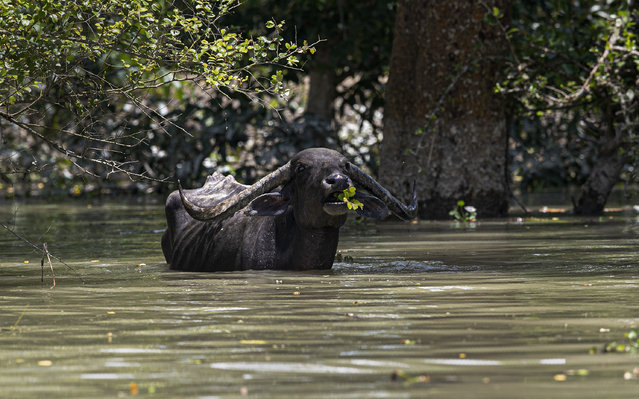
A wild water buffalo eats tree branches standing in flood water at the Pobitora wildlife sanctuary in Pobitora, Morigaon district, Assam, India, Thursday, July 16, 2020. (Photo by Anupam Nath/AP Photo)

A wild water buffalo eats tree branches standing in flood water at the Pobitora wildlife sanctuary in Pobitora, Morigaon district, Assam, India, Thursday, July 16, 2020. Floods and landslides triggered by heavy monsoon rains have killed dozens of people in this northeastern region. The floods also inundated most of Kaziranga National Park, home to an estimated 2,500 rare one-horned rhinos. (Photo by Anupam Nath/AP Photo)
Details
18 Jul 2020 00:01:00
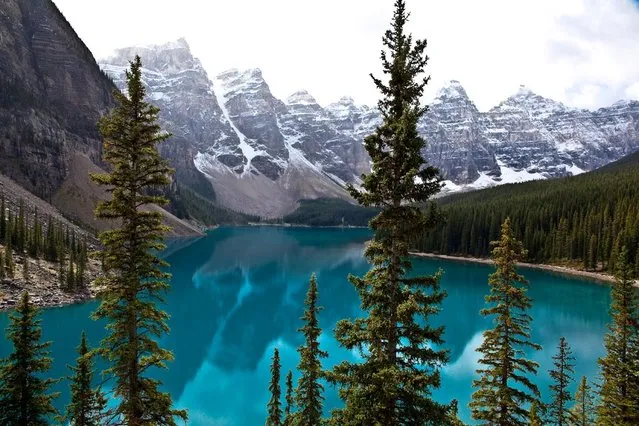
Moraine Lake Canada

Moraine Lake is a glacially-fed lake in Banff National Park, 14 kilometres (8.7 mi) outside the Village of Lake Louise, Alberta, Canada. It is situated in the Valley of the Ten Peaks, at an elevation of approximately 6,183 feet (1,885 m). The lake has a surface area of .5 square kilometres (0.19 sq mi). The lake, being glacially fed, does not reach its crest until mid to late June. When it is full, it reflects a distinct shade of blue. The colour is due to the refraction of light off the rock flour deposited in the lake on a continual basis.
Details
15 Oct 2013 11:56:00