Loading...
Done
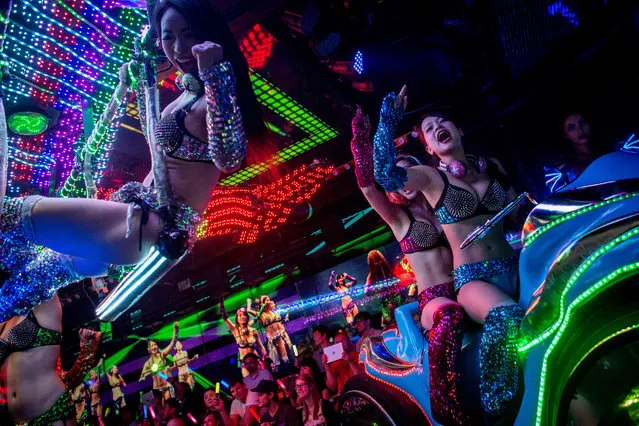
Dancers dressed as futuristic characters perform during a show at The Robot Restaurant on June 29, 2014 in Tokyo, Japan. The now famous Robot Restaurant opened two years ago in Kabukicho area of Shinjuku at an estimated cost of 10 million U.S. dollars. (Photo by Chris McGrath/Getty Images)

Dancers dressed as futuristic characters perform during a show at The Robot Restaurant on June 29, 2014 in Tokyo, Japan. The now famous Robot Restaurant opened two years ago in Kabukicho area of Shinjuku at an estimated cost of 10 million U.S. dollars. Performances are held three times a day and cater mostly to foreign tourists. The cabaret style shows include bikini clad futuristic dancers, performers dressed as robots and a host of large scale robots and vehicles controlled with remotes by stage hands dressed as Ninjas. (Photo by Chris McGrath/Getty Images)
Details
01 Jul 2014 13:16:00
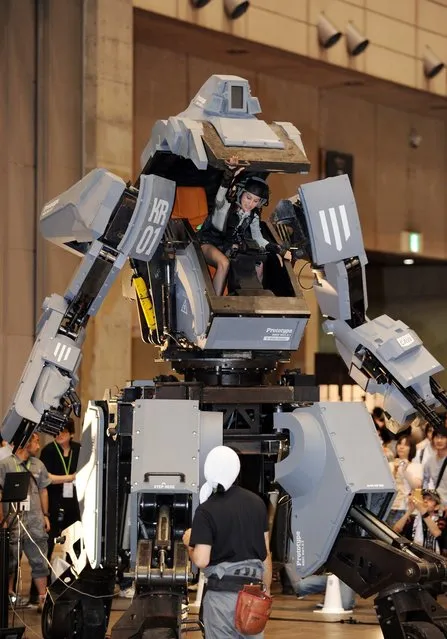
Female “pilot” Anna (C) climbs out the cockpit of Japanese electronics company Suidobashi Heavy Industry's newly unveiled robot “Kuratas” at the Wonder Festival in Chiba, suburban Tokyo on July 29, 2012. The Kuratas robot, which will go on sale with a price tag of one million USD, measures four meters in height, weighs four tons and has four wheeled legs that can either be controlled remotely through the 3G network or by a human seated within the cockpit.

Female pilot Anna climbs out the cockpit of Japanese electronics company Suidobashi Heavy Industry's newly unveiled robot “Kuratas” at the Wonder Festival in Chiba, suburban Tokyo on July 29, 2012. The “Kuratas” robot, which will go on sale with a price tag of one million USD, measures four meters in height, weighs four tons and has four wheeled legs that can either be controlled remotely through the 3G network or by a human seated within the cockpit. (Photo by Yoshikazu Tsuno/AFP Photo)
Details
30 Jul 2012 09:26:00
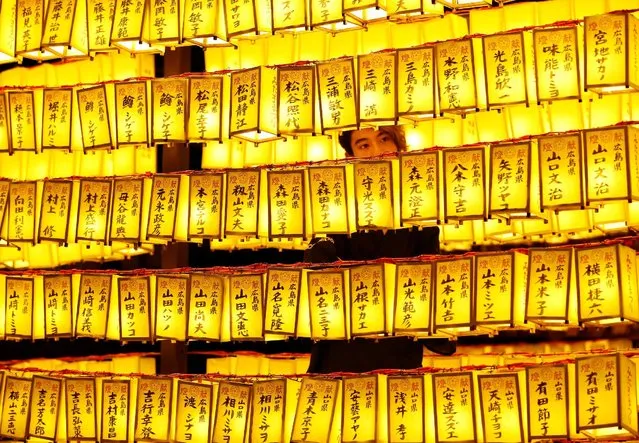
A man stands between thousands of paper lanterns, which were displayed and lit up the precincts of the shrine, where more than 2.4 million war-dead are enshrined, during the Mitama Festival at Yasukuni Shrine in Tokyo, Japan July 13, 2016. “Mitama” is a respectful word that means “the soul of a dead person” in Japanese, and this “Soul Festival” honors just that. The Yasukuni Shrine is dedicated to the honoring of the souls of those who gave their lives to defend Japan, and this festival is an early step towards the Japanese holiday season of Obon, during which Japanese people honor their deceased ancestors. (Photo by Issei Kato/Reuters)

A man stands between thousands of paper lanterns, which were displayed and lit up the precincts of the shrine, where more than 2.4 million war-dead are enshrined, during the Mitama Festival at Yasukuni Shrine in Tokyo, Japan July 13, 2016. “Mitama” is a respectful word that means “the soul of a dead person” in Japanese, and this “Soul Festival” honors just that. (Photo by Issei Kato/Reuters)
Details
14 Jul 2016 09:37:00
Rooftops of solar powered houses are pictured in Ota, 80 km northwest of Tokyo in this October 28, 2008 file photo. One by one, Japan is turning off the lights at the giant oil-fired power plants that propelled it to the ranks of the world's top industrialised nations. With nuclear power in the doldrums after the Fukushima disaster, it's solar energy that is becoming the alternative. (Photo by Yuriko Nakao/Reuters)

Rooftops of solar powered houses are pictured in Ota, 80 km northwest of Tokyo in this October 28, 2008 file photo. One by one, Japan is turning off the lights at the giant oil-fired power plants that propelled it to the ranks of the world's top industrialised nations. With nuclear power in the doldrums after the Fukushima disaster, it's solar energy that is becoming the alternative. Solar power is set to become profitable in Japan as early as this quarter, according to the Japan Renewable Energy Foundation (JREF), freeing it from the need for government subsidies and making it the last of the G7 economies where the technology has become economically viable. (Photo by Yuriko Nakao/Reuters)
Details
24 Nov 2015 08:04:00
A cat wears a “Tsunagaru Col” gadget next to a smart phone displaying the connected app, at the Anicall Corp booth during the Wearable Device Technology Expo in Tokyo January 14, 2015. The gadget (“Tsunagaru” means connection) for animals tracks information about pets, such as the location and other animals the pet might be interacting with, with the purpose of providing “social networking” for animals. (Photo by Yuya Shino/Reuters)

A cat wears a “Tsunagaru Col” gadget next to a smart phone displaying the connected app, at the Anicall Corp booth during the Wearable Device Technology Expo in Tokyo January 14, 2015. The gadget (“Tsunagaru” means connection) for animals tracks information about pets, such as the location and other animals the pet might be interacting with, with the purpose of providing “social networking” for animals. The expo runs until January 16 as a part of Japan's largest electronic exhibition expected to attract around 77,000 visitors, according to organisers. (Photo by Yuya Shino/Reuters)
Details
16 Jan 2015 12:57:00
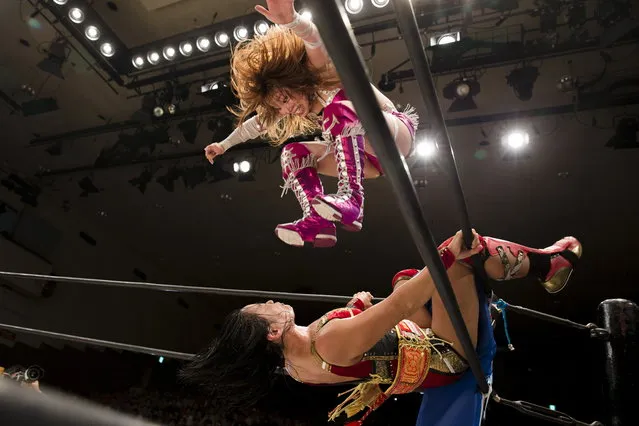
Wrestler Kairi Hojo jumps at her opponent Mieko satomura during their Stardom female professional wrestling show at Korakuen Hall in Tokyo, Japan, July 26, 2015. Professional women's wrestling in Japan means body slams, sweat, and garish costumes. But Japanese rules on hierarchy also come into play, with a culture of deference to veteran fighters. The brutal reality of the ring is masked by a strong fantasy element that feeds its popularity with fans, most of them men. (Photo by Thomas Peter/Reuters)

Wrestler Kairi Hojo jumps at her opponent Mieko satomura during their Stardom female professional wrestling show at Korakuen Hall in Tokyo, Japan, July 26, 2015. Professional women's wrestling in Japan means body slams, sweat, and garish costumes. But Japanese rules on hierarchy also come into play, with a culture of deference to veteran fighters. The brutal reality of the ring is masked by a strong fantasy element that feeds its popularity with fans, most of them men. (Photo by Thomas Peter/Reuters)
Details
14 Dec 2016 07:58:00
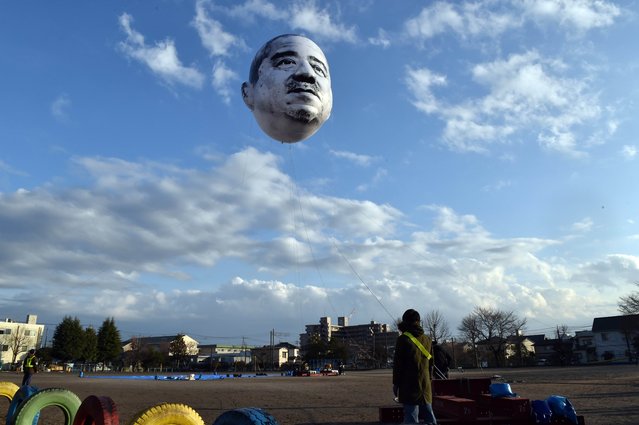
A large balloon of a face of “ojisan”, a middle aged man, floats in the sky above the grounds of Nishiki elementary school in Utsunomiya in Tochigi prefecture, 100km north of Tokyo on December 21, 2014. Members of art group “Me”, meaning “eye” in Japanese and the Utsunomiya Museum of Art launched an art installation “The Day an Ojisan's Face Floated in the Sky”, a 15-meter by 10-meter face balloon of the depicted man, who was auditioned in the city, looking down on his home town from the sky. (Photo by Yoshikazu Tsuno/AFP Photo)

A large balloon of a face of “ojisan”, a middle aged man, floats in the sky above the grounds of Nishiki elementary school in Utsunomiya in Tochigi prefecture, 100km north of Tokyo on December 21, 2014. Members of art group “Me”, meaning “eye” in Japanese and the Utsunomiya Museum of Art launched an art installation “The Day an Ojisan's Face Floated in the Sky”, a 15-meter by 10-meter face balloon of the depicted man, who was auditioned in the city, looking down on his home town from the sky. (Photo by Yoshikazu Tsuno/AFP Photo)
Details
27 Dec 2014 12:48:00
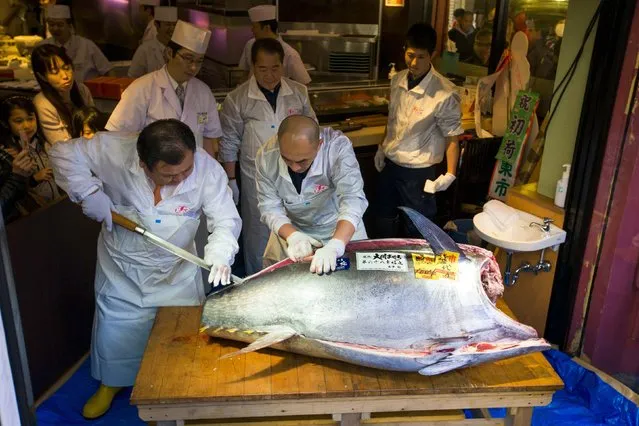
The President of the sushi restaurant chain Sushi Zanmai, Kiyoshi Kimura, cuts a blue fin tuna outside his main restaurant at the outer Tsukiji market in Tokyo January 5, 2015. The 180 kg blue fin tuna traded at a price of 4.5 million yen (37,500 USD) and was the most expensive fish at this year's New Year auction at the Tsukiji market, local media reported. (Photo by Thomas Peter/Reuters)

The President of the sushi restaurant chain Sushi Zanmai, Kiyoshi Kimura, cuts a blue fin tuna outside his main restaurant at the outer Tsukiji market in Tokyo January 5, 2015. The 180 kg blue fin tuna traded at a price of 4.5 million yen (37,500 USD) and was the most expensive fish at this year's New Year auction at the Tsukiji market, local media reported. (Photo by Thomas Peter/Reuters)
Details
06 Jan 2015 11:39:00