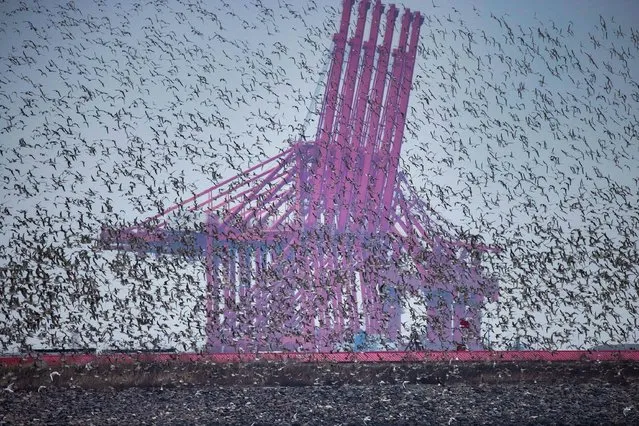
This photo taken on April 4, 2021 shows migratory birds flying over a wetland near the Yalu River in Dandong, in China's northeastern Liaoning province. (Photo by AFP Photo/China Stringer Network)
American singer Tinashe arrives at the 2022 American Music Awards at the Microsoft Theater, in Los Angeles, California, U.S., November 20, 2022. (Photo by Aude Guerrucci/Reuters)
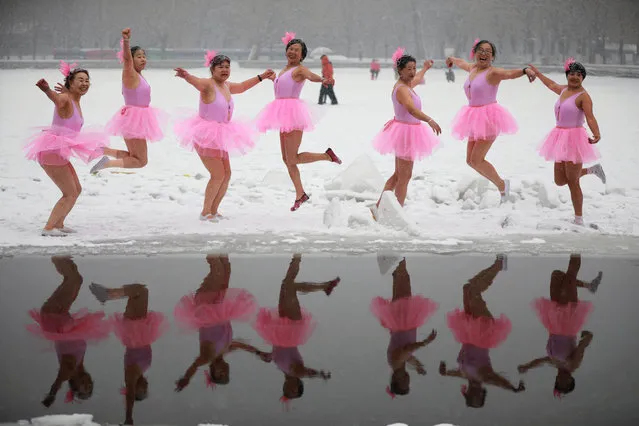
Winter swimmers dressed in ballet costumes pose for a photo before diving into the icy water, during a snowfall at a park in Shenyang, Liaoning province, China on February 15, 2019. (Photo by Reuters/China Stringer Network)
The Mausoleum of the Giants, an immersive solo show of monumental sculptures by the artist Phlegm, is installed at Taylor’s Eye Witness Works in Sheffield, England on March 14, 2019. (Photo by Danny Lawson/PA Wire Press Association)
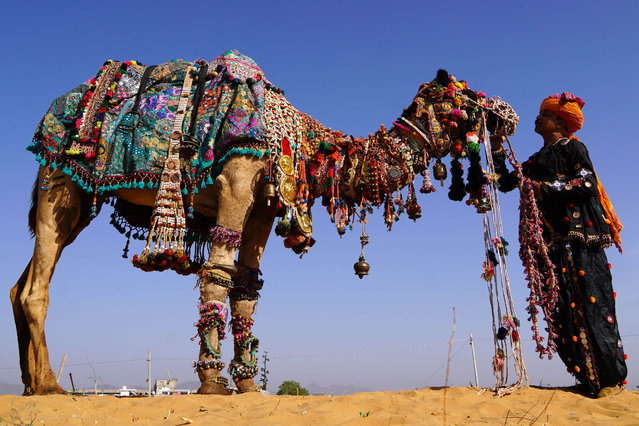
A man interacts with his camel while posing for a picture at the Pushkar Camel Fair in Pushkar in the Indian state of Rajasthan state on November 12, 2021. (Photo by Himanshu Sharma/AFP Photo)
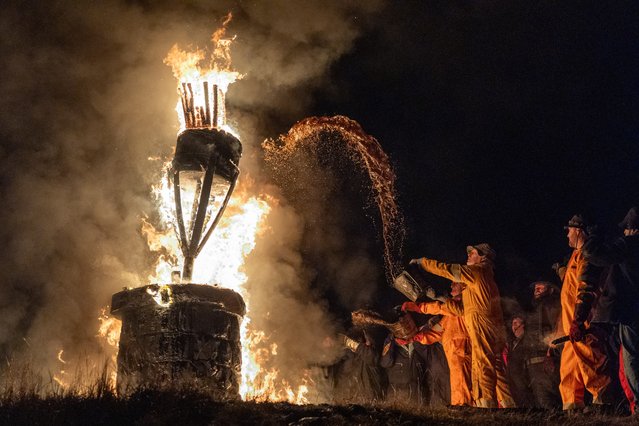
People take part in the Burning of the Clavie fire festival in Burghead, Moray, UK on Saturday, January 11, 2025. Burghead welcomes in the New Year twice each year, on both January 11th and the more traditional January 1st. (Photo by Jane Barlow/PA Images via Getty Images)
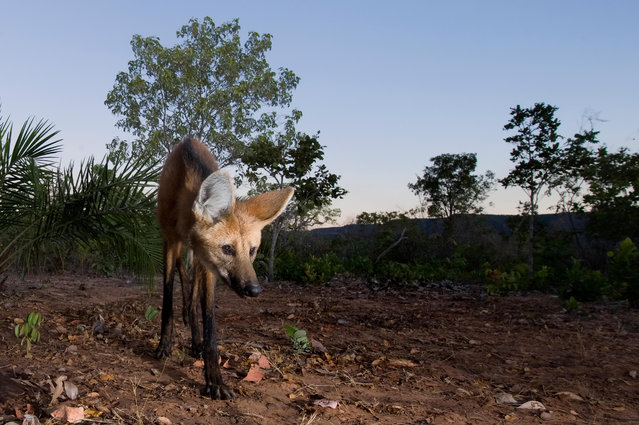
Global wildlife populations will decline by 67% by 2020 unless urgent action is taken to reduce human impact on species and ecosystems, warns the biennial Living Planet Index report from WWF (World Wide Fund for Nature) and ZSL (Zoological Society of London). From elephants to eels, here are some of the wildlife populations most affected by human activity. Here: The maned wolf is among the large mammals in the Brazilian Cerrado that are threatened by the increasing conversion of grasslands into farmland for grazing and growing crops. (Photo by Ben Cranke/Nature Picture Library/Alamy Stock Photo)
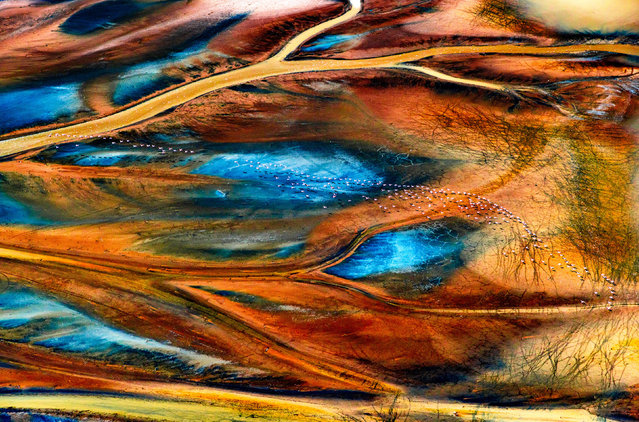
Hundreds of flamingos take flight in the Rift Valley in East Africa early September 2024. The birds gather in the region’s saline lakes to eat the blue-green algae that grows in abundance. The red-orange pigment in the algae is what gives them their distinctive pink plumage. They also use the site to breed. (Photo by Alexandre and Chloe Bes/Naturagency/Solent News)