Loading...
Done
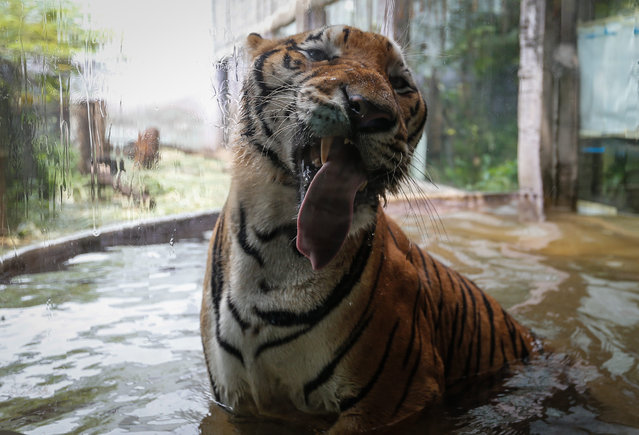
A Bengal tiger licks a glass enclosure during a presentation of Bengial tiger cubs at the Malabon Zoo in Malabon City, north of Manila, Philippines, 14 July 2016. The Bengal tiger cubs, which were born at the zoo, are two months old and named “Tiger Duterte” and “Tiger Leni”. The Malabon Zoo has one of the largest private collections of exotic and endemic animals in the Philippines. (Photo by Mark R. Cristino/EPA)

A Bengal tiger licks a glass enclosure during a presentation of Bengial tiger cubs at the Malabon Zoo in Malabon City, north of Manila, Philippines, 14 July 2016. The Bengal tiger cubs, which were born at the zoo, are two months old and named “Tiger Duterte” and “Tiger Leni”. The Malabon Zoo has one of the largest private collections of exotic and endemic animals in the Philippines. (Photo by Mark R. Cristino/EPA)
Details
17 Jul 2016 11:06:00
In this photo provided on Friday Feb. 15, 2013 by World Press Photo, the 2013 World Press Photo of the year by Paul Hansen, Sweden, for Dagens Nyheter, shows two-year-old Suhaib Hijazi and her three-year-old brother Muhammad who were killed when their house was destroyed by an Israeli missile strike. (Photo by Paul Hansen/Dagens Nyheter/AP Photo)

Swedish photographer Paul Hansen won the 2012 World Press Photo award Friday for newspaper Dagens Nyheter with a picture of two Palestinian children killed in an Israeli missile strike being carried to their funeral.

Photo: In this photo provided on Friday February 15, 2013 by World Press Photo, the 2013 World Press Photo of the year by Paul Hansen, Sweden, for Dagens Nyheter, shows two-year-old Suhaib Hijazi and her three-year-old brother Muhammad who were killed when their house was destroyed by an Israeli missile strike. Their father, Fouad, was also killed and their mother was put in intensive care. Fouad's brothers carry his children to the mosque for the burial ceremony as his body is carried behind on a stretcher in Gaza City, Palestinian Territories, November 20, 2012. (Photo by Paul Hansen/Dagens Nyheter/AP Photo)
Details
16 Feb 2013 12:17:00
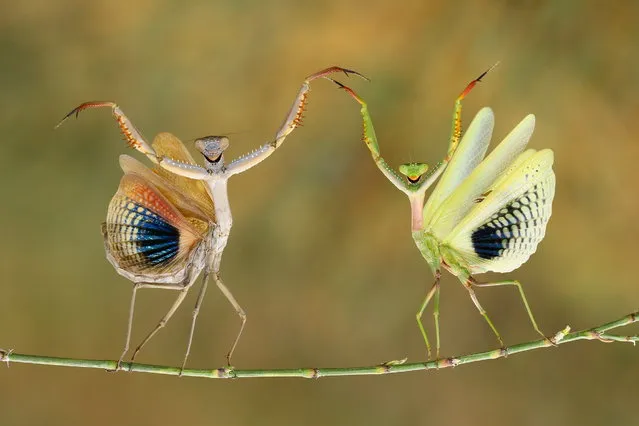
“Show Time”. It's a normal behavior of mantis. They're doing defence. When they're afraid of; raising their arms and spreading their wings. They looks like smiling dancer. Photo location: Nicosia, Cyprus. (Photo and caption by Hasan Baglar/National Geographic Photo Contest)

“Show Time”. It's a normal behavior of mantis. They're doing defence. When they're afraid of; raising their arms and spreading their wings. They looks like smiling dancer. Photo location: Nicosia, Cyprus. (Photo and caption by Hasan Baglar/National Geographic Photo Contest)
Details
28 Oct 2014 13:01:00
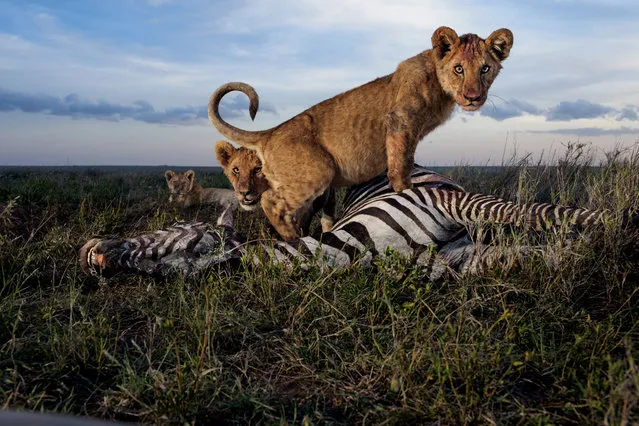
Cubs of the Simba East pride: too young to kill but old enough to crave meat. Adult females, and sometimes males, do the hunting. Zebras and wildebeests rank high as chosen prey in the rainy season. (Photo by Michael Nichols/National Geographic via The Atlantic)

“Serengeti National Park encompasses 5,700 square miles of grassy plains and woodlands near the northern border of Tanzania, and is home to more than 3,500 lions grouped into a couple dozen prides. Photographer Nick Nichols and videographer Nathan Williamson made several extended trips to the Serengeti between July 2011 and January 2013, determined to break new visual ground in their coverage of the Serengeti Lions”. Photo: Cubs of the Simba East pride: too young to kill but old enough to crave meat. Adult females, and sometimes males, do the hunting. Zebras and wildebeests rank high as chosen prey in the rainy season. (Photo by Michael Nichols/National Geographic via The Atlantic)
Details
09 Aug 2013 08:15:00
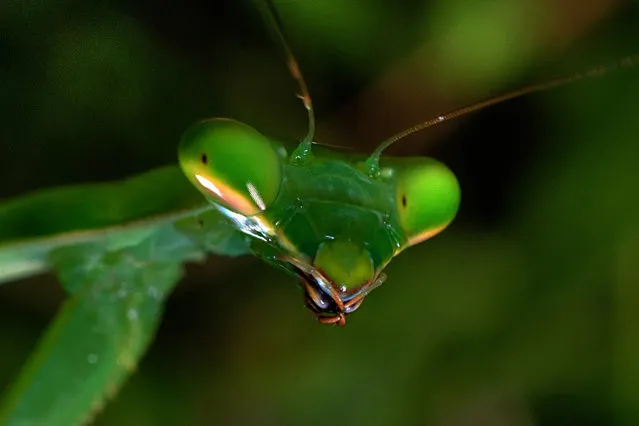
Close Encounter of the Insect Kind: Check out the awesome face on this praying mantis. I can't get over the mouth, it's like something from a science fiction movie. Of all photographic styles macro is definitely my favorite. I am constantly amazed, in every photo that I take, by the intricate level of detail that exists on even the smallest of creatures. It's a stark reminder that a very complex and infinitely beautiful world exists just beyond our human-sized level of perception. Photo taken in Donnybrook, Queensland, Australia. (Photo by Andrew Young/National Geographic Photo Contest

Close Encounter of the Insect Kind: “Check out the awesome face on this praying mantis. I can't get over the mouth, it's like something from a science fiction movie. Of all photographic styles macro is definitely my favorite. I am constantly amazed, in every photo that I take, by the intricate level of detail that exists on even the smallest of creatures. It's a stark reminder that a very complex and infinitely beautiful world exists just beyond our human-sized level of perception. Photo taken in Donnybrook, Queensland, Australia” – Andrew Young. (Photo by Andrew Young/National Geographic Photo Contest via The Atlantic)
Details
24 Sep 2012 09:18:00
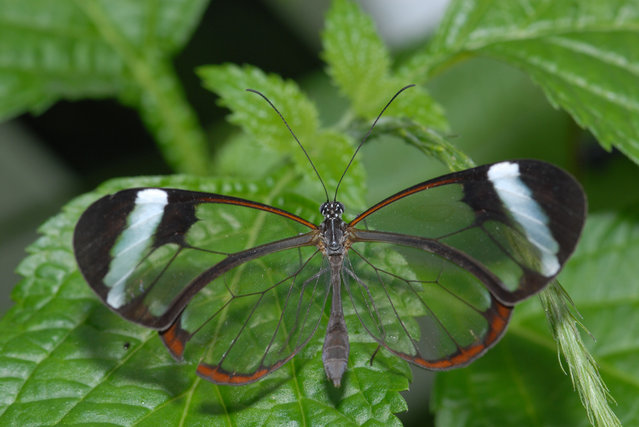
The Glasswinged Butterfly – Greta Oto

“The Glasswinged butterfly (Greta oto) is a brush-footed butterfly, and is a member of the subfamily Danainae, tribe Ithomiini, subtribe Godyridina”. – Wikipedia.
Details
14 May 2015 07:01:00
Models present creations during the PARIA/FARZANEH catwalk at London Fashion Week Men's in London, Britain June 10, 2019. (Photo by Henry Nicholls/Reuters)

Models present creations during the PARIA/FARZANEH catwalk at London Fashion Week Men's in London, Britain June 10, 2019. (Photo by Henry Nicholls/Reuters)
Details
13 Jun 2019 00:03:00
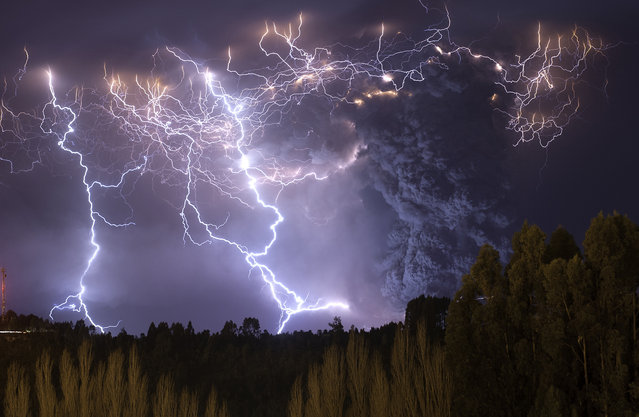
The eruption of Cordon Caulle began on June 4, 2011, located in the Region of Los Rios in Chile. For about 12 months, people and animals became accustomed to living with the daily fall of ash, which also caused problems in the air traffic in South America. The explosions and lightning during first days of the eruption could be seen from hundreds of miles around. This photograph was taken on the second night of eruption from the town of Lago Ranco. (Photo and caption by Francisco Negroni/National Geographic Traveler Photo Contest)

The eruption of Cordon Caulle began on June 4, 2011, located in the Region of Los Rios in Chile. For about 12 months, people and animals became accustomed to living with the daily fall of ash, which also caused problems in the air traffic in South America. The explosions and lightning during first days of the eruption could be seen from hundreds of miles around. This photograph was taken on the second night of eruption from the town of Lago Ranco. (Photo and caption by Francisco Negroni/National Geographic Traveler Photo Contest)

ATTENTION! All pictures are presented in high resolution. To see Hi-Res images – just TWICE click on any picture. In other words, click small picture – opens the BIG picture. Click BIG picture – opens VERY BIG picture.
Details
23 Jun 2013 11:24:00