Loading...
Done
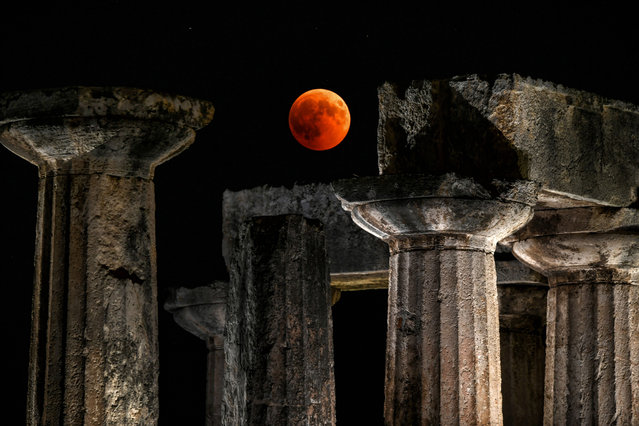
A picture shows the full moon during a “blood moon” eclipse over the temple of Apollo in Corinth on July 27, 2018. The longest “blood moon” eclipse this century began on July 27, coinciding with Mars' closest approach in 15 years to treat skygazers across the globe to a thrilling celestial spectacle. (Photo by Valerie Gache/AFP Photo)

A picture shows the full moon during a “blood moon” eclipse over the temple of Apollo in Corinth on July 27, 2018. The longest “blood moon” eclipse this century began on July 27, coinciding with Mars' closest approach in 15 years to treat skygazers across the globe to a thrilling celestial spectacle. (Photo by Valerie Gache/AFP Photo)
Details
29 Jul 2018 09:47:00
Astronomy Photographer Of The Year 2013 Part1

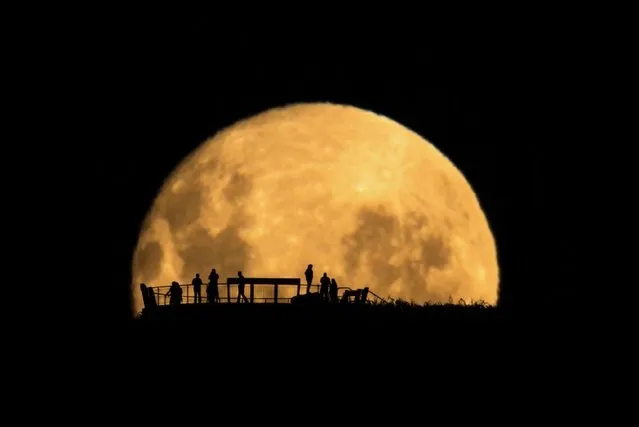
The Royal Observatory just announced its Astronomy Photographer Of The Year 2013 winners. Australian photographer Mark Gee was chosen among a thousand amateur and professional photographers around the globe to win the top title. His work is part of an exhibition of the winning photographers, which opened on Sept. 19 at the Royal Observatory Greenwich. The Royal Observatory shared with us the winners and notable mentions of the competition. Their descriptions of the prizewinners can be found below the images.
Details
04 Oct 2013 11:45:00
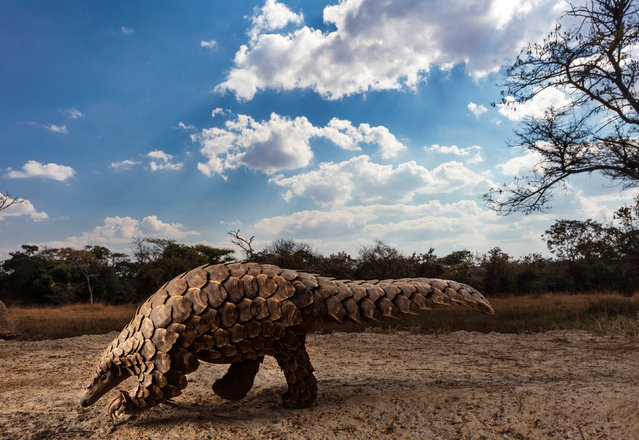
Pangolins in Crisis: Brent Stirton, South Africa; 1st place, Natural world and wildlife. “Pangolins are the world’s most illegally trafficked mammals, with an estimated one million trafficked to Asia in the last 10 years. Their scales are used in traditional Chinese and Vietnamese medicine, and their meat is sold as a high-priced delicacy. As a result, pangolins are listed as critically endangered and anyone who trades or consumes them is breaking the law. This body of work exposes the trade, while exploring aspects of illegality and celebrating the people who are trying to save these animals”. (Photo by Brent Stirton/Sony World Photography Awards 2020)

Pangolins in Crisis: Brent Stirton, South Africa; 1st place, Natural world and wildlife. “Pangolins are the world’s most illegally trafficked mammals, with an estimated one million trafficked to Asia in the last 10 years. Their scales are used in traditional Chinese and Vietnamese medicine, and their meat is sold as a high-priced delicacy. As a result, pangolins are listed as critically endangered and anyone who trades or consumes them is breaking the law. This body of work exposes the trade, while exploring aspects of illegality and celebrating the people who are trying to save these animals”. (Photo by Brent Stirton/Sony World Photography Awards 2020)
Details
11 Jun 2020 00:05:00
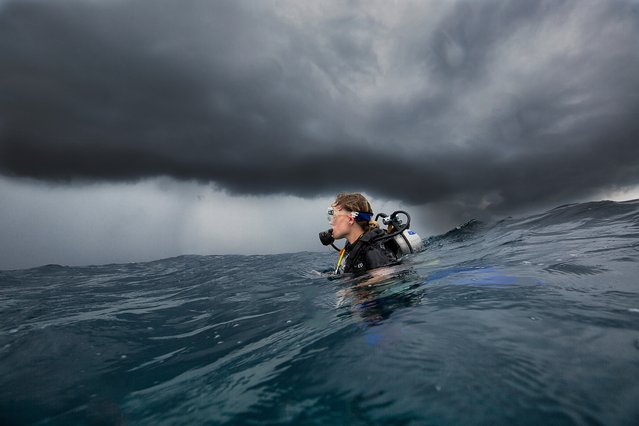
Winner. “This was taken in the South Ari Atolls, Maldives, as the south-west monsoon season was setting in. It features my partner – and dive buddy – Emma after surfacing at the end of the last dive of the day to find 1.5 metre swells and dark monsoon clouds. MICK RYAN, JUDGE: This beautiful portrait of a diver in an ocean swell below a menacing sky stands out this month for its emotional and elemental beauty. It is a reminder that while we may play among nature we are always dwarfed by its power and must be constantly on our guard”. (Photo by Simon Dunn/The Guardian)

Winner. “This was taken in the South Ari Atolls, Maldives, as the south-west monsoon season was setting in. It features my partner – and dive buddy – Emma after surfacing at the end of the last dive of the day to find 1.5 metre swells and dark monsoon clouds. MICK RYAN, JUDGE: This beautiful portrait of a diver in an ocean swell below a menacing sky stands out this month for its emotional and elemental beauty. It is a reminder that while we may play among nature we are always dwarfed by its power and must be constantly on our guard”. (Photo by Simon Dunn/The Guardian)
Details
04 Oct 2016 10:55:00
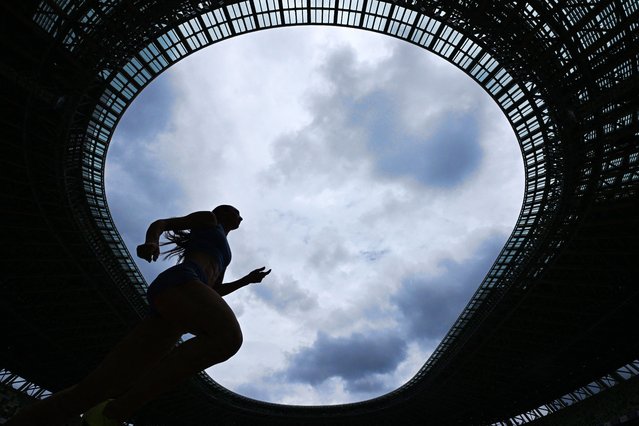
An athlete takes part in a warm-up around the track of the National Stadium in Tokyo on September 12, 2025, ahead of the World Athletics Championships. (Photo by Kirill Kudryavtsev/AFP Photo)

An athlete takes part in a warm-up around the track of the National Stadium in Tokyo on September 12, 2025, ahead of the World Athletics Championships. (Photo by Kirill Kudryavtsev/AFP Photo)
Details
11 Oct 2025 05:30:00
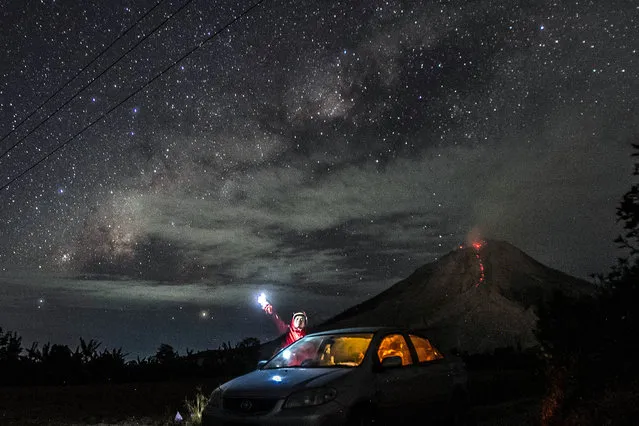
Long Exposure pictures showing Mount Sinabung spewing out hot lava on August 2, 2017 in Karo, Indonesia. Sinabung located in North Sumatra Province roared back to life in 2010 for the first time in 400 years. After another period of inactivity it erupted once more in 2013, and has remained highly active since. (Photo by Albert Damanik/Barcroft Images)

Long Exposure pictures showing Mount Sinabung spewing out hot lava on August 2, 2017 in Karo, Indonesia. Sinabung located in North Sumatra Province roared back to life in 2010 for the first time in 400 years. After another period of inactivity it erupted once more in 2013, and has remained highly active since. (Photo by Albert Damanik/Barcroft Images)
Details
03 Aug 2017 09:09:00
“Sokolica”. Sokolica, Poland. (Photo and caption by Marcin Kęsek/National Geographic Traveler Photo Contest)

“Sokolica”. Sokolica, Poland. (Photo and caption by Marcin Kęsek/National Geographic Traveler Photo Contest)

ATTENTION! All pictures are presented in high resolution. To see Hi-Res images – just TWICE click on any picture. In other words, click small picture – opens the BIG picture. Click BIG picture – opens VERY BIG picture.
Details
25 Jun 2013 09:13:00
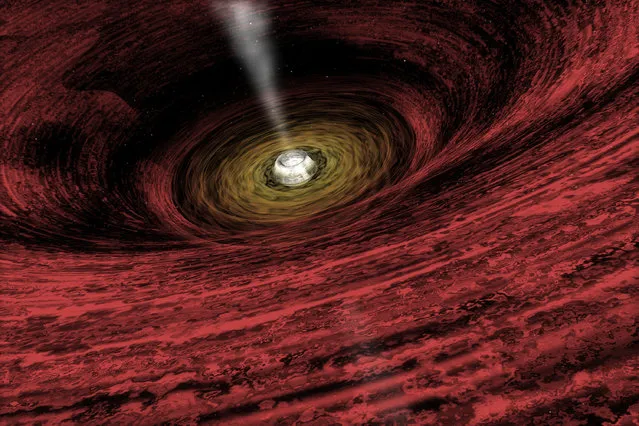
An artist's impression of a growing supermassive black hole located in the early Universe is seen in this NASA handout illustration released on June 15, 2011. Using the deepest X-ray image ever taken, astronomers found the first direct evidence that massive black holes were common in the early universe. This discovery from NASA's Chandra X-Ray Observatory shows that very young black holes grew more aggressively than previously thought, in tandem with the growth of their host galaxies. (Photo by Reuters/NASA/Chandra X-Ray Observatory/A.Hobart)

An artist's impression of a growing supermassive black hole located in the early Universe is seen in this NASA handout illustration released on June 15, 2011. Using the deepest X-ray image ever taken, astronomers found the first direct evidence that massive black holes were common in the early universe. This discovery from NASA's Chandra X-Ray Observatory shows that very young black holes grew more aggressively than previously thought, in tandem with the growth of their host galaxies. (Photo by Reuters/NASA/Chandra X-Ray Observatory/A.Hobart)
Details
11 Feb 2016 12:57:00