Loading...
Done
A cosplayer visits an anime fair in Beijing, Thursday, July 21, 2022. (Photo by Ng Han Guan/AP Photo)

A cosplayer visits an anime fair in Beijing, Thursday, July 21, 2022. (Photo by Ng Han Guan/AP Photo)
Details
27 Jul 2022 05:34:00
A woman wears a plastic water bottle with a cutout to cover her face, as she walks on a footbridge in Hong Kong on January 31, 2020, as a preventative measure following a virus outbreak which began in the Chinese city of Wuhan. The World Health Organization, which initially downplayed the severity of a disease that has now killed 170 nationwide, warned all governments to be “on alert” as it weighed whether to declare a global health emergency. (Photo by Anthony Wallace/AFP Photo)

A local wears a plastic water bottle with a cutout to cover her face, as she walks on a footbridge in Hong Kong on January 31, 2020, as a preventative measure following a virus outbreak which began in the Chinese city of Wuhan. The World Health Organization, which initially downplayed the severity of a disease that has now killed 170 nationwide, warned all governments to be “on alert” as it weighed whether to declare a global health emergency. (Photo by Anthony Wallace/AFP Photo)
Details
03 Feb 2020 00:03:00
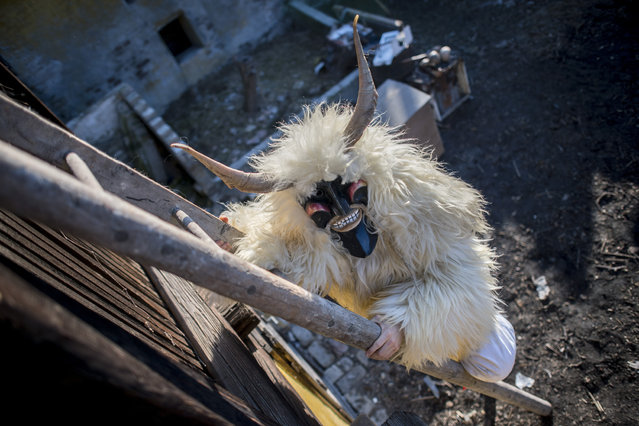
A man wears a busho mask and a costume made of sheep pelt while climbing up a ladder outside a barn in Mohacs, Hungary, 20 February 2020, on the first day of carnival. The traditional Busho carnival, which marks the end of winter, dates back to the 16th century. According to local legend, members of an ethnic South Slavic group living in Mohacs at the time dressed up in similar costumes and wore wooden masks to scare away Ottoman invaders, who mistook them for demons. (Photo by Tamas Soki/EPA/EFE)

A man wears a busho mask and a costume made of sheep pelt while climbing up a ladder outside a barn in Mohacs, Hungary, 20 February 2020, on the first day of carnival. The traditional Busho carnival, which marks the end of winter, dates back to the 16th century. According to local legend, members of an ethnic South Slavic group living in Mohacs at the time dressed up in similar costumes and wore wooden masks to scare away Ottoman invaders, who mistook them for demons. (Photo by Tamas Soki/EPA/EFE)
Details
23 Feb 2020 00:07:00
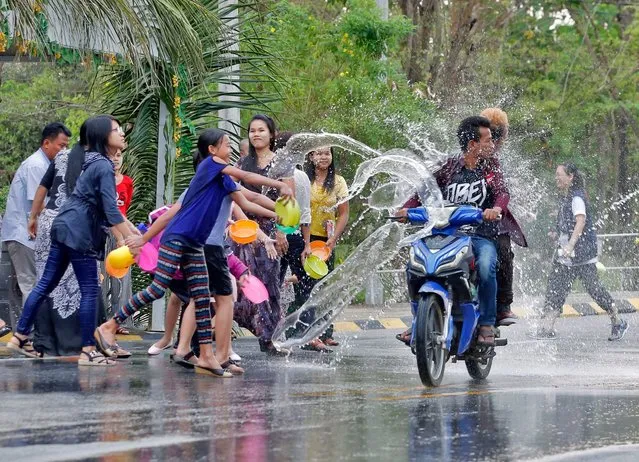
People participate in the first day of Thingyan Water Festival in Naypyitaw, Myanmar on April 13, 2018. The annual water festival, known as Thingyan, features large groups of people congregating to celebrate the by splashing water and throwing powder at each other's faces as a symbol of cleansing and washing away the sins from the old year. It marks the start of the traditional New Year and is similarly celebrated in countries such as Myanmar, Thailand, Laos and Cambodia. (Photo by Hein Htet/EPA/EFE/Rex Features/Shutterstock)

People participate in the first day of Thingyan Water Festival in Naypyitaw, Myanmar on April 13, 2018. The annual water festival, known as Thingyan, features large groups of people congregating to celebrate the by splashing water and throwing powder at each other's faces as a symbol of cleansing and washing away the sins from the old year. It marks the start of the traditional New Year and is similarly celebrated in countries such as Myanmar, Thailand, Laos and Cambodia. (Photo by Hein Htet/EPA/EFE/Rex Features/Shutterstock)
Details
27 Apr 2018 00:03:00
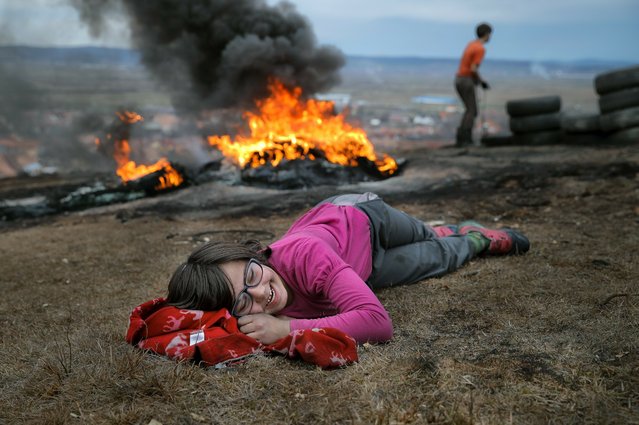
In this photo taken on Sunday, March 10, 2019, a little girl laughs during a ritual marking the upcoming Clean Monday, the beginning of the Great Lent, 40 days ahead of Orthodox Easter, on the hills surrounding the village of Poplaca, in central Romania's Transylvania region. Romanian villagers burn piles of used tires then spin them in the Transylvanian hills in a ritual they believe will ward off evil spirits as they begin a period of 40 days of abstention, when Orthodox Christians cut out meat, fish, eggs, and dairy. (Photo by Vadim Ghirda/AP Photo)


In this photo taken on Sunday, March 10, 2019, a little girl laughs during a ritual marking the upcoming Clean Monday, the beginning of the Great Lent, 40 days ahead of Orthodox Easter, on the hills surrounding the village of Poplaca, in central Romania's Transylvania region. Romanian villagers burn piles of used tires then spin them in the Transylvanian hills in a ritual they believe will ward off evil spirits as they begin a period of 40 days of abstention, when Orthodox Christians cut out meat, fish, eggs, and dairy. (Photo by Vadim Ghirda/AP Photo)

Details
01 Jun 2019 00:03:00
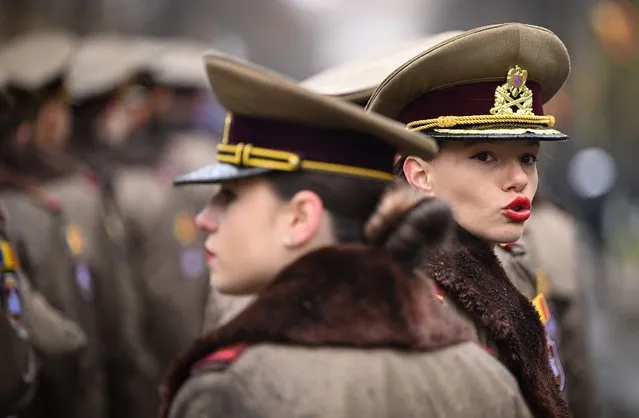
Romanian female soldiers stand prior to the military parade on Romania's National Day in Bucharest, on December 1, 2022. (Photo by Daniel Mihailescu/AFP Photo)

Romanian female soldiers stand prior to the military parade on Romania's National Day in Bucharest, on December 1, 2022. (Photo by Daniel Mihailescu/AFP Photo)
Details
02 Dec 2022 03:59:00
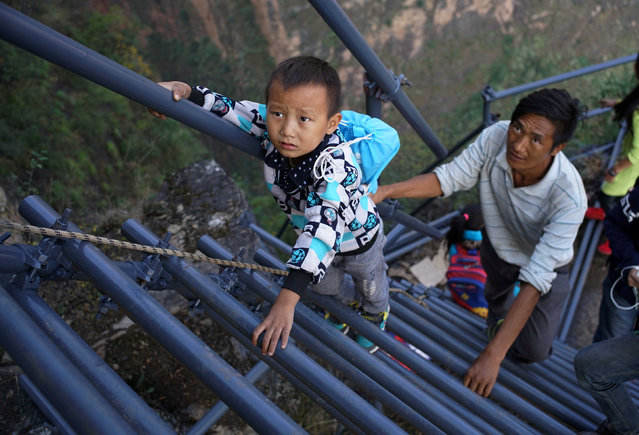
A student from “the cliff village” in Atule'er climbs newly-constructed steel ladders after school to go home for holidays, in Liangshan Sichuan province, China, November 19, 2016. The steel ladders which replaced the unsafe vine ladders shortened the time taken for the children to go home, from three hours to two. (Photo by Reuters/Stringer)

A student from “the cliff village” in Atule'er climbs newly-constructed steel ladders after school to go home for holidays, in Liangshan Sichuan province, China, November 19, 2016. The steel ladders which replaced the unsafe vine ladders shortened the time taken for the children to go home, from three hours to two. (Photo by Reuters/Stringer)
Details
07 Dec 2016 11:57:00
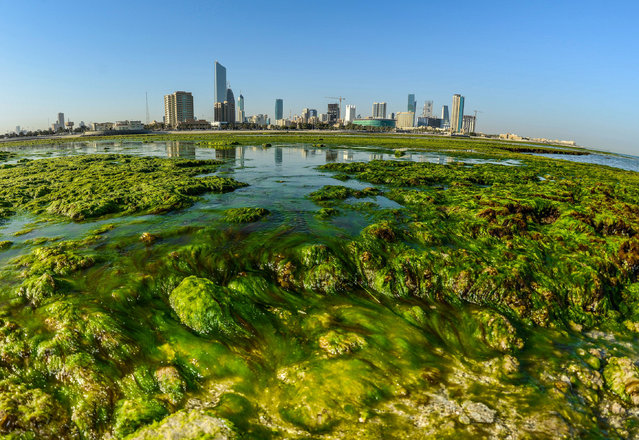
Green algae sits on a beach in Kuwait City, Kuwait, 28 February 2017. The formation of green algae is a normal phenomenon that occurs every year at the shores of Kuwait. (Photo by Raed Qutena/EPA)

Green algae sits on a beach in Kuwait City, Kuwait, 28 February 2017. The formation of green algae is a normal phenomenon that occurs every year at the shores of Kuwait. (Photo by Raed Qutena/EPA)
Details
01 Mar 2017 10:50:00