Loading...
Done
Two rainbows emerge from a black storm above the mountains, on August 19, 2014, in Kingman, Arizona.  Double tornadoes, lightning storms and rotating supercells – this is what it's like to chase storms for a year.(Photo by Roger Hill/Barcroft Media)

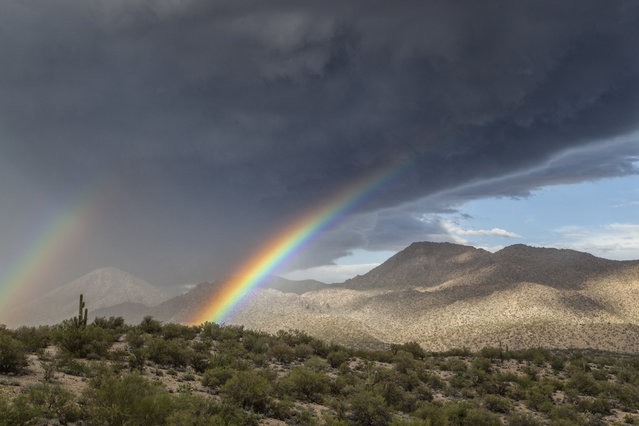
Two rainbows emerge from a black storm above the mountains, on August 19, 2014, in Kingman, Arizona. Double tornadoes, lightning storms and rotating supercells – this is what it's like to chase storms for a year. These dramatic images show apocalyptic weather throughout 2014 from a lightning storm to a pair of rainbows. Roger Hill, 57, has been chasing storms in the United States for thirty years and runs a tour operation with his wife Caryn. His favourite photograph of the year was also one of the most difficult to get – as two violent tornadoes tore through Pilger, Nebraska on June 16. The spiraling winds killed a five-year-old girl and injured at least 19 others, and as Roger tried to get the perfect shot debris began to rain down on his car. (Photo by Roger Hill/Barcroft Media)
Details
25 Feb 2015 09:27:00
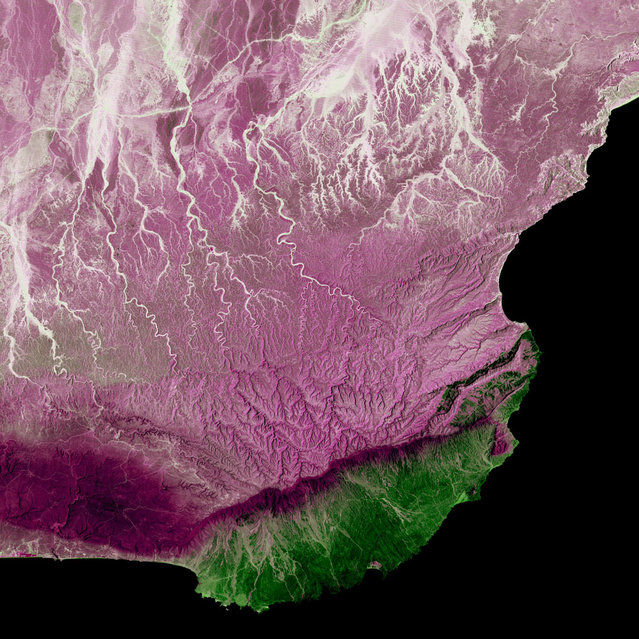
Dhofar Region, Oman. Much of Oman is desert, but the Arabian Sea coast in the Dhofar region represents a startling difference in climate. This coastal region catches the monsoon rains, or khareef, during the summer months. Drenching rains fall primarily on the mountainous ridge that separates the lush, fertile areas along the coast from the arid interior, recharging streams, waterfalls and springs that provide plentiful water supplies in the fertile lowlands for the remainder of the year. Image taken by Landsat 5 on April 2, 2005. (Photo by USGS/NASA)

Dhofar Region, Oman. Much of Oman is desert, but the Arabian Sea coast in the Dhofar region represents a startling difference in climate. This coastal region catches the monsoon rains, or khareef, during the summer months. Drenching rains fall primarily on the mountainous ridge that separates the lush, fertile areas along the coast from the arid interior, recharging streams, waterfalls and springs that provide plentiful water supplies in the fertile lowlands for the remainder of the year. Image taken by Landsat 5 on April 2, 2005. (Photo by USGS/NASA)
Details
25 Dec 2012 11:13:00
This combination of two photos taken on July 5, 2014, shows the Aazzab family waiting to break their fast, top, and their meal, bottom, during the holy month of Ramadan in Casablanca, Morocco. (Photo by Abdeljalil Bounhar/AP Photo)

This combination of two photos taken on July 5, 2014, shows the Aazzab family waiting to break their fast, top, and their meal, bottom, during the holy month of Ramadan in Casablanca, Morocco. For the millions of Muslims abstaining from food and drink from sunrise to sunset every day during Islam's holiest month of Ramadan, that first sip of water after a grueling fast is by far the most anticipated moment of the day. (Photo by Abdeljalil Bounhar/AP Photo)
Details
29 Jul 2014 11:37:00
1955: A pornographer posing as a fashion photographer sets up a photoshoot with an unsuspecting model, in the hope of getting some illicit footage. He suggests she try wearing something a little more suggestive

A pornographer posing as a fashion photographer sets up a photoshoot with an unsuspecting model, in the hope of getting some illicit footage. He suggests she try wearing something a little more suggestive. (Photo by Pryor/Three Lions/Getty Images). Circa 1955
Details
01 Oct 2011 12:48:00
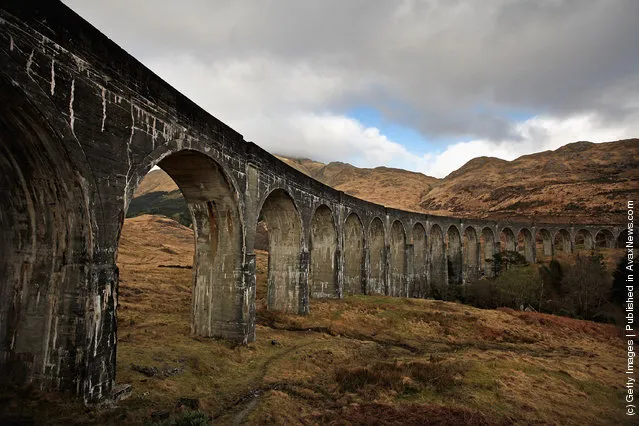
A view of the Glenfinnan Viaduct

“Glenfinnan Viaduct is a railway viaduct on the West Highland Line in Glenfinnan, Lochaber, Highland, Scotland. It was built between 1897 and 1901. Located at the top of Loch Shiel in the West Highlands of Scotland, the viaduct overlooks the Glenfinnan Monument and the waters of Loch Shiel”. – Wikipedia

Photo: A view of the Glenfinnan Viaduct on March 30, 2012 in Glenfinnan, Scotland. Built by Sir Robert McAlpine, the single track viaduct that is made up of 21 arches is considered to have been one of the largest engineering projects of its time. Today, it is still used by ScotRail and was recently used for scenes in three of the Harry Potter films. (Photo by Jeff J. Mitchell/Getty Images)
Details
31 Mar 2012 09:21:00
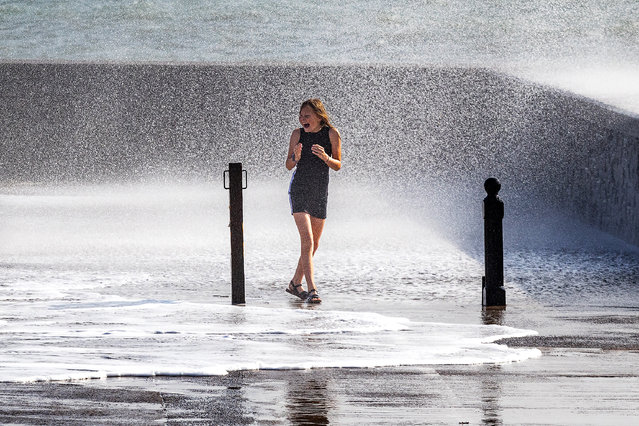
Waves batter the North Devon coast at Ilfracombe, UK on August 23, 2024, as Storm Lilian hits the UK and the Met Office issues a yellow weather warning. (Photo by Mark Passmore Photography)

Waves batter the North Devon coast at Ilfracombe, UK on August 23, 2024, as Storm Lilian hits the UK and the Met Office issues a yellow weather warning. (Photo by Mark Passmore Photography)
Details
02 Nov 2024 02:58:00
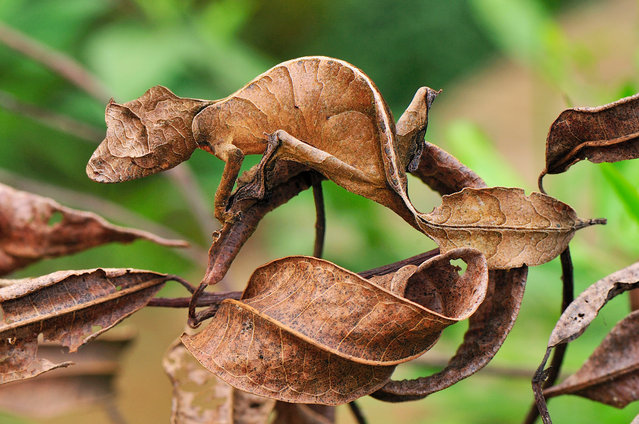
Is it a leaf? Is it tree bark? No, it’s the Satanic leaf-tailed gecko. Cleverly disguised as a rotting leaf, Madagascar’s camouflage king has red eyes, pointy horns and a taste for night hunting: it’s nature’s most devilish deceiver. (Photo by Thomas Marent/ARDEA)

Is it a leaf? Is it tree bark? No, it’s the Satanic leaf-tailed gecko. Cleverly disguised as a rotting leaf, Madagascar’s camouflage king has red eyes, pointy horns and a taste for night hunting: it’s nature’s most devilish deceiver. The twisted body and veiny skin echo the detail of a dry leaf, which ensures the gecko blends in with its forest home. The mottled tail appears to have sections missing, as though it has withered over time. This mini-monster epitomises survival of the fittest, having adapted gradually to become today’s extraordinary leaf impersonator. (Photo by Thomas Marent/ARDEA)
Details
20 Nov 2015 08:03:00
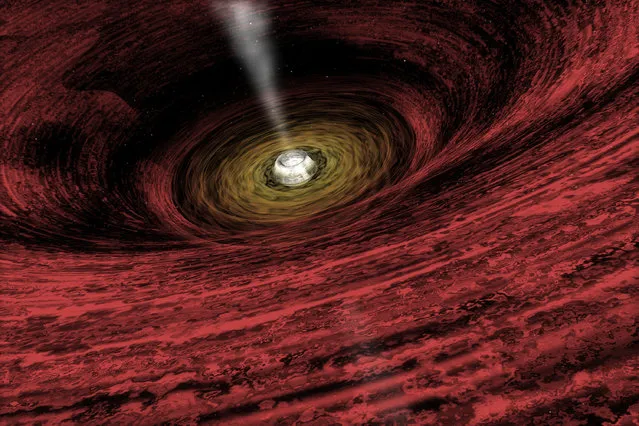
An artist's impression of a growing supermassive black hole located in the early Universe is seen in this NASA handout illustration released on June 15, 2011. Using the deepest X-ray image ever taken, astronomers found the first direct evidence that massive black holes were common in the early universe. This discovery from NASA's Chandra X-Ray Observatory shows that very young black holes grew more aggressively than previously thought, in tandem with the growth of their host galaxies. (Photo by Reuters/NASA/Chandra X-Ray Observatory/A.Hobart)

An artist's impression of a growing supermassive black hole located in the early Universe is seen in this NASA handout illustration released on June 15, 2011. Using the deepest X-ray image ever taken, astronomers found the first direct evidence that massive black holes were common in the early universe. This discovery from NASA's Chandra X-Ray Observatory shows that very young black holes grew more aggressively than previously thought, in tandem with the growth of their host galaxies. (Photo by Reuters/NASA/Chandra X-Ray Observatory/A.Hobart)
Details
11 Feb 2016 12:57:00