Loading...
Done
An artist's impression of a growing supermassive black hole located in the early Universe is seen in this NASA handout illustration released on June 15, 2011. Using the deepest X-ray image ever taken, astronomers found the first direct evidence that massive black holes were common in the early universe. This discovery from NASA's Chandra X-Ray Observatory shows that very young black holes grew more aggressively than previously thought, in tandem with the growth of their host galaxies. (Photo by Reuters/NASA/Chandra X-Ray Observatory/A.Hobart)

An artist's impression of a growing supermassive black hole located in the early Universe is seen in this NASA handout illustration released on June 15, 2011. Using the deepest X-ray image ever taken, astronomers found the first direct evidence that massive black holes were common in the early universe. This discovery from NASA's Chandra X-Ray Observatory shows that very young black holes grew more aggressively than previously thought, in tandem with the growth of their host galaxies. (Photo by Reuters/NASA/Chandra X-Ray Observatory/A.Hobart)
Details
11 Feb 2016 12:57:00
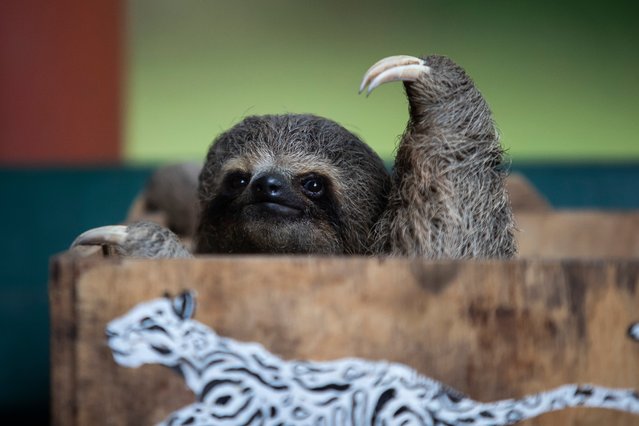
A young sloth named Gloria, that was rescued after being stolen from the wild destined for trafficking, peeks out of the box it is being taken to be released at the city's Botanical Garden in Rio de Janeiro, Brazil, Monday, March 13, 2023. Gloria was cared for by the Free Life Institute NGO that rehabilitates injured wildlife found in the surrounding Rio area and returns them, when possible, back to the wild. Those that are too injured to be released are sent to other rehab centers or sanctuaries to live out their lives in protected environments. (Photo by Bruna Prado/AP Photo)

A young sloth named Gloria, that was rescued after being stolen from the wild destined for trafficking, peeks out of the box it is being taken to be released at the city's Botanical Garden in Rio de Janeiro, Brazil, Monday, March 13, 2023. Gloria was cared for by the Free Life Institute NGO that rehabilitates injured wildlife found in the surrounding Rio area and returns them, when possible, back to the wild. Those that are too injured to be released are sent to other rehab centers or sanctuaries to live out their lives in protected environments. (Photo by Bruna Prado/AP Photo)
Details
16 Jul 2024 04:01:00
The shuttle never got its final coat of paint and was left unfinished. (Photo by Ralph Mirebs/Exclusivepix Media)

Ralph Mirebs, an urban explorer and photographer in Russia, has revealed extraordinary photos of Soviet space shuttle prototypes gathering dust in an abandoned hangar. The abandoned hangar is located at the Baikonur Cosmodrome in Kazakhstan, which is still in operation today (with the close of NASA’s shuttle program, Russian Soyuz shuttles are the only way for astronauts to reach the International Space Station). The Buran prototype shuttles found by Mirebs, however, are from an earlier era – they are the last remnants of a space program that began in 1974 and was finally shuttered in 1993. (Photo by Ralph Mirebs/Exclusivepix Media)
Details
12 Mar 2017 00:05:00
Women grieves near a bodies covered by tarp at the site of a landslide in Xinmo village in Maoxian County in southwestern China's Sichuan Province, Sunday, June 25, 2017. (Photo by Ng Han Guan/AP Photo)

Women grieves near a bodies covered by tarp at the site of a landslide in Xinmo village in Maoxian County in southwestern China's Sichuan Province, Sunday, June 25, 2017. Crews searching through the rubble left by a landslide that buried a mountain village under tons of soil and rocks in southwestern China on Saturday found bodies, but more than 100 people remained missing. (Photo by Ng Han Guan/AP Photo)
Details
26 Jun 2017 08:57:00
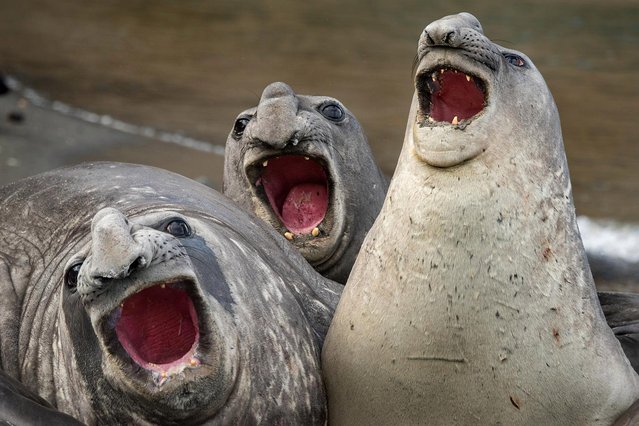
Three elephant seals put on a show in Roie Galitz's “Three Tanors”, taken on January 7, 2016 in South Georgia Island. (Photo by Roie Galitz/CWPA/Barcroft Images)

Three elephant seals put on a show in Roie Galitz's “Three Tanors”, taken on January 7, 2016 in South Georgia Island. The Comedy Wildlife Photography Awards are in full swing, so check out some of the fierce competitors jostling for the top prize this year. Photographers Paul Joynson-Hicks MBE and Tom Sullam founded the awards to spotlight wildlife conservation efforts and to inject some humour into the world of wildlife photography. (Photo by Roie Galitz/CWPA/Barcroft Images)
Details
07 Jul 2017 07:16:00
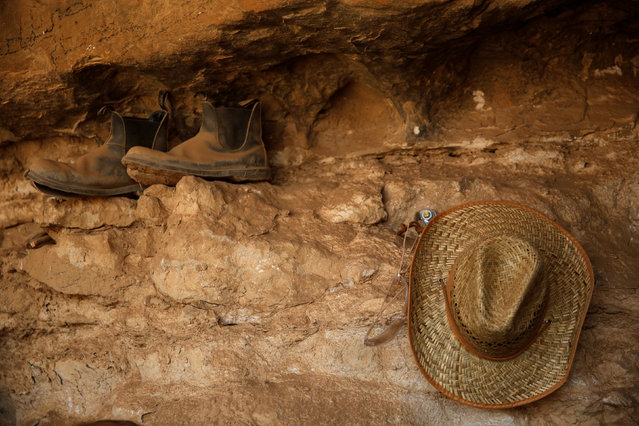
A hat and boots belonging to a volunteer with the Israeli Antique Authority are seen inside the Cave of the Skulls, an excavation site in the Judean Desert near the Dead Sea, Israel June 1, 2016. (Photo by Ronen Zvulun/Reuters)

A hat and boots belonging to a volunteer with the Israeli Antique Authority are seen inside the Cave of the Skulls, an excavation site in the Judean Desert near the Dead Sea, Israel June 1, 2016. A team of volunteers and archaeologists are searching for remains of The Dead Sea Scrolls, one of the oldest known Hebrew texts, in a national bid, initiated by the Israel Antiquities Authority (IAA), to prevent the robbery of such important artefacts and once found to hand them over to the state for preservation. (Photo by Ronen Zvulun/Reuters)
Details
02 Jun 2016 12:17:00
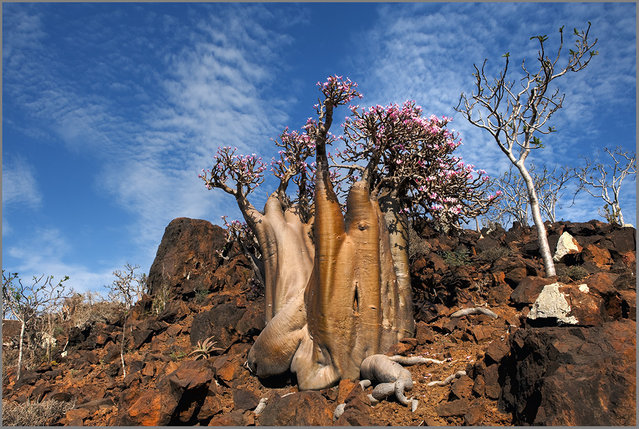
The Wonder Land of Socotra, Yemen

The largest island, also called Socotra, is about 95% of the landmass of the archipelago. It lies some 240 kilometres (150 mi) east of the Horn of Africa and 380 kilometres (240 mi) south of the Arabian Peninsula. The island is very isolated and through the process of speciation, a third of its plant life is found nowhere else on the planet. It has been described as the most alien-looking place on Earth. The island measures 132 kilometres (82 mi) in length and 49.7 kilometres (30.9 mi) in width.
Details
25 Sep 2013 09:11:00
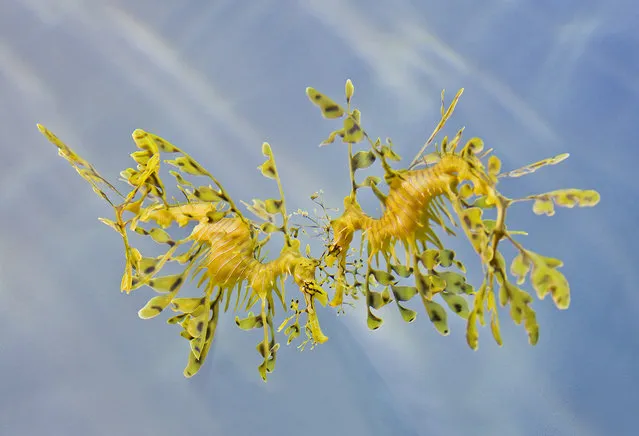
Leafy sea dragon

The leafy seadragon or Glauert's seadragon, Phycodurus eques, is a marine fish in the family Syngnathidae, which also includes the seahorses. It is the only member of the genus Phycodurus. It is found along the southern and western coasts of Australia. The name is derived from the appearance, with long leaf-like protrusions coming from all over the body. These protrusions are not used for propulsion; they serve only as camouflage. The leafy seadragon propels itself by means of a pectoral fin on the ridge of its neck and a dorsal fin on its back closer to the tail end. These small fins are almost completely transparent and difficult to see as they undulate minutely to move the creature sedately through the water, completing the illusion of floating seaweed.
Details
05 Sep 2012 08:51:00