Loading...
Done
Athlets run during the women's 3000 meter steeplechase at the International Athletics Meeting in Lucerne, Switzerland, 14 June 2016. (Photo by Alexandra Wey/EPA)

Athlets run during the women's 3000 meter steeplechase at the International Athletics Meeting in Lucerne, Switzerland, 14 June 2016. (Photo by Alexandra Wey/EPA)
Details
16 Jun 2016 12:55:00
Two Chinese farmers got more than they bargained for when they pulled up the root of a fleece flower – and came face-to-face with the doppelganger of Homer Simpson, on May 17, 2013. The large root appears to have two bulging eyes and a prominent nose – giving it an uncanny resemblance to the famous cartoon character. With two offshoot roots shaped like arms, it even looks like it is pondering or confused – just what you would expect from the real Homer. (Photo by ImagineChina)

Two Chinese farmers got more than they bargained for when they pulled up the root of a fleece flower – and came face-to-face with the doppelganger of Homer Simpson, on May 17, 2013. The large root appears to have two bulging eyes and a prominent nose – giving it an uncanny resemblance to the famous cartoon character. With two offshoot roots shaped like arms, it even looks like it is pondering or confused – just what you would expect from the real Homer. (Photo by ImagineChina)
Details
18 May 2013 11:52:00
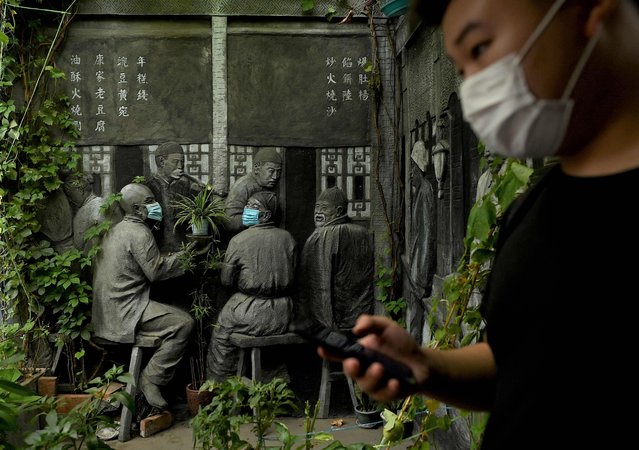
A man walks pat sculptures with face masks on along an alley in Beijing on August 3, 2021. (Photo by Noel Celis/AFP Photo)

A man walks pat sculptures with face masks on along an alley in Beijing on August 3, 2021. (Photo by Noel Celis/AFP Photo)
Details
09 Aug 2021 08:30:00
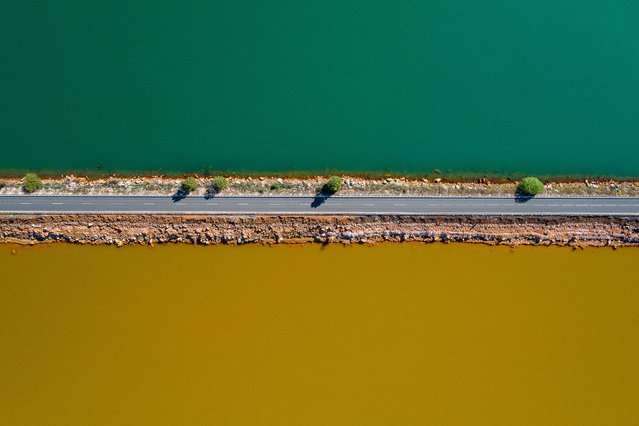
Shortlisted: The Life: A narrow strip, Río Tinto, Huelva, Spain. A narrow strip of road divides ochre-coloured and fresh waters. Trees wait on the fresh side of the road opposite the toxic waters of a nearby mine reservoir. (Photo by Roberto Bueno/CIWEM Environmental Photographer of the Year 2021)

Shortlisted: The Life: A narrow strip, Río Tinto, Huelva, Spain. A narrow strip of road divides ochre-coloured and fresh waters. Trees wait on the fresh side of the road opposite the toxic waters of a nearby mine reservoir. (Photo by Roberto Bueno/CIWEM Environmental Photographer of the Year 2021)
Details
10 Nov 2021 08:04:00
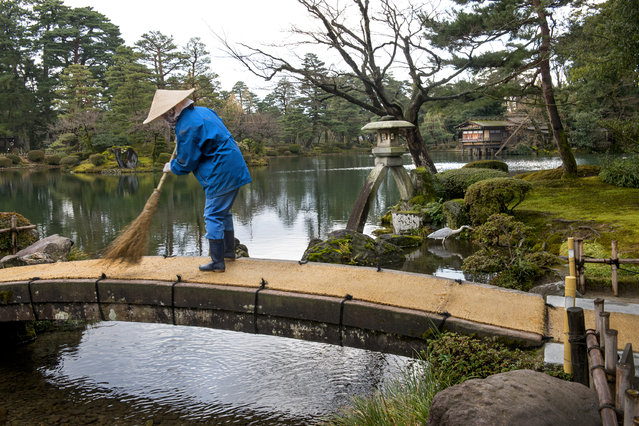
A groundskeeper uses a bamboo broom at Kasumigaike Pond at Kenrokuen Garden in Kanazawa, Japan on January 12, 2016. The japanese garden, located next to Kanazawa Castle, encompasses over 28 acres in downtown Kanazawa. With two ponds, rolling hills with streams and bridges, is considered a strolling-style landscape garden. It's regarded as one of the top three most beautiful gardens in Japan. (Photo by Linda Davidson/The Washington Post)

A groundskeeper uses a bamboo broom at Kasumigaike Pond at Kenrokuen Garden in Kanazawa, Japan on January 12, 2016. The japanese garden, located next to Kanazawa Castle, encompasses over 28 acres in downtown Kanazawa. With two ponds, rolling hills with streams and bridges, is considered a strolling-style landscape garden. It's regarded as one of the top three most beautiful gardens in Japan. (Photo by Linda Davidson/The Washington Post)
Details
03 Feb 2016 13:36:00
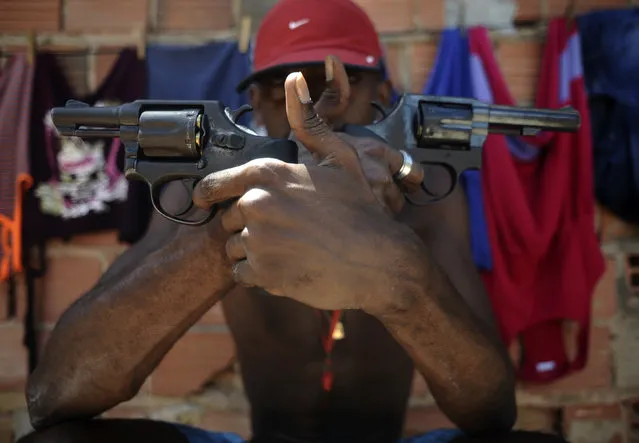
A Brazilian drug gang member nicknamed Pilintra, 26, poses with a gun atop a hill overlooking a slum in Salvador, Bahia State, April 11, 2013. One of Brazil's main tourist destinations and a 2014 World Cup host city, Salvador suffers from an unprecedented wave of violence with an increase of over 250% in the murder rate, according to the Brazilian Center for Latin American Studies (CEBELA). (Photo by Lunae Parracho/Reuters)

A Brazilian drug gang member nicknamed Pilintra, 26, poses with a gun atop a hill overlooking a slum in Salvador, Bahia State, April 11, 2013. One of Brazil's main tourist destinations and a 2014 World Cup host city, Salvador suffers from an unprecedented wave of violence with an increase of over 250% in the murder rate, according to the Brazilian Center for Latin American Studies (CEBELA). (Photo by Lunae Parracho/Reuters)
Details
04 May 2013 11:12:00
South Korean workers are seen from a crane as they work on the 123rd floor during the framing completion ceremony of the 'Lotte World Tower' in Seoul, South Kora, 22 December 2015. The building's exterior was completed in a final height of 550 meters, and 123 floors. The ceremony came five years and two months after the construction of the building began and its opening will likely take place at the end of next year when the interior work is set to be completed, the South Korean Yonhap news agency reported. (Photo by Jeon Heon-Kyun/EPA)

South Korean workers are seen from a crane as they work on the 123rd floor during the framing completion ceremony of the 'Lotte World Tower' in Seoul, South Kora, 22 December 2015. The building's exterior was completed in a final height of 550 meters, and 123 floors. The ceremony came five years and two months after the construction of the building began and its opening will likely take place at the end of next year when the interior work is set to be completed, the South Korean Yonhap news agency reported. The building is the highest in South Korea and the fifth highest in the world, according to Yonhap. (Photo by Jeon Heon-Kyun/EPA)
Details
23 Dec 2015 13:19:00
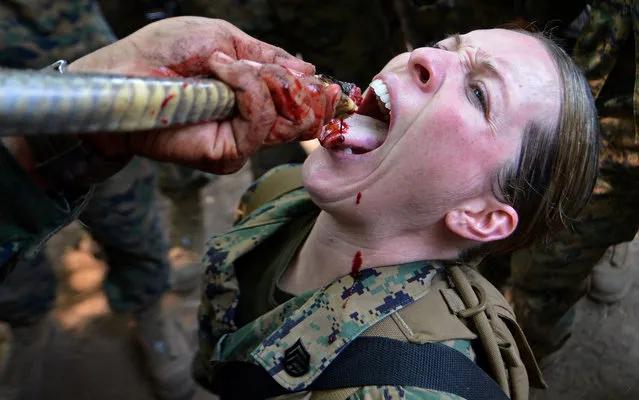
In a military base in the Thai province of Chon Buri February 20 U.S. Marines Navy with Thailand began their studies in jungle survival. The event is held in joint military exercises “Cobra Gold 2013”. During a jungle survival program February 20, 2013 taught by Royal Thai Special Forces in Sannapit, Thailand, U.S. Marines learned to catch cobras and drink their fresh blood, not to mention eat forest insects and pull the heads off of chicken. The training was part of Operation Cobra Gold 13, the 32nd edition of international military exercises hosted by the Thai. According to a U.S. Marines press release, Cobra Gold is the largest exercise of its kind in Asia and incorporates troops from five other nations in addition to the U.S. and Thailand. The Daily Mail reports that the Marines were invited to experience the local custom of drinking cobra blood after being taught to catch and kill cobras in the wild. As CNN notes, Cobra blood is believed to be a panacea and aphrodiasic in parts of Southeast Asia. In Jakarta, vendors can earn over $100 a night selling shots of cobra blood mixed with liquor. (Photo by Pornchai Kittiwongsakul/AFP Photo)


During a jungle survival program February 20, 2013 taught by Royal Thai Special Forces in Sannapit, Thailand, U.S. Marines learned to catch cobras and drink their fresh blood, not to mention eat forest insects and pull the heads off of chicken. The training was part of Operation Cobra Gold 13, the 32nd edition of international military exercises hosted by the Thai. According to a U.S. Marines press release, Cobra Gold is the largest exercise of its kind in Asia and incorporates troops from five other nations in addition to the U.S. and Thailand. The Daily Mail reports that the Marines were invited to experience the local custom of drinking cobra blood after being taught to catch and kill cobras in the wild. As CNN notes, Cobra blood is believed to be a panacea and aphrodiasic in parts of Southeast Asia. In Jakarta, vendors can earn over $100 a night selling shots of cobra blood mixed with liquor. (Photo by Pornchai Kittiwongsakul/AFP Photo)

Details
23 Feb 2013 11:52:00