African ostrichs are seen during sunny autumn day in the largest ostrich farm “Nornieki” in Snepele, Latvia, 18 October 2021. (Photo by Toms Kalnins/EPA/EFE)
Lilly Caron, 8, of Bridgeton, Maine, Jason Homchick, of San Diego, and Lilly's father Jason Caron, (obscured), ride the Sky Swing at Seacoast Adventure, Thursday, July 14, 2016, in Wyndham, Maine. The 100-foot-tall swing gives riders the combined thrills of sky diving and hang gliding. (Photo by Robert F. Bukaty/AP Photo)
A girl carries utensils after filling them with water from a pipe that supplies water to trains at a railway station on the outskirts of Agartala, India, February 28, 2017. (Photo by Jayanta Dey/Reuters)
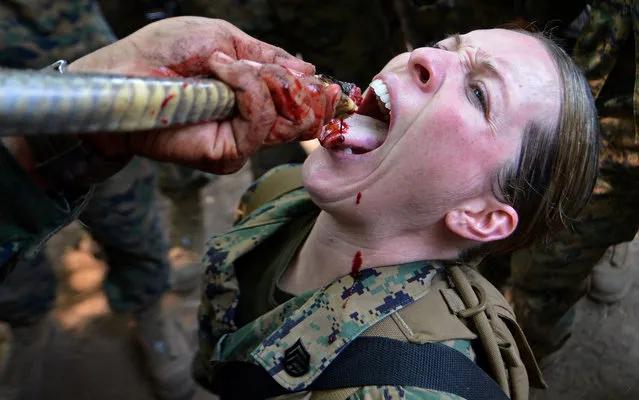
During a jungle survival program February 20, 2013 taught by Royal Thai Special Forces in Sannapit, Thailand, U.S. Marines learned to catch cobras and drink their fresh blood, not to mention eat forest insects and pull the heads off of chicken. The training was part of Operation Cobra Gold 13, the 32nd edition of international military exercises hosted by the Thai. According to a U.S. Marines press release, Cobra Gold is the largest exercise of its kind in Asia and incorporates troops from five other nations in addition to the U.S. and Thailand. The Daily Mail reports that the Marines were invited to experience the local custom of drinking cobra blood after being taught to catch and kill cobras in the wild. As CNN notes, Cobra blood is believed to be a panacea and aphrodiasic in parts of Southeast Asia. In Jakarta, vendors can earn over $100 a night selling shots of cobra blood mixed with liquor. (Photo by Pornchai Kittiwongsakul/AFP Photo)
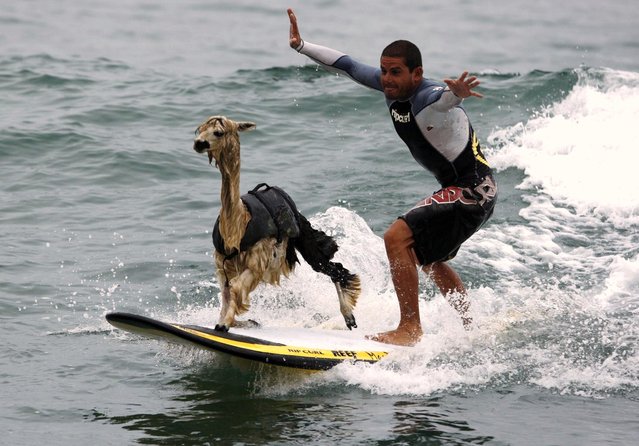
Peruvian surfer Domingo Pianezzi rides a wave with his alpaca Pisco at San Bartolo beach in Lima March 16, 2010. Pianezzi has spent a decade training dogs to ride the nose of his board when he catches waves, and now he is the first to do so with an alpaca. (Photo by Pilar Olivares/Reuters)
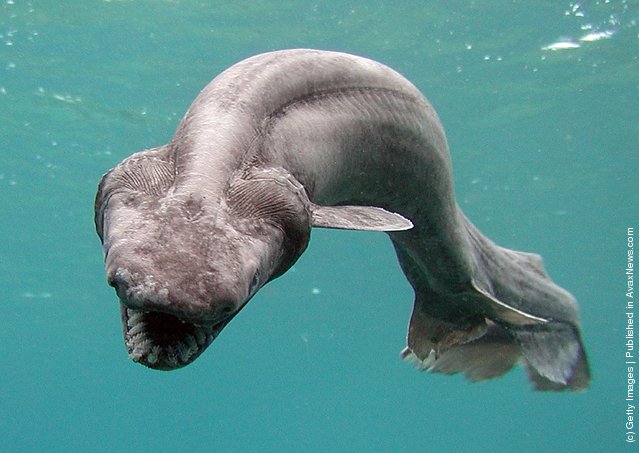
“The frilled shark (Chlamydoselachus anguineus) is one of two extant species of shark in the family Chlamydoselachidae, with a wide but patchy distribution in the Atlantic and Pacific Oceans. This uncommon species is found over the outer continental shelf and upper continental slope, generally near the bottom though there is evidence of substantial upward movements. It has been caught as deep as 1,570 m (5,150 ft), whereas in Suruga Bay, Japan it is most common at depths of 50–200 m (160–660 ft). Exhibiting several “primitive” features, the frilled shark has often been termed a «living fossil»”. – Wikipedia
Photo: A 1.6 meter long Frill shark swims in a tank after being found by a fisherman at a bay in Numazu, on January 21, 2007 in Numazu, Japan. The frill shark, also known as a Frilled shark usually lives in waters of a depth of 600 meters and so it is very rare that this shark is found alive at sea-level. It's body shape and the number of gill are similar to fossils of sharks which lived 350,000,000 years ago. (Photo by Awashima Marine Park/Getty Images)
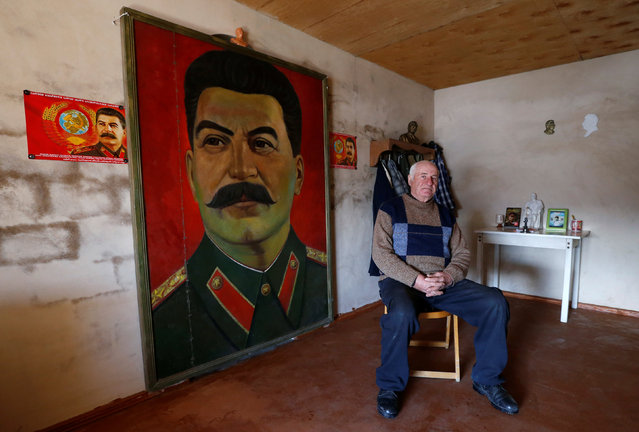
Retired builder Vasili Sidamonidze, 70, poses for a portrait at his home in Gori, Georgia, December 6, 2016. “Unfortunately, Stalin is not popular nowadays. Our people don't respect him. Only we, members of the (Communist) Party, respect him”, Sidamonidze said. “I always try to attend Stalin's birthday anniversaries in Gori. Unfortunately many people don't want to join us even if they live nearby. They look at us from their windows”. (Photo by David Mdzinarishvili/Reuters)
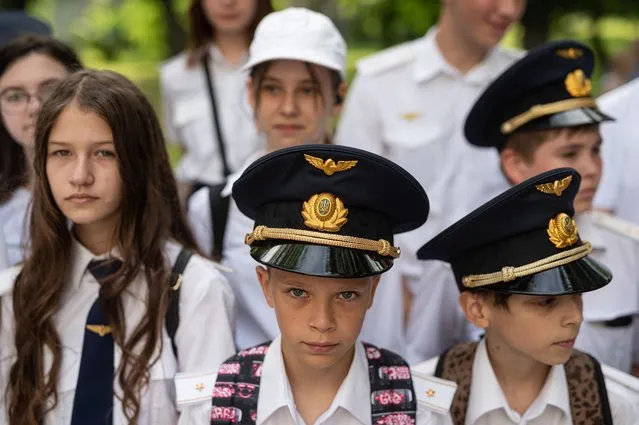
Young conductors stand in line during the steam locomotive presentation at the Kyiv Children's Railway Station on July 3, 2022 in Kyiv, Ukraine. According to the railway's operators, the Gr-336 locomotive was built in Germany in 1951 and brought to Kyiv as part of reparations in the wake of World War II. (Photo by Alexey Furman/Getty Images)