Loading...
Done
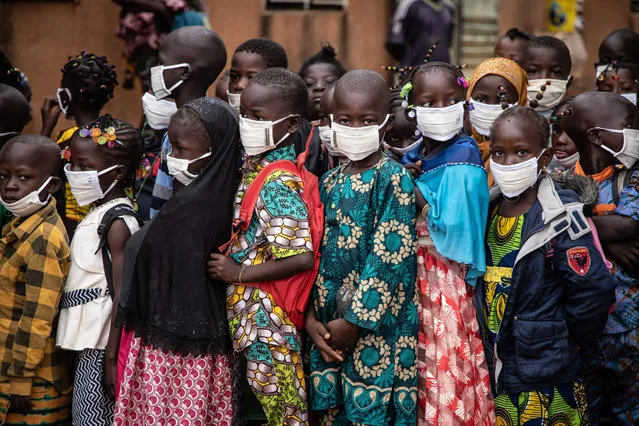
Pupils wearing face masks wait for the opening of their primary school on the first day of the new school year, in Ouagadougou, on October 1, 2020. (Photo by Olympia de Maismont/AFP Photo)

Pupils wearing face masks wait for the opening of their primary school on the first day of the new school year, in Ouagadougou, on October 1, 2020. (Photo by Olympia de Maismont/AFP Photo)
Details
08 Oct 2020 00:01:00
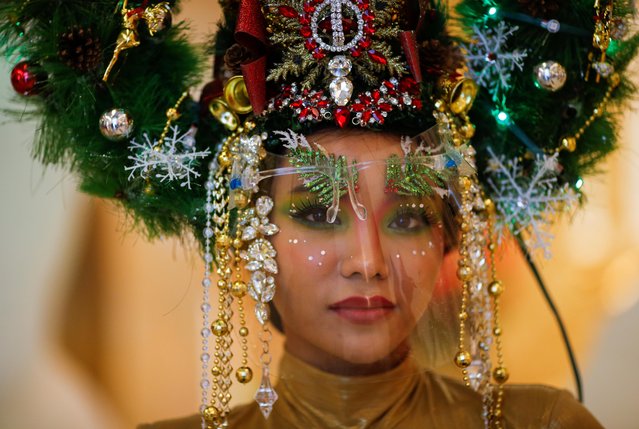
A performer wears a face shield at a shopping center on New Year's Eve during the coronavirus disease (COVID-19) outbreak, in Bangkok, Thailand on December 31, 2020. (Photo by Soe Zeya Tun/Reuters)

A performer wears a face shield at a shopping center on New Year's Eve during the coronavirus disease (COVID-19) outbreak, in Bangkok, Thailand on December 31, 2020. (Photo by Soe Zeya Tun/Reuters)
Details
15 Jan 2021 00:05:00
Capturing this picture of lightning striking near Blackpool Tower has earned Stephen Cheatley the UK Weather Photographer of the Year award 2018. (Photo by Stephen Cheatley/Bav Media)

Capturing this picture of lightning striking near Blackpool Tower has earned Stephen Cheatley the UK Weather Photographer of the Year award 2018. (Photo by Stephen Cheatley/Bav Media)
Details
31 May 2019 00:05:00
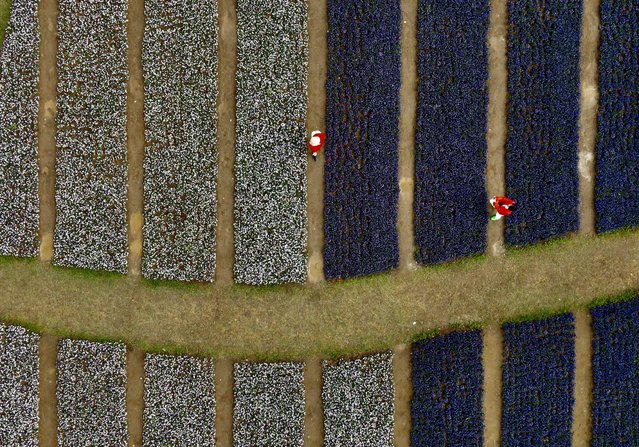
An aerial view shows local residents visiting a river side park in Taipei during the Lunar Mew Year on February 19, 2021. (Photo by Sam Yeh/AFP Photo)

An aerial view shows local residents visiting a river side park in Taipei during the Lunar Mew Year on February 19, 2021. (Photo by Sam Yeh/AFP Photo)
Details
15 Apr 2021 09:04:00
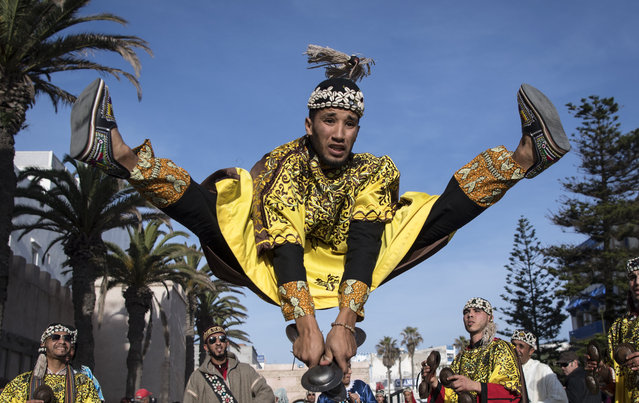
A Gnawa traditional group performs in the city of Essaouira on December 14, 2019, to celebrate the decision of adding the Gnawa culture to UNESCO's list of Intangible Cultural Heritage of Humanity. Gnawa culture, a centuries-old Moroccan practice rooted in music, African rituals and Sufi traditions, was added to UNESCO's list of Intangible Cultural Heritage of Humanity earlier in the week. Gnawa refers to a “set of musical productions, fraternal practices and therapeutic rituals where the secular mixes with the sacred”, according to the nomination submitted by Morocco. Often dressed in colourful outfits, Gnawa musicians play the guenbri, a type of lute with three strings, accompanied by steel castanets called krakebs. (Photo by Fadel Senna/AFP Photo)

A Gnawa traditional group performs in the city of Essaouira on December 14, 2019, to celebrate the decision of adding the Gnawa culture to UNESCO's list of Intangible Cultural Heritage of Humanity. Gnawa culture, a centuries-old Moroccan practice rooted in music, African rituals and Sufi traditions, was added to UNESCO's list of Intangible Cultural Heritage of Humanity earlier in the week. Gnawa refers to a “set of musical productions, fraternal practices and therapeutic rituals where the secular mixes with the sacred”, according to the nomination submitted by Morocco. Often dressed in colourful outfits, Gnawa musicians play the guenbri, a type of lute with three strings, accompanied by steel castanets called krakebs. (Photo by Fadel Senna/AFP Photo)
Details
18 Dec 2019 00:05:00
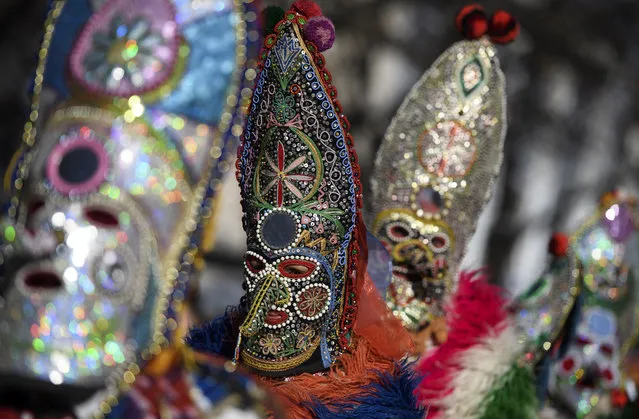
Mask dancers take part in a parade during the the International Festival of Masquerade Games “Surva” in the town of Pernik, some 30 km from Sofia, Bulgaria, 27 January 2019. In ancient times the old Thracians held the Kukeri Ritual Games in honor of god Dionysus – known as a god of wine and ecstasy. Even today these games are also known as the Dionysus' games. Among the Kukeri dancers' are many characters, including Dionysus and his satyrs as well as others from deep history such as the tsar, harachari, plyuvkachi, startzi, and pesyatzi. (Photo by Vassil Donev/EPA/EFE)

Mask dancers take part in a parade during the the International Festival of Masquerade Games “Surva” in the town of Pernik, some 30 km from Sofia, Bulgaria, 27 January 2019. In ancient times the old Thracians held the Kukeri Ritual Games in honor of god Dionysus – known as a god of wine and ecstasy. Even today these games are also known as the Dionysus' games. Among the Kukeri dancers' are many characters, including Dionysus and his satyrs as well as others from deep history such as the tsar, harachari, plyuvkachi, startzi, and pesyatzi. (Photo by Vassil Donev/EPA/EFE)
Details
31 Jan 2019 00:01:00
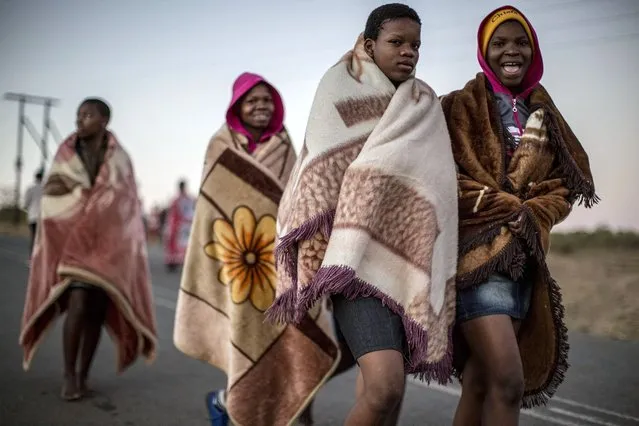
South African maidens wrap themselves in blankets as they head to a ritual bath in a local river on September 5, 2014 at the eNyokeni Royal Palace in Nongoma in the KwaZulu-Natal region ahead of the 13th anniversary of the Reed Dance (uMkhosi woMhlanga) celebrated by the Zulu King Goodwill Zwelithin. (Photo by Marco Longari/AFP Photo)

South African maidens wrap themselves in blankets as they head to a ritual bath in a local river on September 5, 2014 at the eNyokeni Royal Palace in Nongoma in the KwaZulu-Natal region ahead of the 13th anniversary of the Reed Dance (uMkhosi woMhlanga) celebrated by the Zulu King Goodwill Zwelithin. As part of the ceremony, the young women dance bare-breasted for the king, each carrying a long reed, deposited later as they approach the King and is a cultural celebration that promotes respect for young women, and preserves the custom of keeping girls as virgins until marriage. (Photo by Marco Longari/AFP Photo)
Details
07 Sep 2014 13:04:00
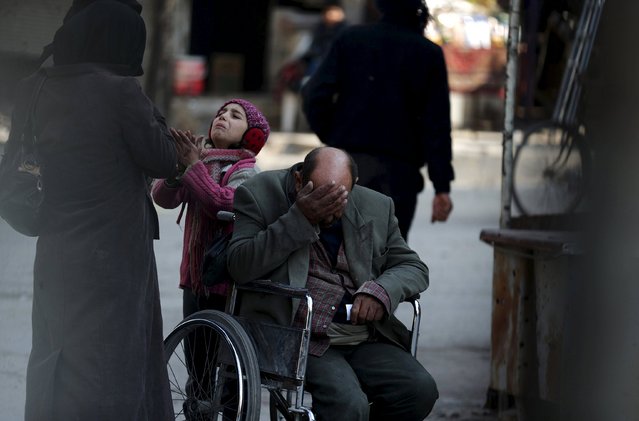
A girl asks a passerby for help to pay a medical bill as her father sits in his wheelchair in the Douma neighbourhood of Damascus Syria February 3, 2016. (Photo by Bassam Khabieh/Reuters)

Hadeel, 10, asks a passerby for help to pay a medical bill as her father Shahrour, 54, sits in his wheelchair in the Douma neighbourhood of Damascus Syria February 3, 2016. Shahrour said he developed diabetes at the beginning of the war in Syria. A lack of insulin led to his medical condition worsening and his right foot had to be amputated. Recently he also suffered a stroke that paralysed half his face. He and part of his extended family, a total of 18 people, live together and struggle to get by. (Photo by Bassam Khabieh/Reuters)
Details
12 Feb 2016 12:46:00