A model showcases Jaton designs during the Fashion x Art at NGV Runway at the Ian Potter Centre on November 16, 2021 in Melbourne, Australia. (Photo by Daniel Pockett/Getty Images)
Australia's Nicholas Timmings competes in the men's Skeleton World Cup in Altenberg, eastern Germany, on December 3, 2021. (Photo by Tobias Schwarz/AFP Photo)
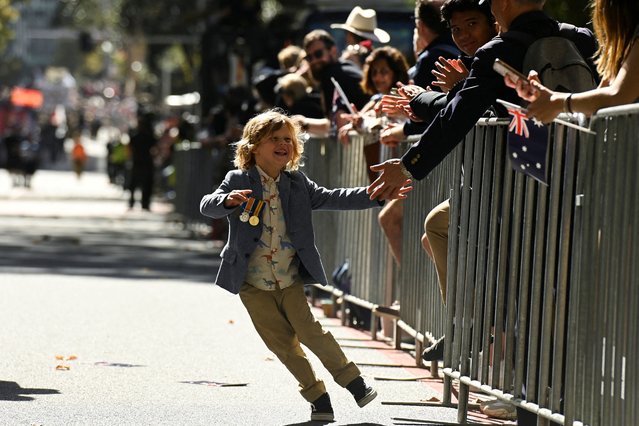
A young marcher high fives the crowd as Australian military personnel, past and present, commemorate ANZAC Day during a parade through the city centre in Sydney, Australia on April 25, 2023. (Photo by Jaimi Joy/Reuters)
Soccer fans wearing Argentina's football team jersey arrive at workers' stadium to watch a friendly match between Australia and Argentina in Beijing on June 15, 2023. (Photo by Jade Gao/AFP Photo)
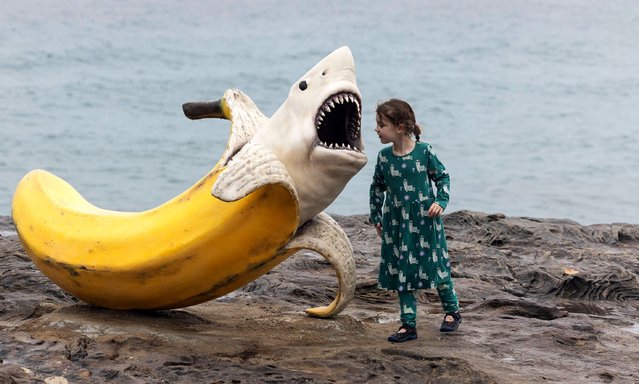
Five-year-old Jeda takes a close look at “Sharnana” by artist Drew McDonald at the Sculpture by The Sea on October 18, 2024 in Sydney, Australia. (Photo by Jessica Hromas/The Guardian)
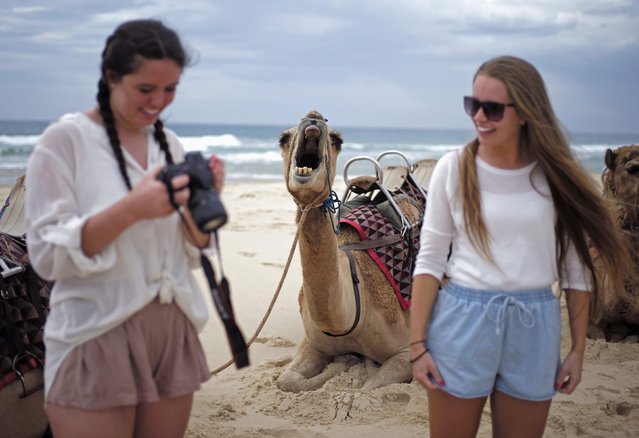
A camel yawns as a tourist checks images on her camera following a ride on a camel safari alongside the Pacific Ocean on Lighthouse Beach, north of Sydney, December 4, 2014. For 25 years camel rides on this beach have given visitors to Australia's holiday coast a rare experience available only in a handful of locations in the country. Australia's long history with the “ships of the desert” goes back to the 1800s when they were imported from Afghanistan and India for use as transportation across Australia's vast deserts before being released into the wild following their replacement by motorised transport. (Photo by Jason Reed/Reuters)
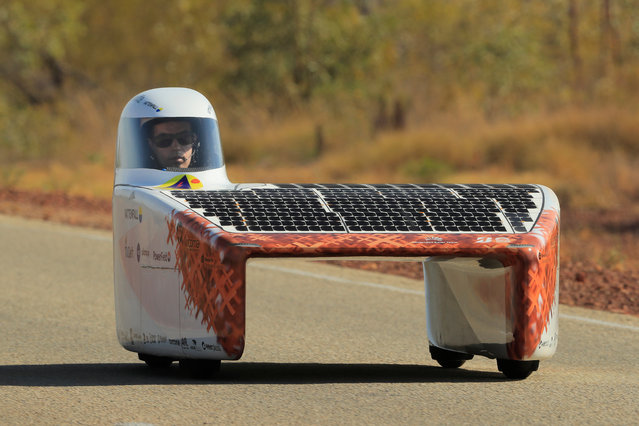
The Vattenfall Solar Team car “Nuna” from the Netherlands competes in the Challenger class on Day 2 of the 2019 Bridgestone World Solar Challenge at Elliott on October 14, 2019 in Elliott Australia. Teams from across the globe are competing in the 2019 World Solar Challenge – a 3000 km solar-powered vehicle race between Darwin and Adelaide. The race starts on the 13th of October in Darwin in the Northern Territory and travels the Stuart Highway to Port Augusta and then via Highway 1 to finish in the City of Adelaide in South Australia. (Photo by Mark Evans/Getty Images for SATC)
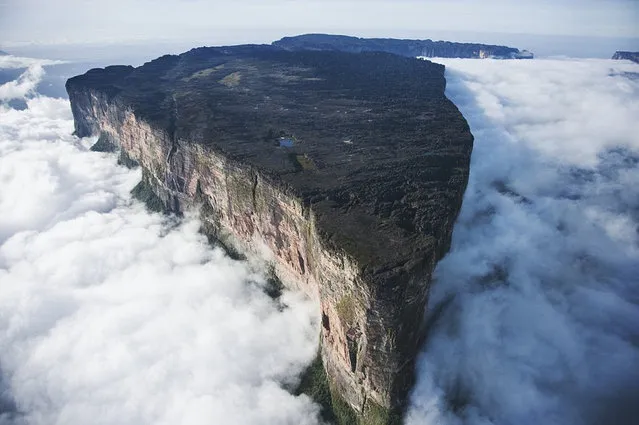
Mount Roraima (Spanish: Monte Roraima, also known as Tepuy Roraima and Cerro Roraima; Portuguese: Monte Roraima [ˈmõtʃi ʁoˈɾajmɐ]) is the highest of the Pakaraima chain of tepui plateau in South America. First described by the English explorer Sir Walter Raleigh in 1596, its 31 km2 summit area is defended by 400-metre-tall cliffs on all sides. The mountain includes the triple border point of Venezuela, Brazil and Guyana.