Loading...
Done
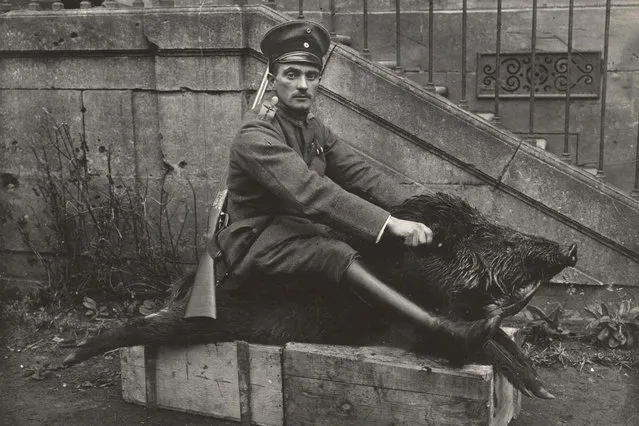
A German Air Force Officer sits astride a dead boar outside a house where he is stationed near the Western Front, in this 1918 handout picture. This picture is part of a previously unpublished set of World War One (WWI) images from a private collection. The pictures offer an unusual view of varied and contrasting aspects of the conflict, from high tech artillery to mobile pigeon lofts, and from officers partying in their headquarters to the grim reality of life and death in the trenches. The year 2014 marks the centenary of the start of the war. (Photo by Reuters/Archive of Modern Conflict London)

A German Air Force Officer sits astride a dead boar outside a house where he is stationed near the Western Front, in this 1918 handout picture. This picture is part of a previously unpublished set of World War One (WWI) images from a private collection. The pictures offer an unusual view of varied and contrasting aspects of the conflict, from high tech artillery to mobile pigeon lofts, and from officers partying in their headquarters to the grim reality of life and death in the trenches. The year 2014 marks the centenary of the start of the war. (Photo by Reuters/Archive of Modern Conflict London)
Details
26 Jun 2014 12:13:00
A Grey Seal pup and it's mother lay in the mud at the Lincolnshire Wildlife Trust's Donna Nook nature reserve on November 24, 2014 in Grimsby, England. Seal pup numbers have increased on last year with over 800 pups born at the reserve so far. Large bull seals are the first to arrive at the reserve in late October or early November where they will wait for females. (Photo by Dan Kitwood/Getty Images)

A Grey Seal pup and it's mother lay in the mud at the Lincolnshire Wildlife Trust's Donna Nook nature reserve on November 24, 2014 in Grimsby, England. Seal pup numbers have increased on last year with over 800 pups born at the reserve so far. Large bull seals are the first to arrive at the reserve in late October or early November where they will wait for females. (Photo by Dan Kitwood/Getty Images)
Details
26 Nov 2014 15:11:00
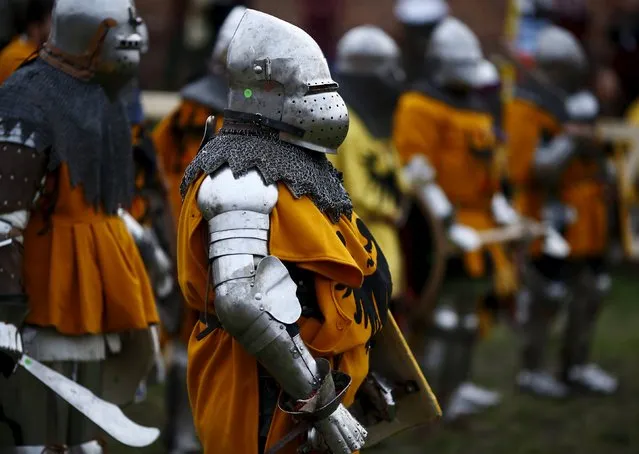
Fighters from Germany take up position before competing in the Medieval Combat World Championship at Malbork Castle, northern Poland, April 30, 2015. (Photo by Kacper Pempel/Reuters)

Fighters from Germany take up position before competing in the Medieval Combat World Championship at Malbork Castle, northern Poland, April 30, 2015. Medieval combat is a full contact sport that revives the foot based tournament fighting of medieval Europe. Countries fight in refereed matches where the objective is to get the opposing team to the floor. There are also duels with polearms, swords and shields where the number of hits landed are scored. The fighters, both male and female, wear heavy armours and weapons, mostly replicas of authentic pieces, and fight following the knights code of conduct. According to organizers, 25 nations from 6 continents are taking part in the Championships, which started on April 30 and will go on until May 3. (Photo by Kacper Pempel/Reuters)
Details
03 May 2015 12:02:00
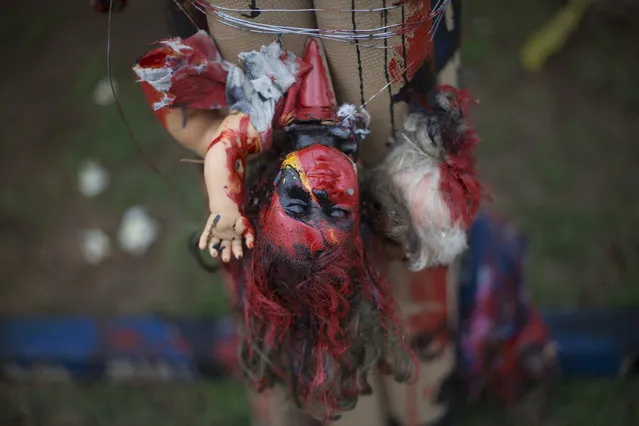
A doll forms part of a sculpture as part of an exhibit titled The Sea Isnt Made for Fish at Rio de Janeiro Federal University in Rio de Janeiro, Brazil, Monday, June 1, 2015. Art students have taken advantage of a material they have in endless supply trash to create an exhibition that aims to draw attention to the fetid state of the citys Guanabara Bay, where the Olympic sailing events are to be held next year. (AP Photo/Silvia Izquierdo)

A doll forms part of a sculpture as part of an exhibit titled The Sea Isn't Made for Fish at Rio de Janeiro Federal University in Rio de Janeiro, Brazil, Monday, June 1, 2015. Art students have taken advantage of a material they have in endless supply trash to create an exhibition that aims to draw attention to the fetid state of the citys Guanabara Bay, where the Olympic sailing events are to be held next year. (AP Photo/Silvia Izquierdo)
Details
08 Jun 2015 15:25:00
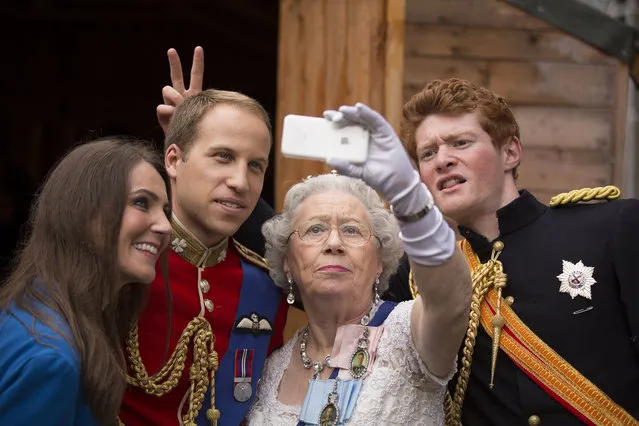
“The Duke and Duchess of Cambridge”, “The Queen” and “Prince Harry” outside the Summerhall arts venue in Edinburgh, Scotland, where their creator Alison Jackson is holding a live performance of her work called La Trashiata. (Photo by James Glossop/The Times/SIPA Press/News Syndication)

“The Duke and Duchess of Cambridge”, “The Queen” and “Prince Harry” outside the Summerhall arts venue in Edinburgh, Scotland, where their creator Alison Jackson is holding a live performance of her work called La Trashiata. Debuting at the Edinburgh Festival Fringe and broadcast to Odeon Cinemas in association with Hibrow Productions, “La Trashiata” will feature a roster of Alison Jackson's brilliant lookalikes singing some of opera's most famous arias. The stage will be set for uncanny doppelgangers to each take to the stage and perform their amusingly appropriate song. (Photo by James Glossop/The Times/SIPA Press/News Syndication)
Details
24 Aug 2014 09:05:00
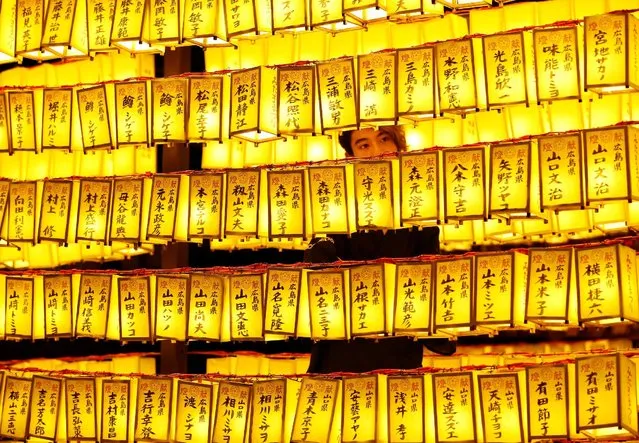
A man stands between thousands of paper lanterns, which were displayed and lit up the precincts of the shrine, where more than 2.4 million war-dead are enshrined, during the Mitama Festival at Yasukuni Shrine in Tokyo, Japan July 13, 2016. “Mitama” is a respectful word that means “the soul of a dead person” in Japanese, and this “Soul Festival” honors just that. The Yasukuni Shrine is dedicated to the honoring of the souls of those who gave their lives to defend Japan, and this festival is an early step towards the Japanese holiday season of Obon, during which Japanese people honor their deceased ancestors. (Photo by Issei Kato/Reuters)

A man stands between thousands of paper lanterns, which were displayed and lit up the precincts of the shrine, where more than 2.4 million war-dead are enshrined, during the Mitama Festival at Yasukuni Shrine in Tokyo, Japan July 13, 2016. “Mitama” is a respectful word that means “the soul of a dead person” in Japanese, and this “Soul Festival” honors just that. (Photo by Issei Kato/Reuters)
Details
14 Jul 2016 09:37:00
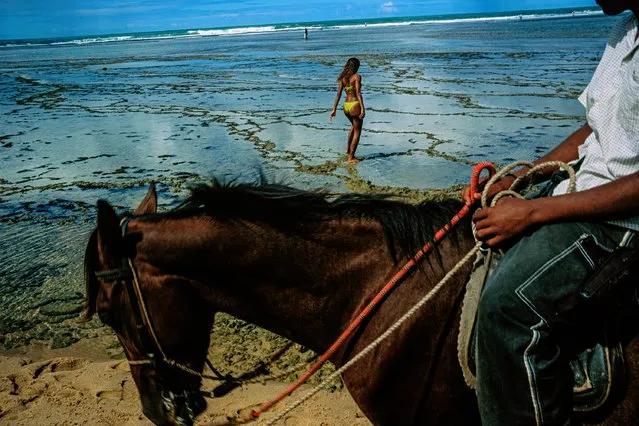
Praia du Forte, Bahia. “This was the lead picture for a National Geographic story on Bahia, because it was both mysterious as well as a “geography” picture showing where the slaves arrived from Nigeria. Beach pictures seem like they should be easy to take, but for me they are actually quite difficult. Too easy to fall into cliche. When I saw the kid coming on the horse, I quickly ran to see if I could make something with a woman in a bikini that was not a bikini shot”. (Photo by David Alan Harvey/The Guardian)

Praia du Forte, Bahia. “This was the lead picture for a National Geographic story on Bahia, because it was both mysterious as well as a “geography” picture showing where the slaves arrived from Nigeria. Beach pictures seem like they should be easy to take, but for me they are actually quite difficult. Too easy to fall into cliche. When I saw the kid coming on the horse, I quickly ran to see if I could make something with a woman in a bikini that was not a bikini shot”. (Photo by David Alan Harvey/The Guardian)
Details
20 Aug 2016 11:35:00
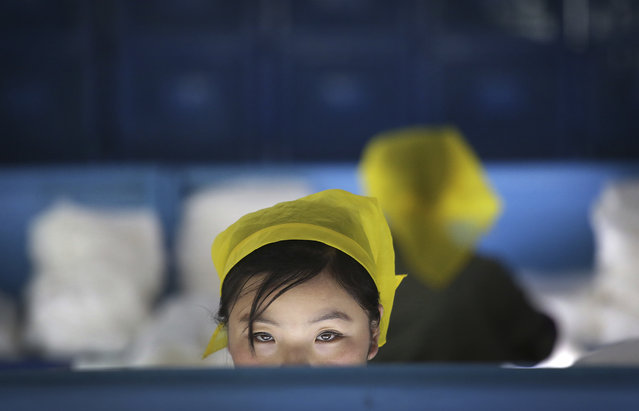
In this Friday, January 6, 2017, photo, a North Korean woman working at the Kim Jong Suk Silk Mill looks up from her workstation in Pyongyang, North Korea. The silk mill, named after North Korean leader Kim Jong Un's grandmother, is where 1,600 workers – mostly women – sort and process silkworms to produce silk thread that officials at the Pyongyang factory say is made into roughly 200 tons of silk a year. (Photo by Wong Maye-E/AP Photo)

In this Friday, January 6, 2017, photo, a North Korean woman working at the Kim Jong Suk Silk Mill looks up from her workstation in Pyongyang, North Korea. The silk mill, named after North Korean leader Kim Jong Un's grandmother, is where 1,600 workers – mostly women – sort and process silkworms to produce silk thread that officials at the Pyongyang factory say is made into roughly 200 tons of silk a year. (Photo by Wong Maye-E/AP Photo)
Details
17 Jan 2017 12:01:00