Loading...
Done
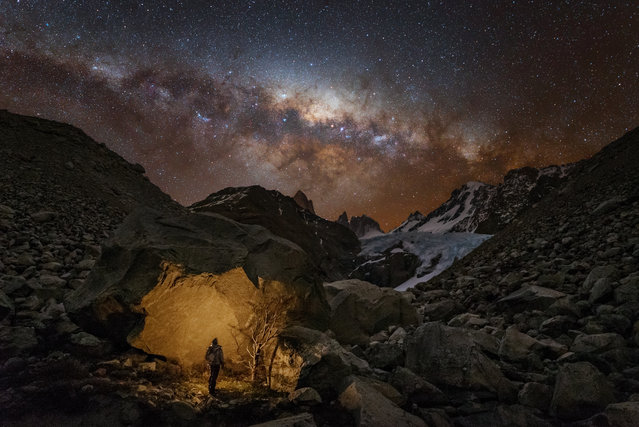
“People and Space”. Winner: Wanderer in Patagonia by Yuri Zvezdny (Russia) A lone stargazer stares up at the stars of our galaxy, the Milky Way, as they stretch across the night sky over the glacier “White Stones” (Piedras Blancas) in the Los Glaciares National Park, Argentina. El Chaltén, Santa Cruz Province, Argentina, 27 September 2016 iOptron Sky-Tracker mount, Sony A7S camera, 18 mm f/2.8 lens, ISO 5000, 30-second exposure Wanderer in Patagonia. (Photo by Yuri Zvezdny/Insight Astronomy Photographer of the Year 2017)

“People and Space”. Winner: Wanderer in Patagonia by Yuri Zvezdny (Russia) A lone stargazer stares up at the stars of our galaxy, the Milky Way, as they stretch across the night sky over the glacier “White Stones” (Piedras Blancas) in the Los Glaciares National Park, Argentina. El Chaltén, Santa Cruz Province, Argentina, 27 September 2016 iOptron Sky-Tracker mount, Sony A7S camera, 18 mm f/2.8 lens, ISO 5000, 30-second exposure Wanderer in Patagonia. (Photo by Yuri Zvezdny/Insight Astronomy Photographer of the Year 2017)
Details
18 Sep 2017 07:09:00
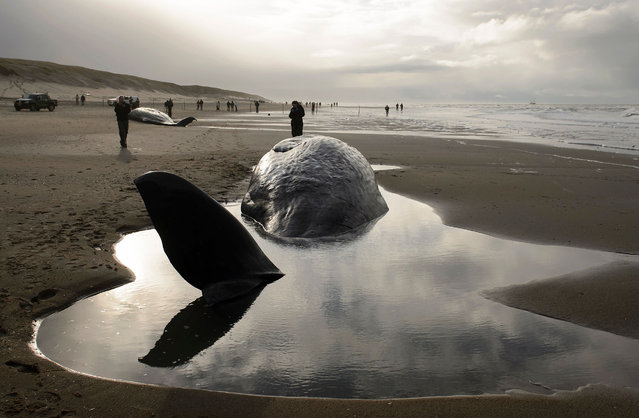
People stand near beached sperm whales on January 13, 2016, after they became stranded on the Dutch island of Texel the day before. Five sperm whales which became stranded on Texel have died, officials said January 13. Experts said the beached whales had already been badly injured and their chances of survival were poor. Volunteers tried to save them but called off their efforts late in the night because of bad weather and darkness, ANP news agency said. (Photo by Remko de Waal/AFP Photo/ANP)

People stand near beached sperm whales on January 13, 2016, after they became stranded on the Dutch island of Texel the day before. Five sperm whales which became stranded on Texel have died, officials said January 13. Experts said the beached whales had already been badly injured and their chances of survival were poor. Volunteers tried to save them but called off their efforts late in the night because of bad weather and darkness, ANP news agency said. (Photo by Remko de Waal/AFP Photo/ANP)
Details
17 Dec 2017 04:51:00
On August 31, 2012, a long filament of solar material that had been hovering in the sun's atmosphere, the corona, erupted out into space at 4:36 p.m. EDT. The coronal mass ejection, or CME, traveled at over 900 miles per second. The CME did not travel directly toward Earth, but did connect with Earth's magnetic environment, or magnetosphere, causing aurora to appear on the night of Monday, September 3. (Photo by NASA/GSFC/SDO)

On August 31, 2012, a long filament of solar material that had been hovering in the sun's atmosphere, the corona, erupted out into space at 4:36 p.m. EDT. The coronal mass ejection, or CME, traveled at over 900 miles per second. The CME did not travel directly toward Earth, but did connect with Earth's magnetic environment, or magnetosphere, causing aurora to appear on the night of Monday, September 3. (Photo by NASA/GSFC/SDO via The Atlantic)
Details
14 Sep 2012 09:01:00
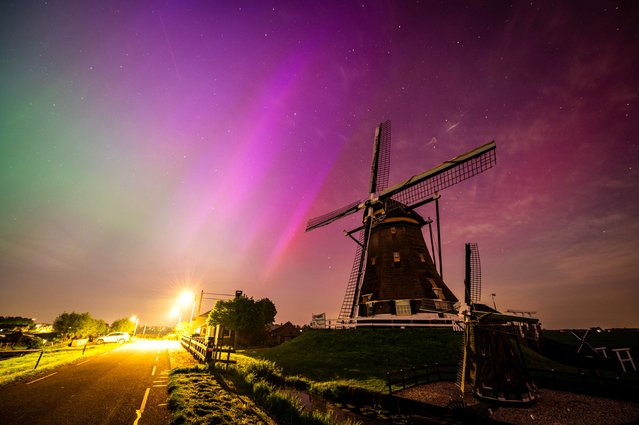
The Northern lights (aurora borealis) lights up the night sky above the Molenviergang in Aarlanderveen, the Netherlands, early on 11 May 2024. The National Oceanic and Atmospheric Administration (NOAA) of America has warned that the strongest geomagnetic storm for 20 years is set to hit Earth, making the Aurora Borealis, or Northern Lights, visible at much lower geomagnetic latitudes than usual. (Photo by Josh Walet/EPA/EFE/Rex Features/Shutterstock)

The Northern lights (aurora borealis) lights up the night sky above the Molenviergang in Aarlanderveen, the Netherlands, early on 11 May 2024. The National Oceanic and Atmospheric Administration (NOAA) of America has warned that the strongest geomagnetic storm for 20 years is set to hit Earth, making the Aurora Borealis, or Northern Lights, visible at much lower geomagnetic latitudes than usual. (Photo by Josh Walet/EPA/EFE/Rex Features/Shutterstock)
Details
17 Aug 2024 04:31:00
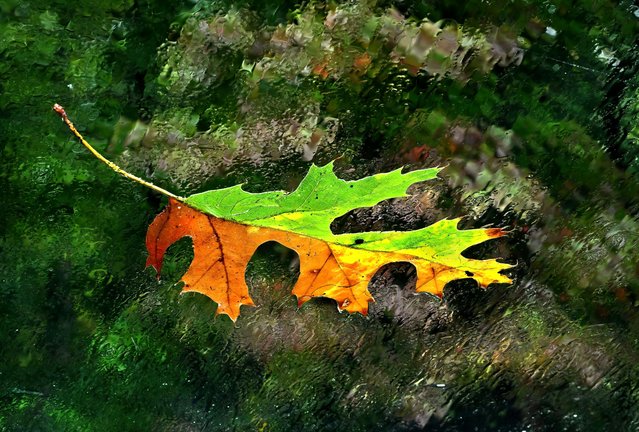
Today is what is known as the equilux and it happens when day and night are equal and occurs a few days before the spring equinox, and a few days after the autumn equinox. What appears to be a floating leaf is actually a stray sticking to a wet car windshield in a park in Scaggsville, Maryland on September 25, 2024. Today sunrise was at 7:02am and  sunset took place at 7:02pm. The green and orange colored leaf (about half for each color) seems to represent the transition from Summer to Fall. (Photo by Michael S. Williamson/The Washington Post)

Today is what is known as the equilux and it happens when day and night are equal and occurs a few days before the spring equinox, and a few days after the autumn equinox. What appears to be a floating leaf is actually a stray sticking to a wet car windshield in a park in Scaggsville, Maryland on September 25, 2024. Today sunrise was at 7:02am and sunset took place at 7:02pm. The green and orange colored leaf (about half for each color) seems to represent the transition from Summer to Fall. (Photo by Michael S. Williamson/The Washington Post)
Details
03 Oct 2024 04:12:00
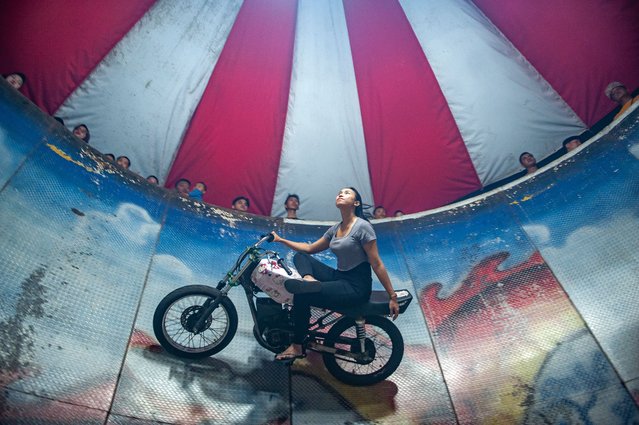
On February 16, 2025, Finna Indriani, a 27-year-old female jockey, showcased her skills in a specialized “sport-action” performance during the “Roda Gila” entertainment event at a traditional night market in Deli Serdang, North Sumatra Province, Indonesia. Including female jockeys in the “roda-gila” attraction exemplifies a significant advancement in challenging gender stereotypes and demonstrates women's competencies in action sports. Action sports are inherently inclusive and accessible to individuals of all genders. Society can foster greater inclusivity and equality by actively promoting and supporting women's involvement in action sports. (Photo by Sutanta Aditya/Rex Features/Shutterstock)

On February 16, 2025, Finna Indriani, a 27-year-old female jockey, showcased her skills in a specialized “sport-action” performance during the “Roda Gila” entertainment event at a traditional night market in Deli Serdang, North Sumatra Province, Indonesia. (Photo by Sutanta Aditya/Rex Features/Shutterstock)
Details
27 Feb 2025 05:09:00
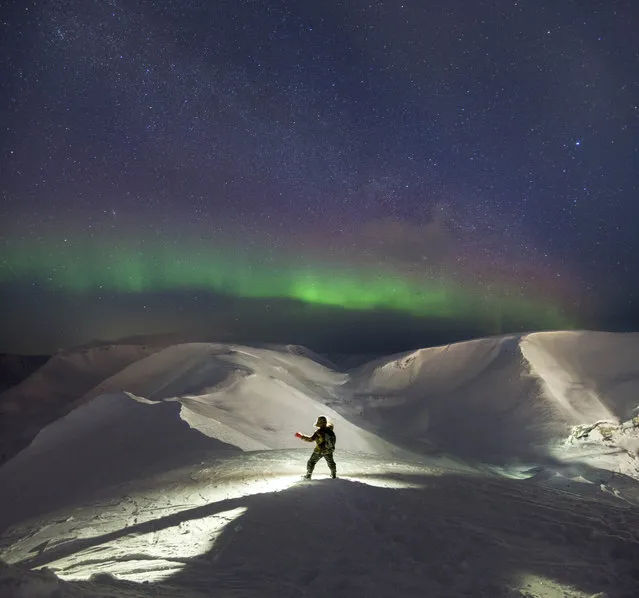
“I spend time trying to get the exposure right”, Vitaly Istomin explained. (Photo by Vitaly Istomin/Caters News Agency)

These Northern Lights “rainbows” have turned the sky greener than the Earth below. Vitaly Istomin, 26, spent several nights in freezing conditions under the stars in northern Russia’s Khibiny Mountains to capture the aurora’s “rainbows”. (Photo by Vitaly Istomin/Caters News Agency)
Details
22 Feb 2018 00:02:00
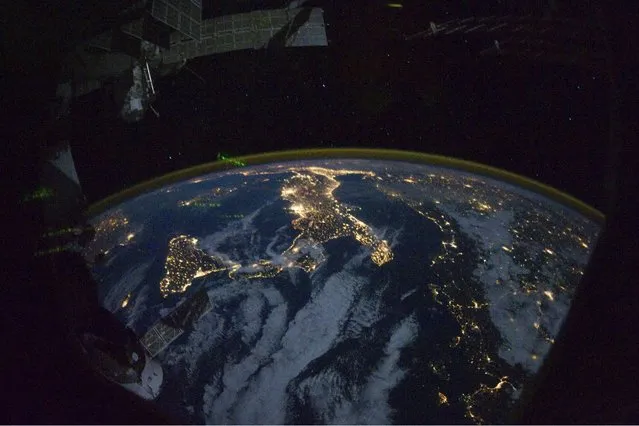
This image provided by NASA shows parts of Europe and Africa very easily recognizable in this night time image shot by one of the Expedition 25 crew members aboard the International Space Station flying 220 miles above Earth on Thursday Oct. 28, 2010. The view “looks” northward over Sicily and the “boot” of Italy, with the Mediterranean Sea representing most of the visible water in the view and the Adriatic Sea to the right of center. Tunisia is partially visible at left. Part of a docked Russian spacecraft and other components of the ISS are in the foreground. (Photo by AP photo/NASA)

This image provided by NASA shows parts of Europe and Africa very easily recognizable in this night time image shot by one of the Expedition 25 crew members aboard the International Space Station flying 220 miles above Earth on Thursday October 28, 2010. The view “looks” northward over Sicily and the “boot” of Italy, with the Mediterranean Sea representing most of the visible water in the view and the Adriatic Sea to the right of center. Tunisia is partially visible at left. Part of a docked Russian spacecraft and other components of the ISS are in the foreground. (Photo by AP Photo/NASA)
Details
11 May 2013 12:29:00