Loading...
Done
Kristen McMenamy and Linda Evangelista in Paris, for Vogue Germany, 1991. (Photo by Arthur Elgort/Courtesy Atlas Gallery)

The fashion photographer made his name capturing big name models for Vogue. This month, 40 years’ worth of his work will go on show at Photo London and Atlas Gallery, in his first UK solo exhibition. Here: Kristen McMenamy and Linda Evangelista in Paris, for Vogue Germany, 1991. (Photo by Arthur Elgort/Courtesy Atlas Gallery)
Details
18 May 2017 08:35:00
Nova Scotia Duck Tolling retriever Torrey competes in the 10th annual Petco Unleashed surfing dog contest at Imperial Beach, California August 1, 2015. (Photo by Mike Blake/Reuters)

Nova Scotia Duck Tolling retriever Torrey competes in the 10th annual Petco Unleashed surfing dog contest at Imperial Beach, California August 1, 2015. Proceeds raised at the event go to benefit the San Diego Humane Society. (Photo by Mike Blake/Reuters)
Details
02 Aug 2015 13:28:00
Cat Bags By Pico

These cat hand bags are painstakingly crafted by Pico, a Japanese housewife who loves cats. The difficulty in making these bags means that they often aren’t available, and when they are, they’re only sold on Yahoo! Auction Japan. How much do bags like these go for? The three-color cat below ended up selling for about 700 USD!
Details
21 Oct 2015 09:02:00
Face Painting by Elsa Rhae Pageler

There isn’t exactly a college out there for face painting so Elsa Rhae Pageler‘s talent is as raw as it comes. Perhaps what’s even more amazing is that the video editor and producer from Kansas City graduated with a degree in Film and Media Studies and only does face painting and airbrushing as a side job. An application may take anywhere from 1 to 3 hours and apart from outside gigs, she features video tutorials on her YouTube channel showing how she paints herself to recreate video game and fictional characters. Photo: “Face Palm”. (Photo by Elsa Rhae Pageler)
Details
19 Jun 2014 12:40:00
Wooden Churches - Travelling In The Russian North By Richard Davies Part 1

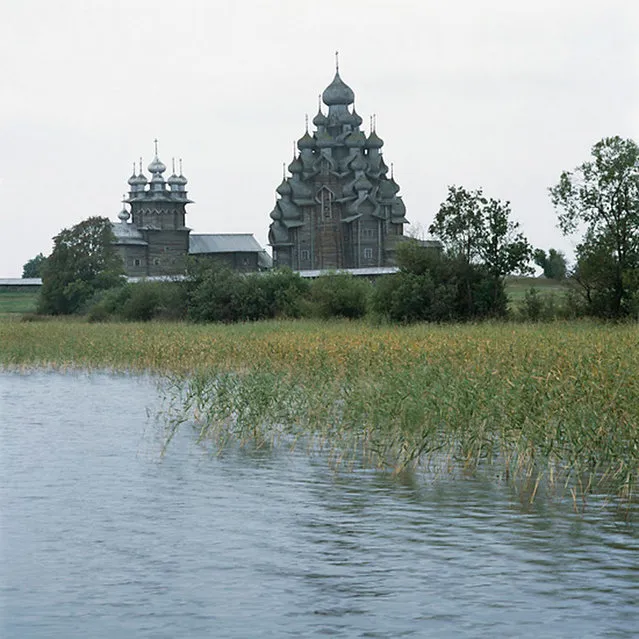
While communism, collectivism, worms, dry rot and casual looting failed to destroy the majestic wooden churches of Russia, it may be ordinary neglect that finally does them in. Dwindled now to several hundred remaining examples, these glories of vernacular architecture lie scattered amid the vastness of the world’s largest country. Just over a decade ago, Richard Davies, a British architectural photographer, struck out on a mission to record the fragile and poetic structures. Austerely beautiful and haunting, “Wooden Churches: Traveling in the Russian North” (White Sea Publishing; $132) is the result. Covering thousands of miles, Mr. Davies described how he and the writer Matilda Moreton tracked down the survivors from among the thousands of onion-domed structures built after Prince Vladimir converted to Christianity in 988.

Details
25 Nov 2013 12:47:00
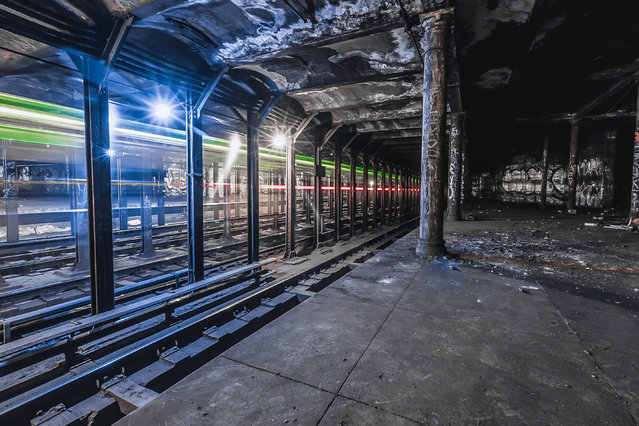
At the dead of night, the photographer – known to his Instagram followers as Dark Cyanide – heads out to look for hidden gems, like abandoned stations, provisions and tunnels. His intriguing images feature vibrant streaks, graffiti, and tight framing – and by adding individuals to some to some of shots, he is also able to depict the incredible scale of some of the tunnels. The photographer, 19, admitted what he and his friends do is highly dangerous, illegal, and he does not recommend others attempt to explore such tunnels. Here: Unnamed subway track in New York City. (Photo by Dark Cyanide/Caters News)

At the dead of night, the photographer – known to his Instagram followers as Dark Cyanide – heads out to look for hidden gems, like abandoned stations, provisions and tunnels. His intriguing images feature vibrant streaks, graffiti, and tight framing – and by adding individuals to some to some of shots, he is also able to depict the incredible scale of some of the tunnels. Here: Unnamed subway track in New York City. (Photo by Dark Cyanide/Caters News)
Details
29 Jan 2016 12:45:00
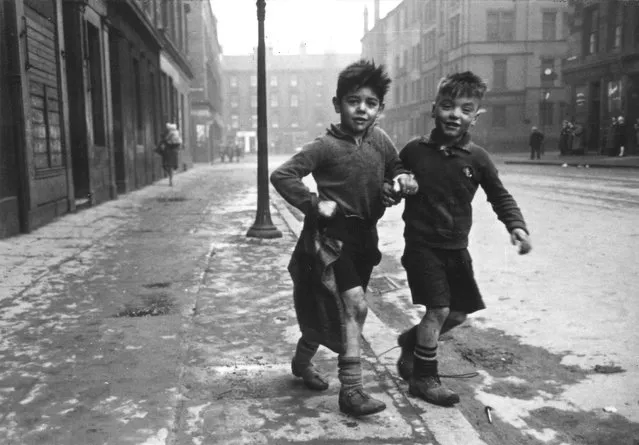
Two boys in the Gorbals area of Glasgow, UK on January 31, 1948. The Gorbals tenements were built quickly and cheaply in the 1840s, providing housing for Glasgow's burgeoning population of industrial workers. Conditions were appalling; overcrowding was standard and sewage and water facilities inadequate. The tenements housed about 40,000 people with up to eight family members sharing a single room, 30 residents sharing a toilet and 40 sharing a tap. By the time this photograph was taken 850 tenements had been demolished since 1920. Redevelopment of the area began in the late 1950s and the tenements were replaced with a modern tower block complex in the sixties. (Photo by Bert Hardy/Getty Images)

Two boys in the Gorbals area of Glasgow, UK on January 31, 1948. The Gorbals tenements were built quickly and cheaply in the 1840s, providing housing for Glasgow's burgeoning population of industrial workers. Conditions were appalling; overcrowding was standard and sewage and water facilities inadequate. The tenements housed about 40,000 people with up to eight family members sharing a single room, 30 residents sharing a toilet and 40 sharing a tap. By the time this photograph was taken 850 tenements had been demolished since 1920. Redevelopment of the area began in the late 1950s and the tenements were replaced with a modern tower block complex in the sixties. (Photo by Bert Hardy/Getty Images)
Details
09 Mar 2017 00:03:00
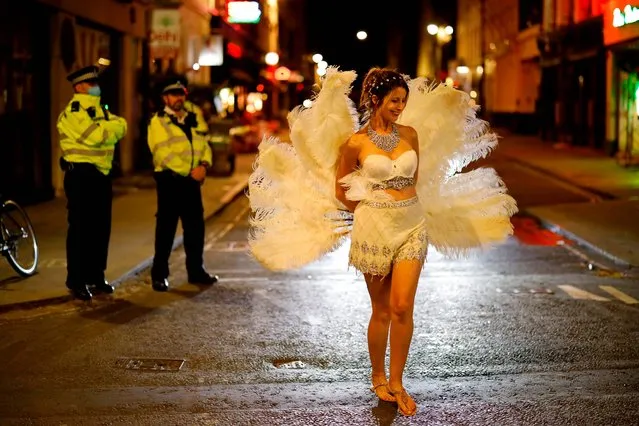
Drinkers leave the bars as police patrol in Soho, in central London on September 24, 2020 as the clock nears 10pm, on the first day of the new earlier closing times for pubs and bars in England and Wales, introduced to combat the spread of the coronavirus. Britain has tightened restrictions to stem a surge of coronavirus cases, ordering pubs to close early and advising people to go back to working from home to prevent a second national lockdown. (Photo by Tolga Akmen/AFP Photo)

Drinkers leave the bars as police patrol in Soho, in central London on September 24, 2020 as the clock nears 10pm, on the first day of the new earlier closing times for pubs and bars in England and Wales, introduced to combat the spread of the coronavirus. Britain has tightened restrictions to stem a surge of coronavirus cases, ordering pubs to close early and advising people to go back to working from home to prevent a second national lockdown. (Photo by Tolga Akmen/AFP Photo)
Details
26 Sep 2020 00:07:00