Loading...
Done
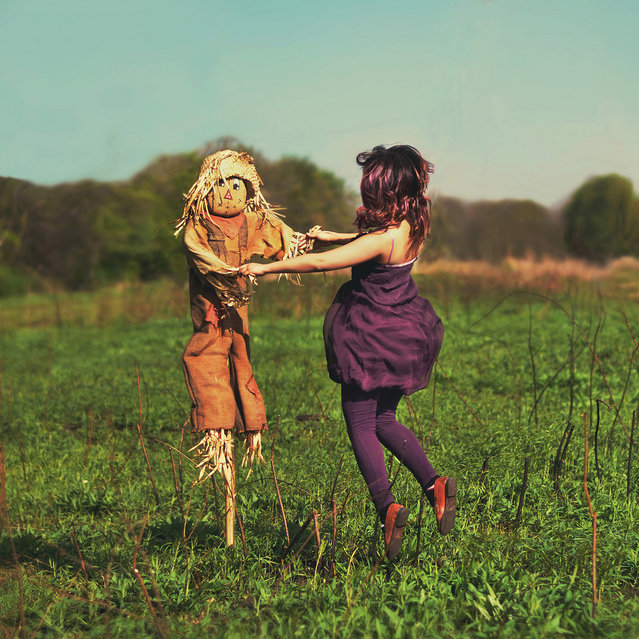
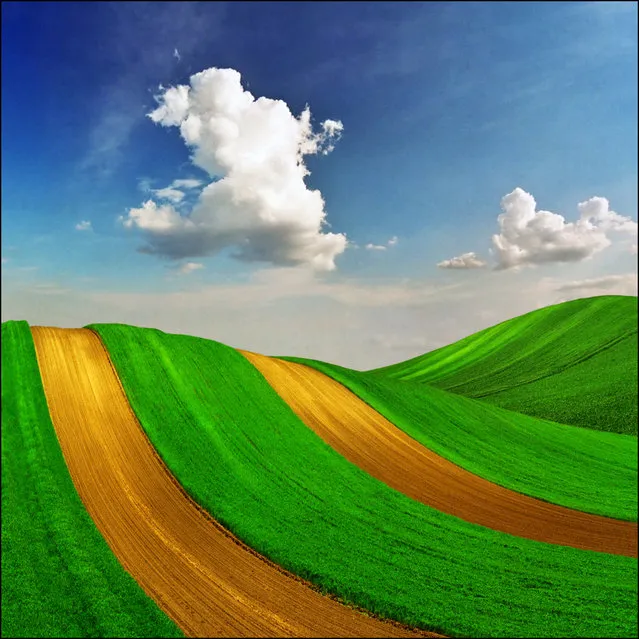
Happy dog (..?) – Pannonian spring fantasy

“I am not a photo reporter, so I don’t feel obligated to honour every detail. What I’m trying to achieve is to emphasize the whole potential of a shot, creating a sight that I'd like if existed.. And since it’s impossible in real life, I do it in virtual :) My work is maybe more similar to ‘photo-painting’ than photography”. – Katarina Stefanović

Photo: Pannonian spring fantasy. (Photo by by Katarina Stefanović)
Details
17 Aug 2012 10:17:00
If I Only Had a Brain (365 project). (Glenda Lissette)

We received intriguing letter: “Hello! My name is Glenda Lissette, I am an 18 year old photographer from Chicago, IL. I produce surreal and conceptual photographs. I am currently working on a project where I take a photo a day for an entire year”. Well, let's look!

Photo: “If I Only Had a Brain” (365 project). (Photo by Glenda Lissette)


Details
20 Nov 2012 11:55:00
Runner English Gardner poses for a portrait at the U.S. Olympic Committee Media Summit in Beverly Hills, Los Angeles, California March 8, 2016. (Photo by Lucy Nicholson/Reuters)

Runner English Gardner poses for a portrait at the U.S. Olympic Committee Media Summit in Beverly Hills, Los Angeles, California March 8, 2016. “My musical inspiration when I'm training is usually a lot of upbeat music”, said Gardner. (Photo by Lucy Nicholson/Reuters)
Details
09 Mar 2016 12:24:00
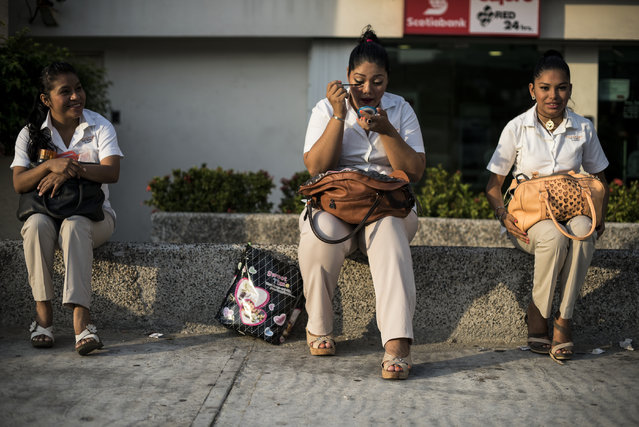
Employees of the Park Royal resort wait for a shuttle to take them to work early in the morning on April 2, 2015 in Acapulco, Mexico. (Photo by Jonathan Levinson/The Washington Post)

Employees of the Park Royal resort wait for a shuttle to take them to work early in the morning on April 2, 2015 in Acapulco, Mexico. Despite problems with cartel violence Semana Santa is one of the biggest tourist weeks of the year in Acapulco, a city whose entire economy depends on tourism, and officials expect around 350,000 mostly Mexican visitors this week. (Photo by Jonathan Levinson/The Washington Post)
Details
06 Apr 2015 09:12:00
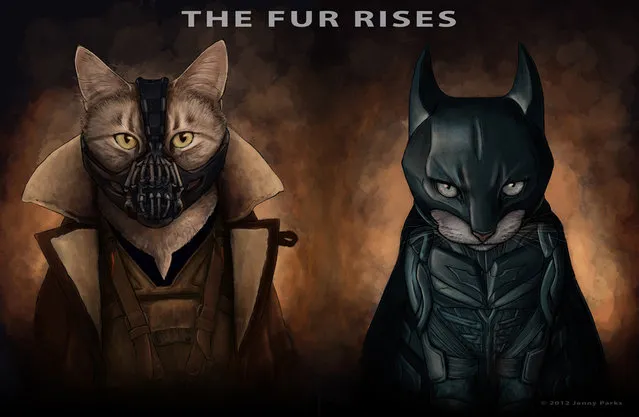
Super Cats By Jenny Parks

Jenny Parks is a scientific illustrator that also happens to be a shameless nerd, with a penchant for drawing animals, dinosaurs, imaginary creatures… and occasionally, people as cats. Somehow, she found herself with a bit of internet fame with the illustration ‘Doctor Mew’, and has been baffled ever since. With a BFA in illustration from the California College of the Arts, and a graduate degree in Science Illustration from UC Santa Cruz, she now resides in San Francisco as a freelance illustrator, fulfilling her destiny to make a living drawing cute, fuzzy things.
Details
25 Jul 2013 10:50:00
Close Encounter of the Insect Kind: Check out the awesome face on this praying mantis. I can't get over the mouth, it's like something from a science fiction movie. Of all photographic styles macro is definitely my favorite. I am constantly amazed, in every photo that I take, by the intricate level of detail that exists on even the smallest of creatures. It's a stark reminder that a very complex and infinitely beautiful world exists just beyond our human-sized level of perception. Photo taken in Donnybrook, Queensland, Australia. (Photo by Andrew Young/National Geographic Photo Contest

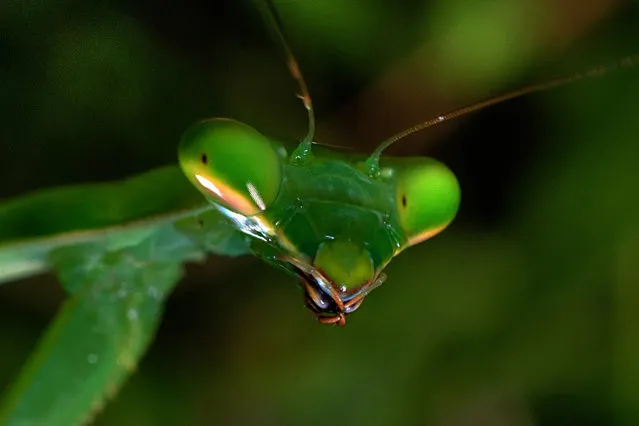
Close Encounter of the Insect Kind: “Check out the awesome face on this praying mantis. I can't get over the mouth, it's like something from a science fiction movie. Of all photographic styles macro is definitely my favorite. I am constantly amazed, in every photo that I take, by the intricate level of detail that exists on even the smallest of creatures. It's a stark reminder that a very complex and infinitely beautiful world exists just beyond our human-sized level of perception. Photo taken in Donnybrook, Queensland, Australia” – Andrew Young. (Photo by Andrew Young/National Geographic Photo Contest via The Atlantic)
Details
24 Sep 2012 09:18:00
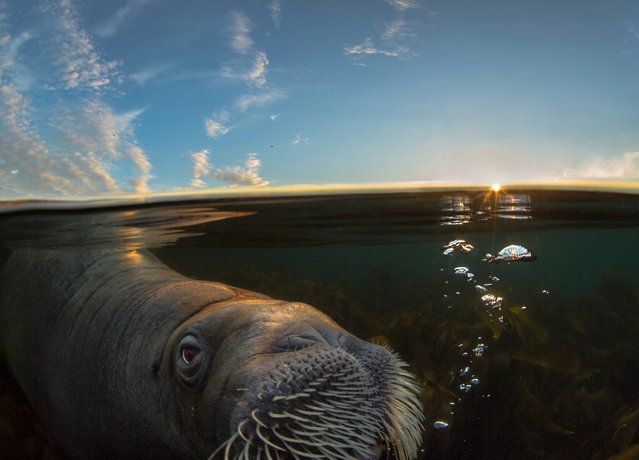
The Wildscreen festival is the world’s biggest celebration of screen-based natural history storytelling which takes place every two years in Bristol. Here: “Walrus in Midnight Sun”. Walrus feed mostly on bivalves in productive, shallow and often sandy habitats in the Arctic. This individual, though, arrived on a beach outside Tromsø, northern Norway, and found comfort on a stranded dead sperm whale. After two weeks he approached Audun, and only half a metre away he stretched his tusk forward and touched his hand gently. “This was one of the most memorable moments of my life”, Rikardsen says. He named the 500kg male Buddy. After two months, the dead whale was decomposed and Buddy suddenly disappeared. (Photo by Audun Rikardsen/Wildscreen 2016)

The Wildscreen festival is the world’s biggest celebration of screen-based natural history storytelling which takes place every two years in Bristol. Here: “Walrus in Midnight Sun”. Walrus feed mostly on bivalves in productive, shallow and often sandy habitats in the Arctic. This individual, though, arrived on a beach outside Tromsø, northern Norway, and found comfort on a stranded dead sperm whale. After two weeks he approached Audun, and only half a metre away he stretched his tusk forward and touched his hand gently. “This was one of the most memorable moments of my life”, Rikardsen says. He named the 500kg male Buddy. After two months, the dead whale was decomposed and Buddy suddenly disappeared. (Photo by Audun Rikardsen/Wildscreen 2016)
Details
07 Oct 2016 10:02:00
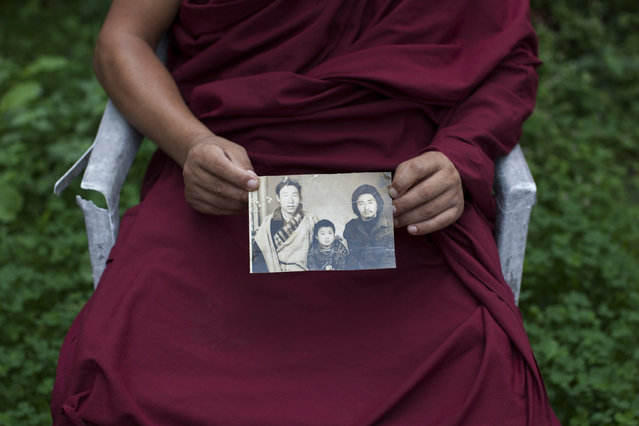
In this Saturday, September 27, 2014 photo, Tibetan monk Dorjee, 38, displays a photograph of his father, left, and himself, center, taken in Tibet, in Dharamsala, India. Dorjee said he held back his tears when he spoke with his parents on the phone after a separation period of 27 years. He exchanged a few words with his father but said his mother fainted on hearing his voice. (Photo by Tsering Topgyal/AP Photo)

“When I was 8 years old, my parents paid a smuggler to take me across the Himalayas, a weekslong walk over the mountains from Tibet to India. It was a trek that tens of thousands of other Tibetans have taken since the Dalai Lama fled a failed 1959 uprising against Chinese rule. My parents must have had their reasons to send me here; they must have had the best of intentions. But 18 years later, I still don't know why they did it. They are not political people. They are small farmers who raise barley and a few yak in a rural area not far from Lhasa, the Tibetan capital. I have not seen them since I left...”. – Tsering Topgyal via The Associated Press. (Photo by Tsering Topgyal/AP Photo)
Details
05 Nov 2014 12:27:00