Loading...
Done
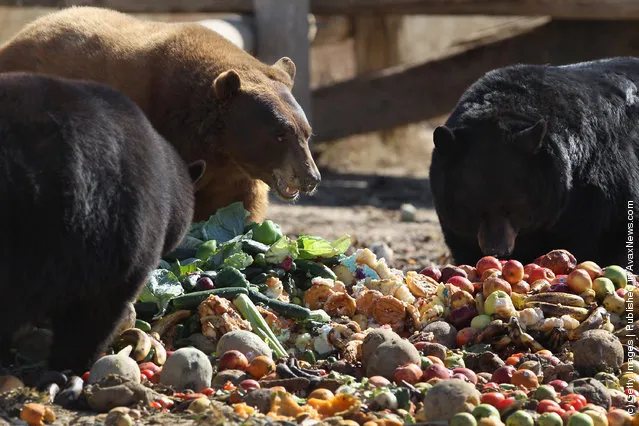
Rescued brown and black bears feed at The Wild Animal Sanctuary

“The Wild Animal Sanctuary is a U.S. organization that specializes in rescuing and caring for large predators which are being ill-treated, for which their owners can no longer care, or which might otherwise be euthanized. Created in 1980, The Wild Animal Sanctuary is situated on 720 acres (291 ha) of grassland near Keenesburg, Colorado North of Denver, and has helped over 1,000 animals since it first opened. As of 2010, it was home to over 290 animals”. – Wikipedia

Photo: Rescued brown and black bears feed at The Wild Animal Sanctuary on October 20, 2011 in Keenesburg, Colorado. (Photo by John Moore/Getty Images)
Details
27 Feb 2012 11:59:00
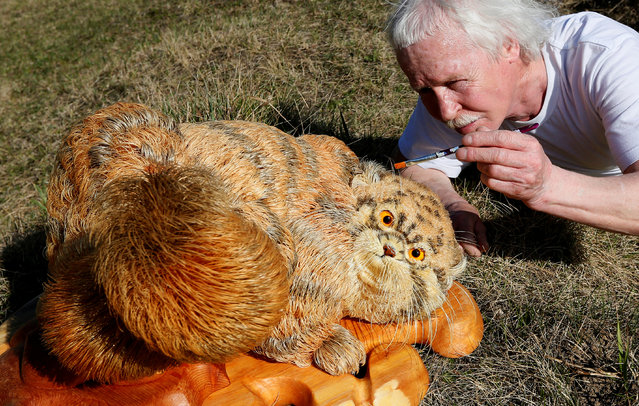
Sergei Bobkov, 59, paints Siberian cedar nut oil onto a life-size sculpture of Pallas's Cat, also known in Russia as Manul Cat, which he made from Siberian cedar wood shavings using more than 700 thousand pieces over four years, in the village of Kozhany, southwest of the Siberian city of Krasnoyarsk, Russia, April 28, 2017. (Photo by Ilya Naymushin/Reuters)

Sergei Bobkov, 59, paints Siberian cedar nut oil onto a life-size sculpture of Pallas's Cat, also known in Russia as Manul Cat, which he made from Siberian cedar wood shavings using more than 700 thousand pieces over four years, in the village of Kozhany, southwest of the Siberian city of Krasnoyarsk, Russia, April 28, 2017. (Photo by Ilya Naymushin/Reuters)
Details
29 Apr 2017 09:20:00
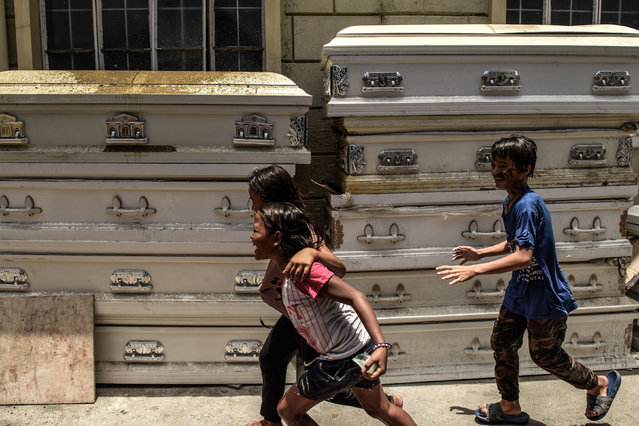
Children run past used caskets at a crematorium facility in Manila on April 29, 2020. Most of the Philippines is under quarantine to contain the spread of the coronavirus that has infected over 7,000 people and killed at least 500 in the country. (Photo by Maria Tan/AFP Photo)

Children run past used caskets at a crematorium facility in Manila on April 29, 2020. Most of the Philippines is under quarantine to contain the spread of the coronavirus that has infected over 7,000 people and killed at least 500 in the country. (Photo by Maria Tan/AFP Photo)
Details
04 May 2020 00:05:00
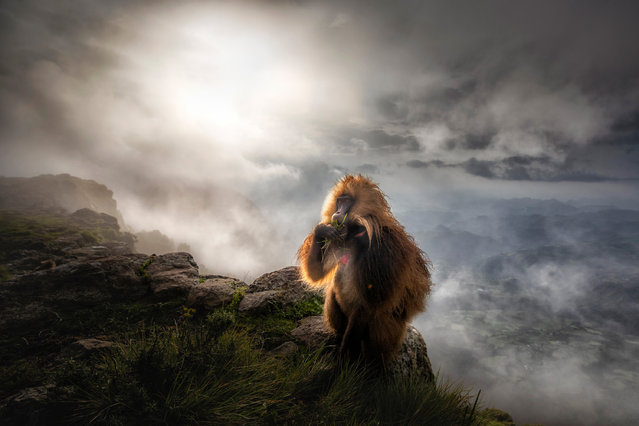
Highly commended, mammals: Gelada after the storm – Marco Gaiotti (Italy). “Gelada baboons are the only monkey species in the world that feed on grasses. They are native to the tableland of Ethiopia. Every morning large family groups wander from their sleeping places in the steep rock face, up to 1,000 metres high, to the feeding grounds at the tablelands. This image clearly depicts their feeding strategy: they pull out bunches of grass, sort the stalks and then lift them to their mouth. This shot was taken towards the end of the rainy season after a heavy storm”. (Photo by Marco Gaiotti/2019 GDT European Wildlife Photographer of the Year)

Highly commended, mammals: Gelada after the storm – Marco Gaiotti (Italy). “Gelada baboons are the only monkey species in the world that feed on grasses. They are native to the tableland of Ethiopia. Every morning large family groups wander from their sleeping places in the steep rock face, up to 1,000 metres high, to the feeding grounds at the tablelands. This image clearly depicts their feeding strategy: they pull out bunches of grass, sort the stalks and then lift them to their mouth. This shot was taken towards the end of the rainy season after a heavy storm”. (Photo by Marco Gaiotti/2019 GDT European Wildlife Photographer of the Year)
Details
31 Oct 2019 00:03:00
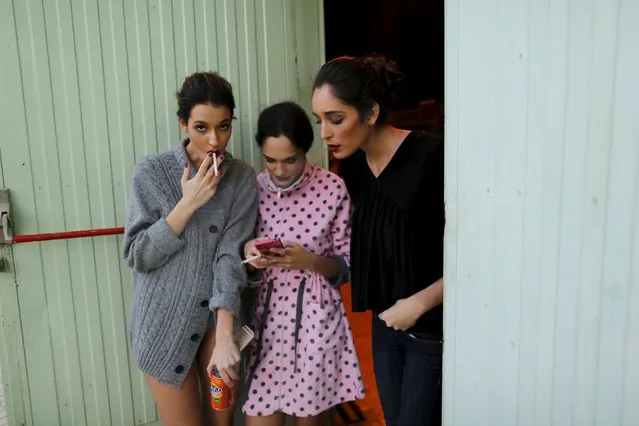
Models smoke during a break at Sevilla de Boda (Seville Wedding) fashion show in the Andalusian capital of Seville November 27, 2015. (Photo by Marcelo del Pozo/Reuters)

Models smoke during a break at Sevilla de Boda (Seville Wedding) fashion show in the Andalusian capital of Seville November 27, 2015. (Photo by Marcelo del Pozo/Reuters)
Details
29 Nov 2015 10:01:00
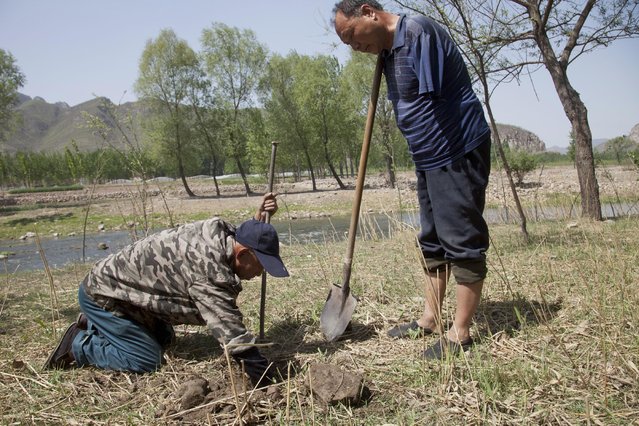
In this April 23, 2015 photo, friends Jia Haixia, left, and Jia Wenqi work to plant a tree in a field in Yeli village near Shijiazhuang city in northern China's Hebei province. For the past 13 years, Jia Wenqi, who has no arms, and Jia Haixia, who is blind, have worked together to plant and water more than 12,000 trees near their village. (Photo by Helene Franchineau/AP Photo)

In this April 23, 2015 photo, friends Jia Haixia, left, and Jia Wenqi work to plant a tree in a field in Yeli village near Shijiazhuang city in northern China's Hebei province. For the past 13 years, Jia Wenqi, who has no arms, and Jia Haixia, who is blind, have worked together to plant and water more than 12,000 trees near their village. (Photo by Helene Franchineau/AP Photo)
Details
13 May 2015 11:21:00
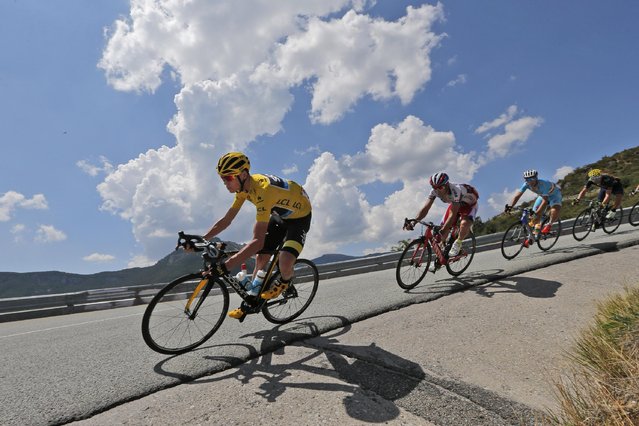
Britain's Chris Froome, wearing the overall leader's yellow jersey, is followed by Spain's Alberto Losada, Italy's Vincenzo Nibali and Spain's Alejandro Valverde as they speed downhill during the seventeenth stage of the Tour de France cycling race over 161 kilometers (100 miles) with start in Digne-les-Bains and finish in Pra Loup, France, Wednesday, July 22, 2015. (Photo by Christophe Ena/AP Photo)

Britain's Chris Froome, wearing the overall leader's yellow jersey, is followed by Spain's Alberto Losada, Italy's Vincenzo Nibali and Spain's Alejandro Valverde as they speed downhill during the seventeenth stage of the Tour de France cycling race over 161 kilometers (100 miles) with start in Digne-les-Bains and finish in Pra Loup, France, Wednesday, July 22, 2015. (Photo by Christophe Ena/AP Photo)
Details
23 Jul 2015 10:45:00
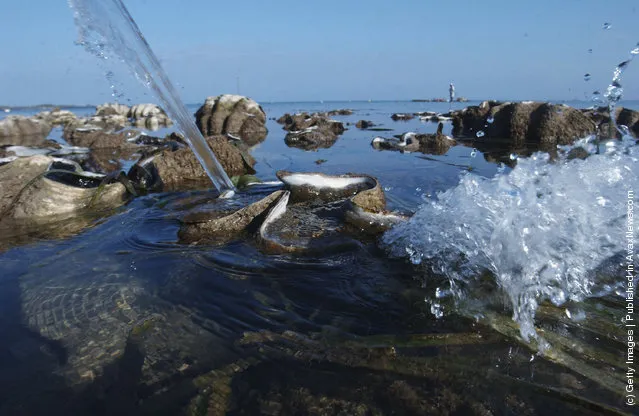
Tridacna Gigas, or Giant Clams

“The giant clam, Tridacna gigas (known as pā’ua in Cook Islands Māori), is the largest living bivalve mollusc. T. gigas is one of the most endangered clam species. It was mentioned as early as 1825 in scientific reports. One of a number of large clam species native to the shallow coral reefs of the South Pacific and Indian oceans, they can weigh more than 200 kilograms (440 lb) measure as much as 120 cm (47 in) across, and have an average lifespan in the wild of 100 years or more”. – Wikipedia

Photo: Tridacna Gigas, or Giant Clams spew water as a traditional fisherman passes by a small sanctuary on January 23, 2004 near Bolinao in the Northern Philippines. The clams, prime builders for coral reefs and providing shelter for spawning fish and other marine life, are exposed by low tides in the sanctuary. Overfishing and pollution throughout the country are not only threatening food security, but are also starting to choke one of the few working clam sanctuaries in the world. (Photo by David Greedy/Getty Images)
Details
01 Oct 2011 13:10:00