Loading...
Done
Assimilation By Dillon Marsh

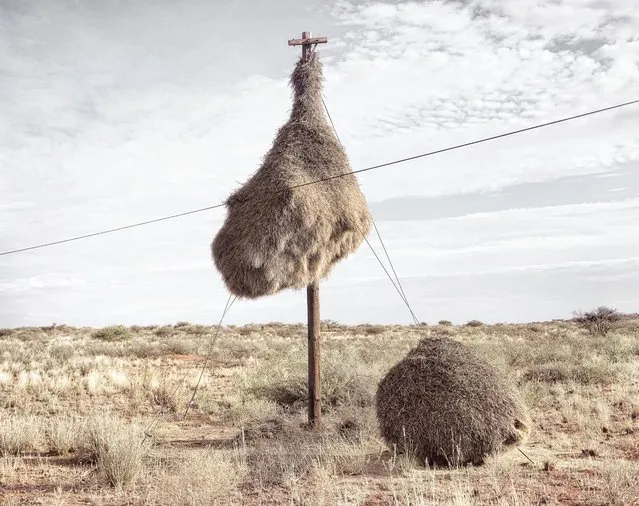
Captured by South African photographer Dillon Marsh, these fantastic photographs depict the many designs employed by sociable weavers to build sturdy nests that are safe from intruders such as cobras and tree snakes. They are also nice cool during the day, and stay warm during cold desert nights. A University of Stellenbosch graduate, Marsh is currently interested in landscape photographer who seeks out anomalies that can be arranged in a photographic series. Assimilation depicts scores of intricate weaver’s nests atop utility poles in Southern Africa. Colonies of sociable weavers have been known to stay attached to one particular nest for up to 100 years, according to The San Diego Zoo.
Details
15 Feb 2014 14:47:00
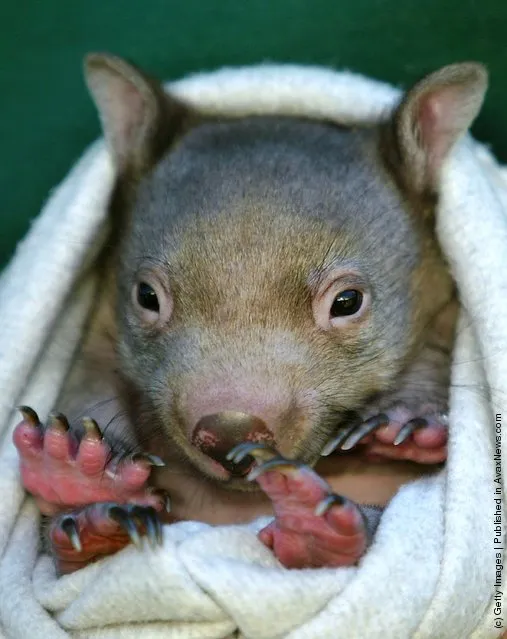
A baby Common Wombat

“Wombats are Australian marsupials; they are short-legged, muscular quadrupeds, approximately 1 metre (39 in) in length with a short, stubby tail. They are adaptable in their habitat tolerances, and are found in forested, mountainous, and heathland areas of south-eastern Australia, including Tasmania, as well as an isolated patch of about 300 ha in Epping Forest National Park in central Queensland”. – Wikipedia

Photo: “Abdul”, a baby Common Wombat, is one of the marsupials on show during the spring baby boom at Taronga Zoo September 1, 2005 in Sydney, Australia. “Abdul” was orphaned when his mother was killed by a car. (Photo by Mark Nolan/Getty Images)
Details
20 Aug 2011 11:23:00
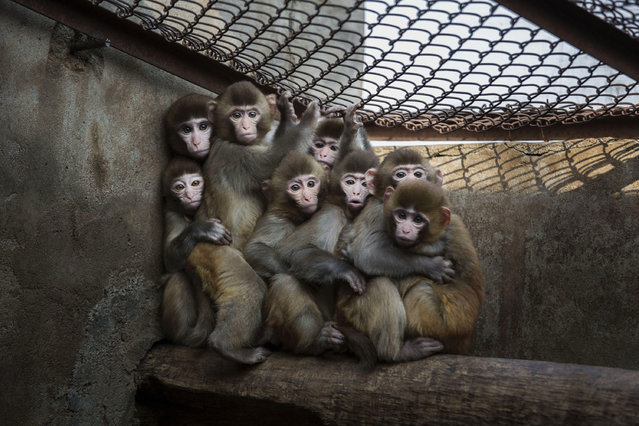
Macaque monkeys crowd together in their cage at a monkey farm on February 3, 2016 in Xinye county, Henan province, China. The area boasts a centuries-long and lucrative history of raising and training monkeys for performance. In Xinye, villagers are seeing an increase in business with the lunar calendar's “Year of the Monkey”. Farmers say most of the monkeys are bred and raised for domestic zoos, circuses, and performing groups, but add that some are also sold for medical research in China and the United States. Despite the popularity of the tradition, critics contend the training methods and conditions constitute animal cruelty. (Photo by Kevin Frayer/Getty Images)

Macaque monkeys crowd together in their cage at a monkey farm on February 3, 2016 in Xinye county, Henan province, China. The area boasts a centuries-long and lucrative history of raising and training monkeys for performance. In Xinye, villagers are seeing an increase in business with the lunar calendar's “Year of the Monkey”. Farmers say most of the monkeys are bred and raised for domestic zoos, circuses, and performing groups, but add that some are also sold for medical research in China and the United States. Despite the popularity of the tradition, critics contend the training methods and conditions constitute animal cruelty. (Photo by Kevin Frayer/Getty Images)
Details
31 Dec 2016 09:56:00
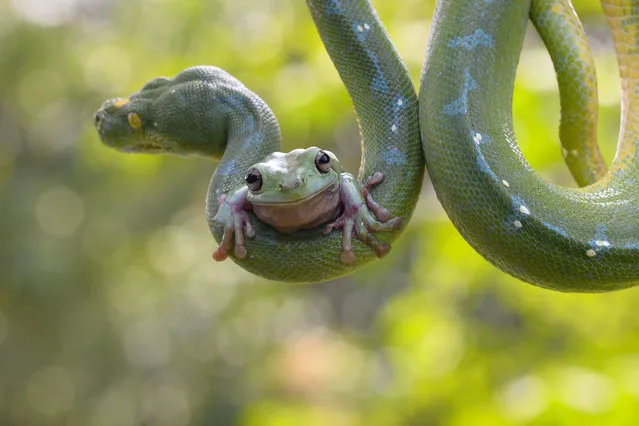
The frog and snake. Clinging on with sticky toes, a green tree frog sits bravely on its unlikely friend – a large tree python. Curled around the branches of a small coconut tree, the snake appears relatively undisturbed by the bold passenger that has clambered onto its skin. Grown in captivity together, the pair display no signs of aggression or fear, comfortable with their encounters high up in the leafy branches.  Photo enthusiast Fahmi Bhs watched in surprise as the frog slowly climbed along the scales of the metre long snake in a zoo in Jakarta, Indonesia. (Photo by Fahmi Bhs/Solent News/SIPA Press)

Clinging on with sticky toes, a green tree frog sits bravely on its unlikely friend – a large tree python. Curled around the branches of a small coconut tree, the snake appears relatively undisturbed by the bold passenger that has clambered onto its skin. Grown in captivity together, the pair display no signs of aggression or fear, comfortable with their encounters high up in the leafy branches. Photo enthusiast Fahmi Bhs watched in surprise as the frog slowly climbed along the scales of the metre long snake in a zoo in Jakarta, Indonesia. (Photo by Fahmi Bhs/Solent News/SIPA Press)
Details
08 Aug 2014 11:09:00
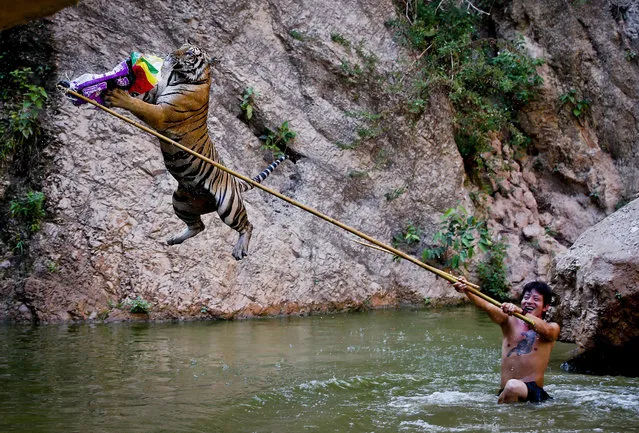
A tiger jumps while being trained at the Tiger Temple in Kanchanaburi province, west of Bangkok, Thailand, February 25, 2016. Thailand's controversial Tiger Temple, dogged for years by talk that it supplies the black market and mistreats its animals, is fighting to keep the big cats after wildlife authorities rejected a bid to extend a zoo licence that expired in 2013. (Photo by Chaiwat Subprasom/Reuters)

A tiger jumps while being trained at the Tiger Temple in Kanchanaburi province, west of Bangkok, Thailand, February 25, 2016. Thailand's controversial Tiger Temple, dogged for years by talk that it supplies the black market and mistreats its animals, is fighting to keep the big cats after wildlife authorities rejected a bid to extend a zoo licence that expired in 2013. The Buddhist temple, home to more than 100 tigers, has been investigated for suspected links to wildlife trafficking and wildlife activists have accused it of illegal breeding of the animals. Thai wildlife authorities have sent ten of the temple's tigers to a wildlife sanctuary. But the temple, which bills itself as a wildlife sanctuary, has denied links to illegal trafficking, and wants to hold on to its tigers. (Photo by Chaiwat Subprasom/Reuters)
Details
29 Feb 2016 11:56:00
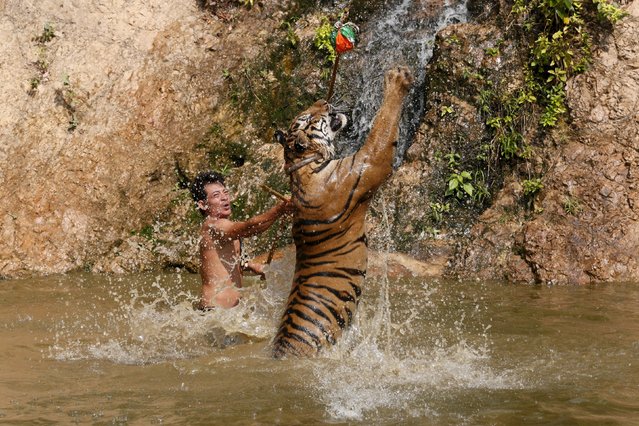
A picture made available 26 April 2016 shows a tiger playing in the water with a trainer nicknamed “Super Tiger Man” at the Tiger Temple in Kanchanaburi province, Thailand, 24 April 2016. The site known in Thai as “Wat Pa Luangta Maha Bua Yannasampanno” has been the focus of a dispute with the Department of National Parks, Wildlife and Plant Conservation (DNP) after the DNP asked in 2015 that the temple hands over its 147 tigers since it was not licensed to keep them. The temple has requested for a zoo license according to its managing director. (Photo by Diego Azubel/EPA)

A picture made available 26 April 2016 shows a tiger playing in the water with a trainer nicknamed “Super Tiger Man” at the Tiger Temple in Kanchanaburi province, Thailand, 24 April 2016. The site known in Thai as “Wat Pa Luangta Maha Bua Yannasampanno” has been the focus of a dispute with the Department of National Parks, Wildlife and Plant Conservation (DNP) after the DNP asked in 2015 that the temple hands over its 147 tigers since it was not licensed to keep them. The temple has requested for a zoo license according to its managing director. (Photo by Diego Azubel/EPA)
Details
01 Jun 2016 12:44:00
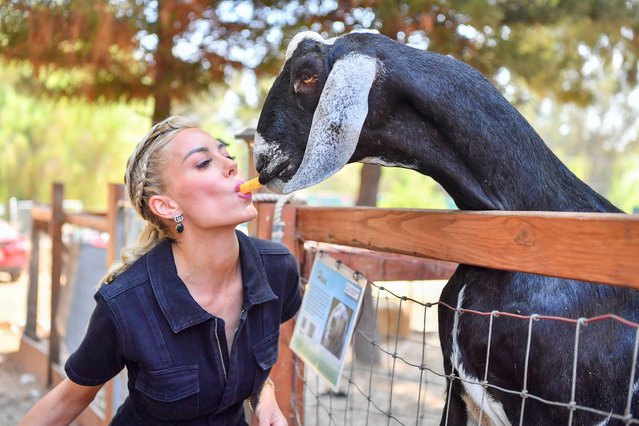
American actress Heather Rae Young feeds an alpaca a carrot stick from her mouth during her bridal shower hosted by PETA at Kindred Spirits Care Farm on September 2, 2021. On Thursday morning, PETA and rescued animals from Kindred Spirits Care Farm will host a bridal shower for Heather Rae Young in honor of the longtime animal rights activist and Selling Sunset star’s upcoming nuptials to Tarek El Moussa. (Photo by Snorlax/The Mega Agency)

American actress Heather Rae Young feeds an alpaca a carrot stick from her mouth during her bridal shower hosted by PETA at Kindred Spirits Care Farm on September 2, 2021. On Thursday morning, PETA and rescued animals from Kindred Spirits Care Farm will host a bridal shower for Heather Rae Young in honor of the longtime animal rights activist and Selling Sunset star’s upcoming nuptials to Tarek El Moussa. (Photo by Snorlax/The Mega Agency)
Details
12 Sep 2021 07:11:00
Newborn White-Cheeked Gibbon Nomascus

“Nomascus is the second most speciose genus of gibbons (family Hylobatidae). Originally this genus was a subgenus of Hylobates, and all individuals were considered one species, Hylobates concolor. Species within Nomascus are characterized by 52 chromosomes. Some species are all black, some light with a distinct black tuft of crown fur, and some by distinct, light-colored cheek patches. Nomascus is found from southern China (Yunnan) to southern Vietnam, and also on Hainan Island. One of the genus' species, Nomascus nasutus, has been deemed “the most critically endangered ape species in the world”. All of the species in this genus are endangered or critically endangered”. – Wikipedia

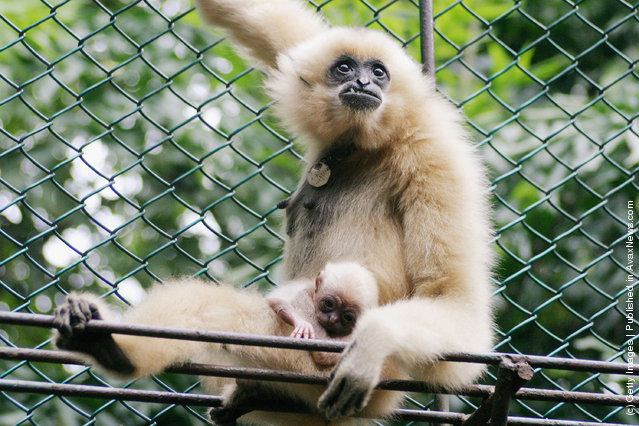
Photo: A newborn White-Cheeked Gibbon clings to its mother in the Nanning Zoo on April 12, 2004 in Nanning, Guangxi province, China. The White-Cheeked Gibbon's natural habitat is Southern China as well as Vietnam and Laos. They are classified as highly endangered and are on the brink of extinction due to poaching and reduction of natural rainforests. (Photo by Getty Images)
Details
12 Aug 2011 11:51:00