Loading...
Done
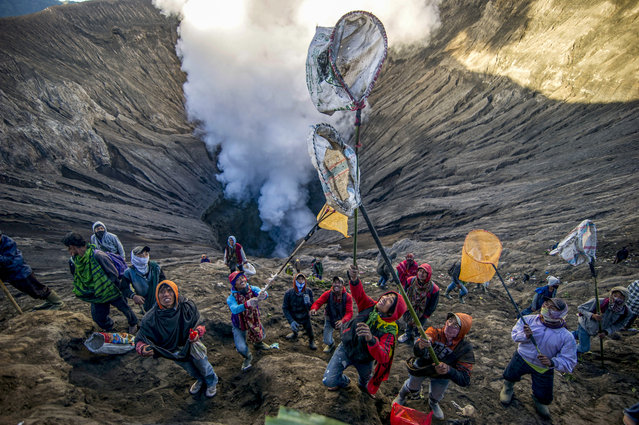
Some people prepare to catch offerings thrown by Tengger tribe people into the crater of Bromo volcano to in Probolinggo, East Java province, on June 30, 2018, as part of Yadnya Kasada festival which falls on the 14th day of the Kasada month based on the traditional Hindu lunar calendar. (Photo by Juni Kriswanto/AFP Photo)

Some people prepare to catch offerings thrown by Tengger tribe people into the crater of Bromo volcano to in Probolinggo, East Java province, on June 30, 2018, as part of Yadnya Kasada festival which falls on the 14th day of the Kasada month based on the traditional Hindu lunar calendar. (Photo by Juni Kriswanto/AFP Photo)
Details
03 Jul 2018 10:16:00
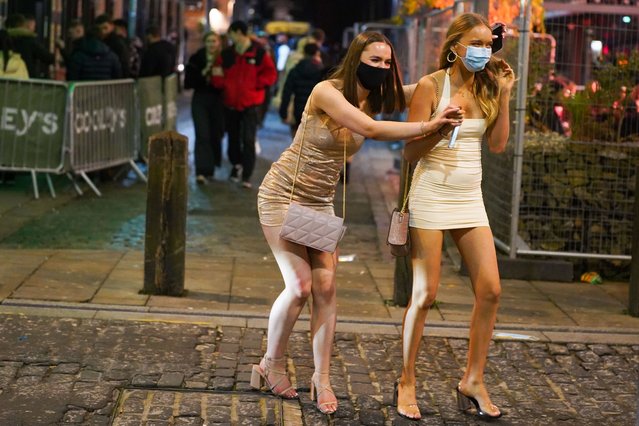
Ladies enjoyed themselves last night – while keeping safe with their face masks on in Liverpool, United Kingdom on Saturday, December 5, 2020, after coronavirus restrictions were eased following the end of the second national lockdown. (Photo by London News Pictures)

Ladies enjoyed themselves last night – while keeping safe with their face masks on in Liverpool, United Kingdom on Saturday, December 5, 2020, after coronavirus restrictions were eased following the end of the second national lockdown. (Photo by London News Pictures)
Details
07 Dec 2020 00:07:00
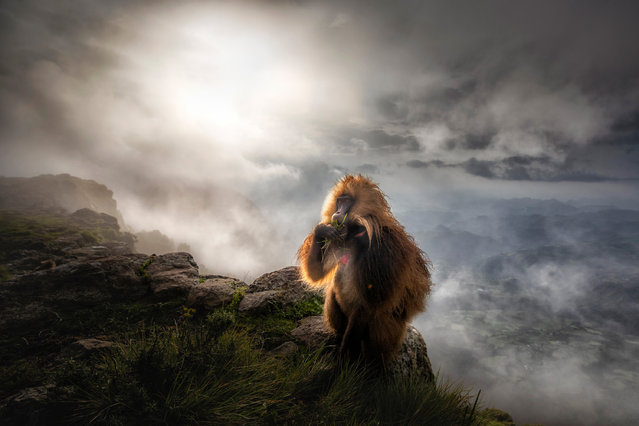
Highly commended, mammals: Gelada after the storm – Marco Gaiotti (Italy). “Gelada baboons are the only monkey species in the world that feed on grasses. They are native to the tableland of Ethiopia. Every morning large family groups wander from their sleeping places in the steep rock face, up to 1,000 metres high, to the feeding grounds at the tablelands. This image clearly depicts their feeding strategy: they pull out bunches of grass, sort the stalks and then lift them to their mouth. This shot was taken towards the end of the rainy season after a heavy storm”. (Photo by Marco Gaiotti/2019 GDT European Wildlife Photographer of the Year)

Highly commended, mammals: Gelada after the storm – Marco Gaiotti (Italy). “Gelada baboons are the only monkey species in the world that feed on grasses. They are native to the tableland of Ethiopia. Every morning large family groups wander from their sleeping places in the steep rock face, up to 1,000 metres high, to the feeding grounds at the tablelands. This image clearly depicts their feeding strategy: they pull out bunches of grass, sort the stalks and then lift them to their mouth. This shot was taken towards the end of the rainy season after a heavy storm”. (Photo by Marco Gaiotti/2019 GDT European Wildlife Photographer of the Year)
Details
31 Oct 2019 00:03:00
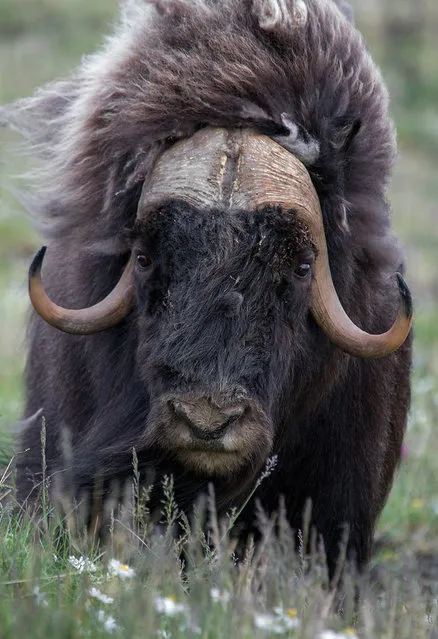
Wild Musk Oxen in Arctic Prairie in Russia

Vitaly Gorshkov, a wildlife photographer, captured these animals in their natural habitat. He says that these animals are so hairy that it is difficult to distinguish the front from the back. The oxen aren’t really afraid of humans that is why it is easy to approach them and take pictures.
Details
25 Apr 2014 12:10:00
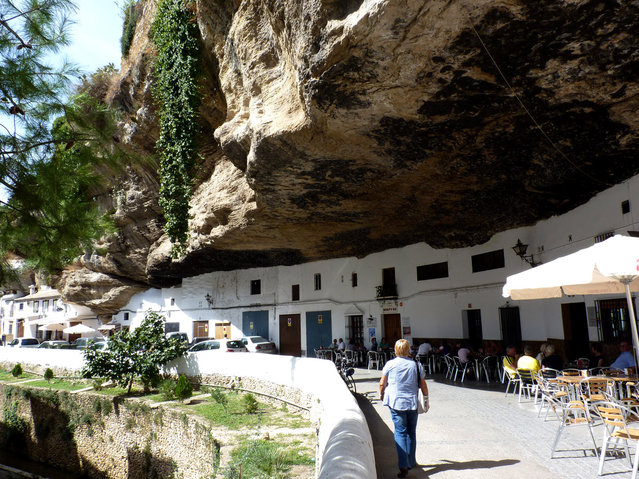
Setenil De Las Bodegas

Setenil de las Bodegas is a town (pueblo) in the province of Cádiz, Spain, famous for its dwellings built into rock overhangs above the Rio Trejo. According to the 2005 census, the city has a population of 3,016 inhabitants. It has an exact antipodal city: Auckland, New Zealand.
Details
27 Sep 2012 10:02:00
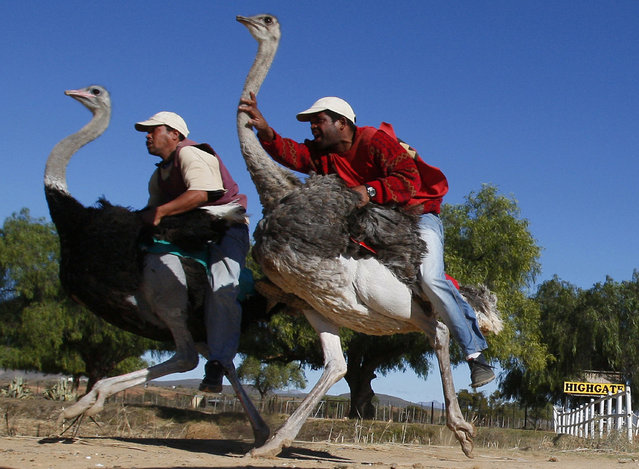
In this Sunday, June 27, 2010 file photo two men compete in an ostrich race at Highgate ostrich farm in Oudtshoorn, South Africa. Clambering onto an ostrich for a ride used to be popular among tourists in a South African town of  Oudtshoorn known of  as the  “ostrich capital of the world”. Not so much anymore. Two major ostrich farms in Oudtshoorn have stopped offering ostrich rides to tourists, responding to concerns about the birds’ welfare. A third farm is sticking with the feature, saying it is regulated and that ostriches do not experience discomfort.. The Highgate farm, however, continues to offer ostrich rides. (Photo by Shuji Kajiyama/AP Photo)

In this Sunday, June 27, 2010 file photo two men compete in an ostrich race at Highgate ostrich farm in Oudtshoorn, South Africa. Clambering onto an ostrich for a ride used to be popular among tourists in a South African town of Oudtshoorn known of as the “ostrich capital of the world”. Not so much anymore. Two major ostrich farms in Oudtshoorn have stopped offering ostrich rides to tourists, responding to concerns about the birds’ welfare. A third farm is sticking with the feature, saying it is regulated and that ostriches do not experience discomfort. The Highgate farm, however, continues to offer ostrich rides. (Photo by Shuji Kajiyama/AP Photo)
Details
20 Jun 2017 07:23:00
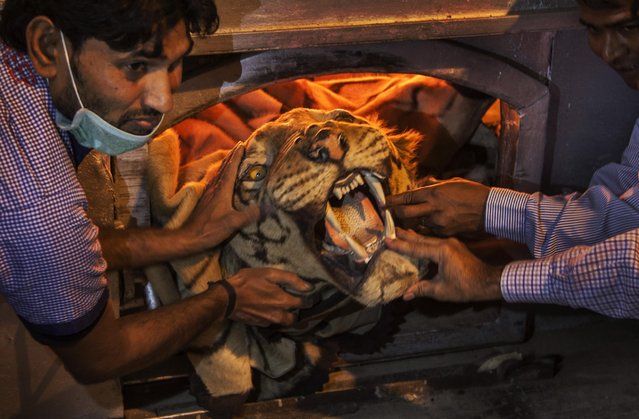
Indian authorities hold a tiger skin as they set fire to a stockpile of illegal wildlife parts at the Delhi Zoo in New Delhi, India, Sunday, November 2, 2014. A stockpile of tiger skins, elephant tusks, rhino horns and other illegal animal parts were burned Sunday in an effort to discourage wildlife smuggling in South Asia. (Photo by Tsering Topgyal/AP Photo)

Indian authorities hold a tiger skin as they set fire to a stockpile of illegal wildlife parts at the Delhi Zoo in New Delhi, India, Sunday, November 2, 2014. A stockpile of tiger skins, elephant tusks, rhino horns and other illegal animal parts were burned Sunday in an effort to discourage wildlife smuggling in South Asia. (Photo by Tsering Topgyal/AP Photo)
Details
03 Nov 2014 12:44:00
Students with torches protest against the alleged encroachment of Nepal border by India in far west of Nepal, during the 49th day of a lockdown imposed by the government amid concerns about the spread of the coronavirus disease (COVID-19), in Kathmandu, Nepal on May 11, 2020. (Photo by Navesh Chitrakar/Reuters)

Students with torches protest against the alleged encroachment of Nepal border by India in far west of Nepal, during the 49th day of a lockdown imposed by the government amid concerns about the spread of the coronavirus disease (COVID-19), in Kathmandu, Nepal on May 11, 2020. (Photo by Navesh Chitrakar/Reuters)
Details
13 May 2020 00:03:00