Loading...
Done
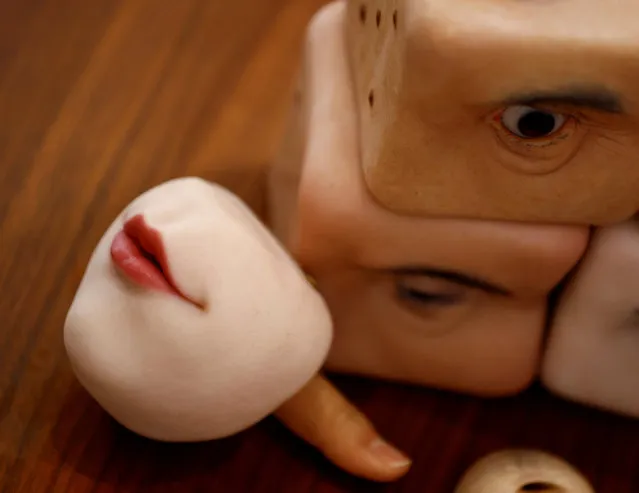
Hyper realistic flesh-like objects created by Masataka Shishido, also known as DJ Doooo, are displayed at his home, during a photo opportunity in Kawasaki, south of Tokyo, Japan on January 26, 2023. (Photo by Kim Kyung-Hoon/Reuters)

Hyper realistic flesh-like objects created by Masataka Shishido, also known as DJ Doooo, are displayed at his home, during a photo opportunity in Kawasaki, south of Tokyo, Japan on January 26, 2023. (Photo by Kim Kyung-Hoon/Reuters)
Details
15 Feb 2023 04:55:00
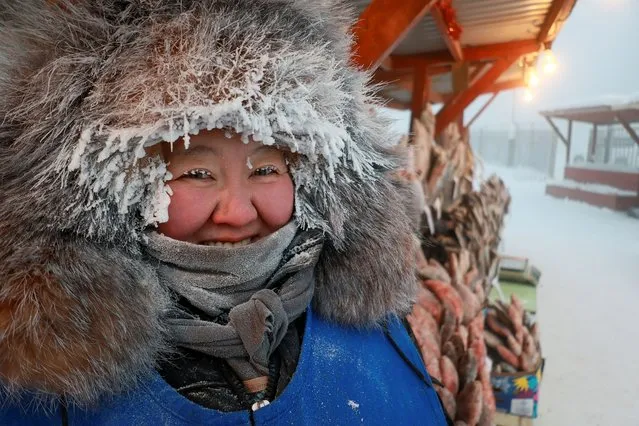
Vendor Nyurgusun Starostina, 47, poses for a picture at an open-air market on a frosty day in Yakutsk, Russia, December 5, 2023. Temperatures in parts of the Sakha Republic, also known as Yakutia and located in the northeastern part of Siberia, went below minus 50 degrees Celsius (minus 58 degrees Fahrenheit) on December 5. (Photo by Roman Kutukov/Reuters)

Vendor Nyurgusun Starostina, 47, poses for a picture at an open-air market on a frosty day in Yakutsk, Russia, December 5, 2023. Temperatures in parts of the Sakha Republic, also known as Yakutia and located in the northeastern part of Siberia, went below minus 50 degrees Celsius (minus 58 degrees Fahrenheit) on December 5. (Photo by Roman Kutukov/Reuters)
Details
20 Dec 2023 02:12:00
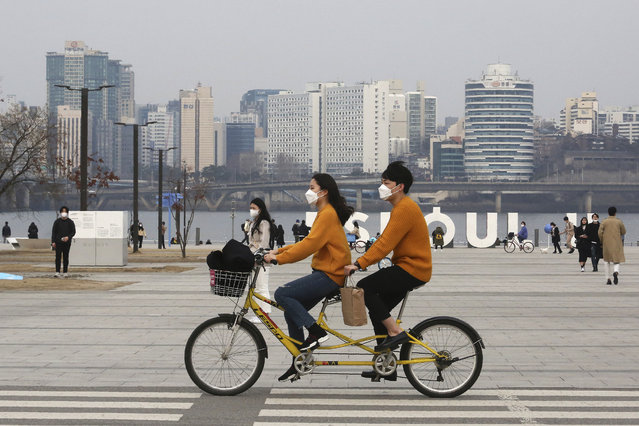
A couple wearing face masks rides a bicycle at a park in Seoul, South Korea, Saturday, March 7, 2020. The number of infections of the COVID-19 disease spread around the globe. (Photo by Ahn Young-joon/AP Photo)

A couple wearing face masks rides a bicycle at a park in Seoul, South Korea, Saturday, March 7, 2020. The number of infections of the COVID-19 disease spread around the globe. (Photo by Ahn Young-joon/AP Photo)
Details
03 Apr 2020 00:01:00
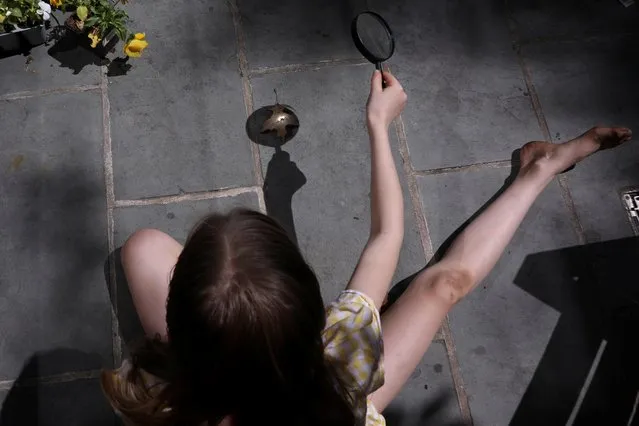
Lydia Hassebroek, 10, uses a magnifying glass to light a leaf on fire in her backyard during the outbreak of the coronavirus disease (COVID-19) in Brooklyn, New York, U.S., May 17, 2020. (Photo by Caitlin Ochs/Reuters)

Lydia Hassebroek, 10, uses a magnifying glass to light a leaf on fire in her backyard during the outbreak of the coronavirus disease (COVID-19) in Brooklyn, New York, U.S., May 17, 2020. (Photo by Caitlin Ochs/Reuters)
Details
19 Jun 2020 00:05:00
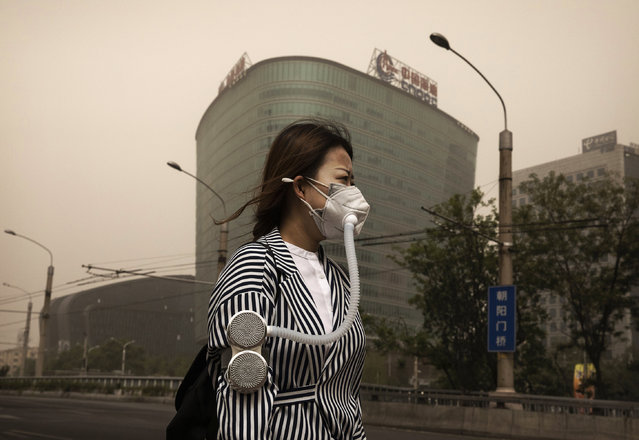
A Chinese woman wears a mask to protect from particles blown in during a sandstorm as she walks in the street on May 4, 2017 in Beijing, China. Sandstorms are common in northern China during the spring season and are caused when heavy winds from Mongolia in the north brings sand and pollutants that can blanket Chinese cities and cause air quality to deteriorate. (Photo by Kevin Frayer/Getty Images)

A Chinese woman wears a mask to protect from particles blown in during a sandstorm as she walks in the street on May 4, 2017 in Beijing, China. Sandstorms are common in northern China during the spring season and are caused when heavy winds from Mongolia in the north brings sand and pollutants that can blanket Chinese cities and cause air quality to deteriorate. (Photo by Kevin Frayer/Getty Images)
Details
12 May 2017 07:06:00
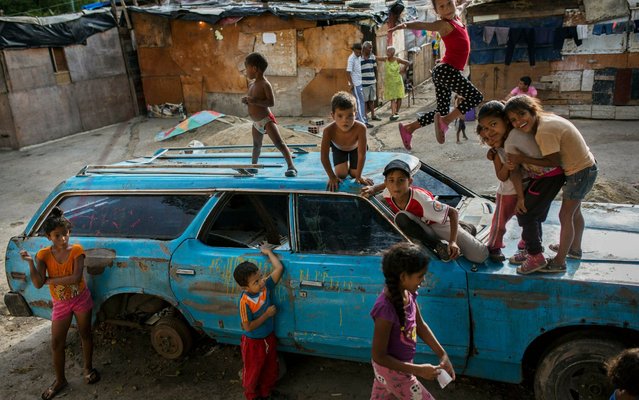
Children play on top of an abandoned car at the “Aguerridos Liberator” shanty town in Caracas, Venezuela, Thursday, May 9, 2019. (Photo by Rodrigo Abd/AP Photo)

Children play on top of an abandoned car at the “Aguerridos Liberator” shanty town in Caracas, Venezuela, Thursday, May 9, 2019. (Photo by Rodrigo Abd/AP Photo)
Details
28 May 2019 00:05:00
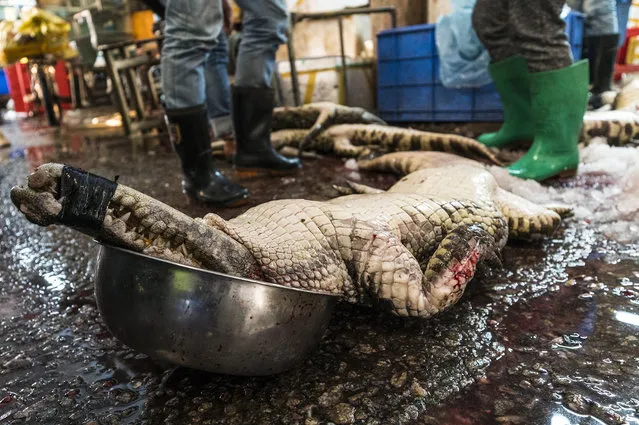
A dead crocodile is seen on Huangsha Seafood Market in Guangzhou, Guandong Province, China, 22 January 2018. Tsukiji Market of China or Huangsha Seafood Market is biggest one in Southern China and one of the biggest in China, as there are literally hundreds of different varieties of fish and seafood scattered throughout the market. Since the proximity of the fish market is so close to the Zhujiang River, it's quite easy for the large fishing vessels and fishermen to unload their fresh catch right at the market, which ensures that the fish and seafood remain fresh. Fish and other seafood are coming there from all around the globe. Seafood Market is full of different kinds of live fish, live shellfish, and live seafood on display in crystal clear tanks and it's common to see 5-star chefs, retailers and expats to source for fresh and high-quality seafood supplies for reasonable prices. While it is a wholesale fish market, since many Guangzhou restaurants and businesses come to purchase their seafood here, the public is welcome to come and even purchase. Many local Chinese have the vendors slice up fresh salmon fillets to take home or carry seafood into one of the nearby specialty restaurants, where they will cook if for them and serve it with vegetables and other side dishes of their choice. One of the biggest attractions for both, tourists and buyers, on market are crocodiles, which are brought there alive in wooden cases with taped jaws so they can?t accidentally bite. They are from crocodile farms from Guangdong, China and from Vietnam. Crocodile meat is popular in most Asian countries and it is consider as delicate one. Crocodiles weight from 10 to 25 kg and bigger ones are about 2 years old. They cost about 70 RMB (8.90 EURO) when bout as whole, or if you buy as parts most expensive and appreciated parts are paws 120 RMB (15.26 EURO) per kg, and tail 100 RMB (12.72 EURO) per kg. (Photo by Aleksandar Plavevski/EPA/EFE)

A dead crocodile is seen on Huangsha Seafood Market in Guangzhou, Guandong Province, China, 22 January 2018. Tsukiji Market of China or Huangsha Seafood Market is biggest one in Southern China and one of the biggest in China, as there are literally hundreds of different varieties of fish and seafood scattered throughout the market. (Photo by Aleksandar Plavevski/EPA/EFE)
Details
17 Apr 2020 00:05:00
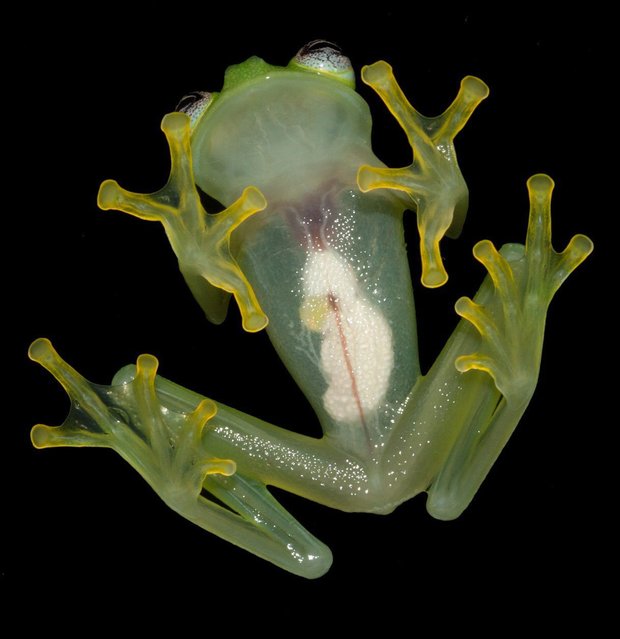
A handout photograph provided by Brian Kubicki of Costa Rican Amphibian Research Center on 26 April 2016 shows a “Crystal frog”, Hyalinobatrachium dianae (H. diane). This frog was discovered by US biologist Brian Kubicki and Costa Ricans Stanley Salazar and Robert Puschendorf in a rainy forest of Costa Rican caribbean after 40 years without notice of any new example of this kind. (Photo by Brian Kubicki/EPA/Costa Rican Amphibian Research Center)

A handout photograph provided by Brian Kubicki of Costa Rican Amphibian Research Center on 26 April 2016 shows a “Crystal frog”, Hyalinobatrachium dianae (H. diane). This frog was discovered by US biologist Brian Kubicki and Costa Ricans Stanley Salazar and Robert Puschendorf in a rainy forest of Costa Rican caribbean after 40 years without notice of any new example of this kind. (Photo by Brian Kubicki/EPA/Costa Rican Amphibian Research Center)
Details
02 May 2015 15:23:00