Loading...
Done
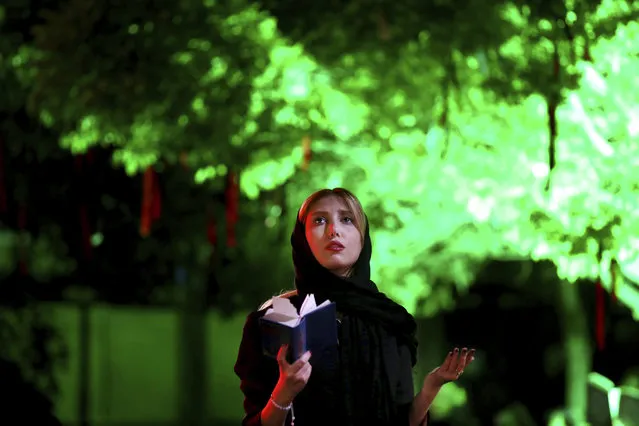
An Iranian Shiite Muslim prays in Laylat al-Qadr, or the night of destiny, during holy fasting month of Ramadan after midnight, in central Tehran, Iran, early Sunday, June 18, 2017. Laylat al-Qadr is the night when Muslims believe the Quran was first revealed to prophet Muhammad. Worshipers gather in religious ceremonies to pray, ask forgiveness and make wishes on one of the most important nights of the Islamic calendar. Shiite Muslims, the vast majority of Iranians, believe the night happens either on 19th, 21st or 23rd of the holy month of Ramadan. (Photo by Ebrahim Noroozi/AP Photo)

An Iranian Shiite Muslim prays in Laylat al-Qadr, or the night of destiny, during holy fasting month of Ramadan after midnight, in central Tehran, Iran, early Sunday, June 18, 2017. Laylat al-Qadr is the night when Muslims believe the Quran was first revealed to prophet Muhammad. Worshipers gather in religious ceremonies to pray, ask forgiveness and make wishes on one of the most important nights of the Islamic calendar. Shiite Muslims, the vast majority of Iranians, believe the night happens either on 19th, 21st or 23rd of the holy month of Ramadan. (Photo by Ebrahim Noroozi/AP Photo)
Details
18 Jun 2017 03:43:00
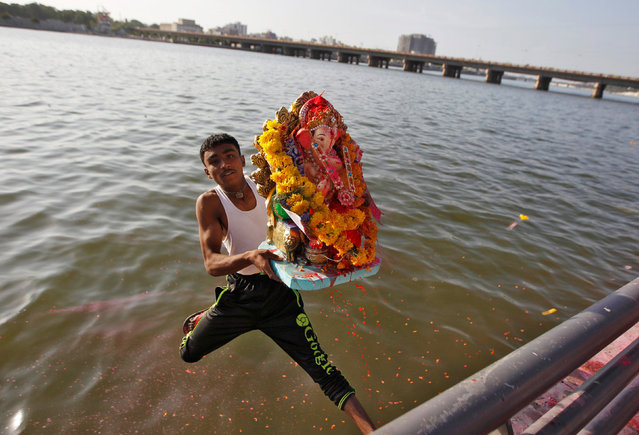
A devotee carrying an idol of the Hindu god Ganesh, the deity of prosperity, jumps into the Sabarmati river to immerse the idol during the 10-day-long Ganesh Chaturthi festival in Ahmedabad, India, September 11, 2016. (Photo by Amit Dave/Reuters)

A devotee carrying an idol of the Hindu god Ganesh, the deity of prosperity, jumps into the Sabarmati river to immerse the idol during the 10-day-long Ganesh Chaturthi festival in Ahmedabad, India, September 11, 2016. (Photo by Amit Dave/Reuters)
Details
16 Sep 2016 10:37:00
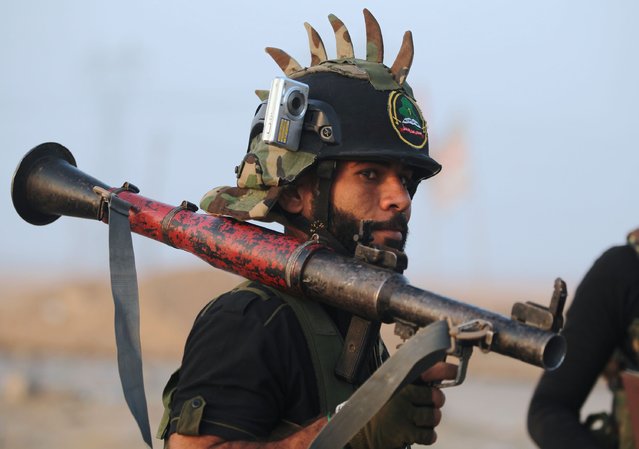
A Shiite fighter from the Hashed al-Shaabi (Popular Mobilisation) patrols in the village of Ayn Nasir, south of Mosul, on October 29, 2016, after recapturing it from Islamic State group jihadists in an ongoing operation to retake the city of Mosul. Iraqi paramilitary forces launched an operation to cut the Islamic State group's supply lines between its Mosul bastion and neighbouring Syria, opening a new front in the nearly two-week-old offensive. (Photo by Ahmad Al-Rubaye/AFP Photo)

A Shiite fighter from the Hashed al-Shaabi (Popular Mobilisation) patrols in the village of Ayn Nasir, south of Mosul, on October 29, 2016, after recapturing it from Islamic State group jihadists in an ongoing operation to retake the city of Mosul. Iraqi paramilitary forces launched an operation to cut the Islamic State group's supply lines between its Mosul bastion and neighbouring Syria, opening a new front in the nearly two-week-old offensive. (Photo by Ahmad Al-Rubaye/AFP Photo)
Details
31 Oct 2016 11:20:00
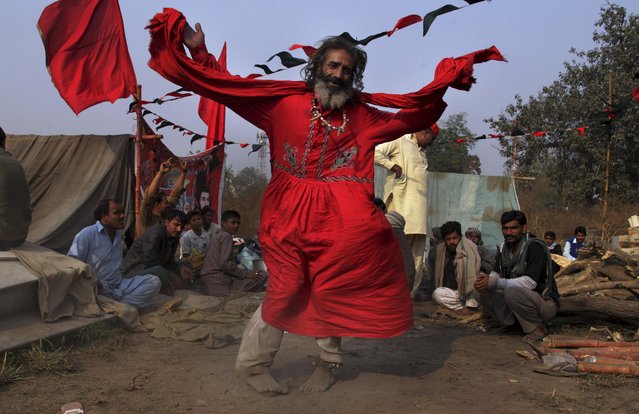
A Pakistani devotee dances to celebrate the three-day annual festival to pay tribute to the famous saint Al-Sheikh Ali Bin Usman Al-Hajveri known as Data Ganjbaksh at outside his shrine in Lahore, Pakistan, Sunday, November 20, 2016. Thousands of people traveled from all over Pakistan to attend the celebrations. (Photo by K.M. Chaudary/AP Photo)

A Pakistani devotee dances to celebrate the three-day annual festival to pay tribute to the famous saint Al-Sheikh Ali Bin Usman Al-Hajveri known as Data Ganjbaksh at outside his shrine in Lahore, Pakistan, Sunday, November 20, 2016. Thousands of people traveled from all over Pakistan to attend the celebrations. (Photo by K.M. Chaudary/AP Photo)
Details
05 Dec 2016 11:33:00
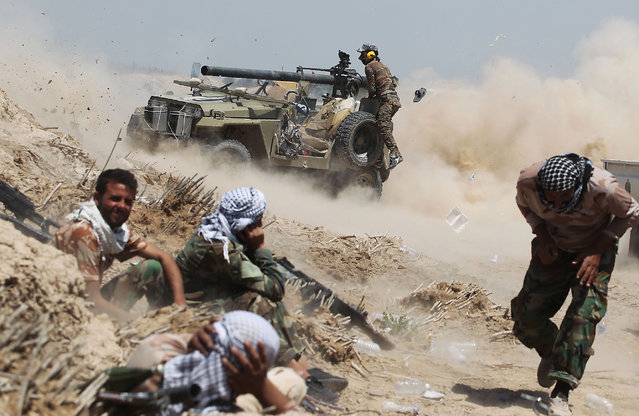
Iraqi pro-government forces fire an anti-tank cannon near al-Sejar village, north-east of Fallujah, on May 25, 2016, as they take part in a major assault to retake the city from the Islamic State (IS) group. Iraqi forces, consisting of special forces, soldiers, police, paramilitary-fighters and pro-government tribesmen, launched a major assault to retake Fallujah, the scene of deadly battles during the US occupation and one of the toughest targets yet in Baghdad's war on the Islamic State group. (Photo by Ahmad Al-Rubaye/AFP Photo)

Iraqi pro-government forces fire an anti-tank cannon near al-Sejar village, north-east of Fallujah, on May 25, 2016, as they take part in a major assault to retake the city from the Islamic State (IS) group. Iraqi forces, consisting of special forces, soldiers, police, paramilitary-fighters and pro-government tribesmen, launched a major assault to retake Fallujah, the scene of deadly battles during the US occupation and one of the toughest targets yet in Baghdad's war on the Islamic State group. (Photo by Ahmad Al-Rubaye/AFP Photo)
Details
26 May 2016 12:42:00
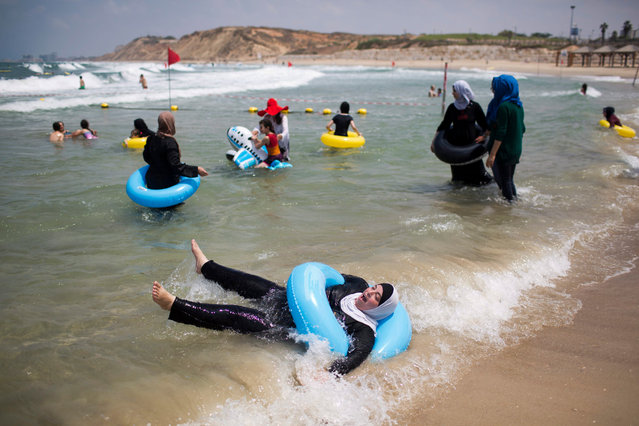
Palestinians kids from the West Bank Palestinian village Umm Al Rajaj cross the Meitar checkpoint into Israel on their way to the beach of Tel Aviv for the first time, Israel, 10 August 2016. A group of humanitarian Israeli women called in Arabic “Min Al Baher” (from the sea) voluntarily arranges authorizations and transportation for Palestinians families that live in the West Bank to cross into Israel in order to visit the sea for the first time. (Photo by Abir Sultan/EPA)

Palestinians kids from the West Bank Palestinian village Umm Al Rajaj cross the Meitar checkpoint into Israel on their way to the beach of Tel Aviv for the first time, Israel, 10 August 2016. A group of humanitarian Israeli women called in Arabic “Min Al Baher” (from the sea) voluntarily arranges authorizations and transportation for Palestinians families that live in the West Bank to cross into Israel in order to visit the sea for the first time. (Photo by Abir Sultan/EPA)
Details
02 Sep 2016 13:41:00
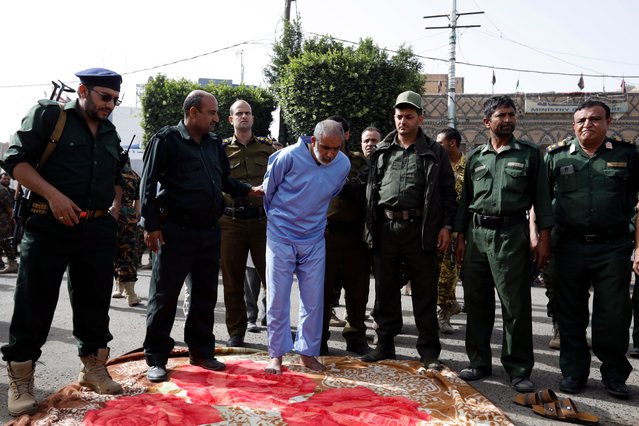
Ali al-Naami, convicted of murdering his three daughters, is placed on a carpet to be executed at a public square in Sana'a, Yemen, 16 June 2021. Defendant Ali al-Naami, 40, convicted of killing his daughters Rahaf, 7, Raghad, 12, and Malak, 14, in June 2019, was executed by an executioner in front of hundreds of spectators in a public square in Sana'a. He had admitted to strangling them and drowning them in a water tank after the mother left the house due to domestic disputes with him. (Photo by Yahya Arhab/EPA/EFE)

Ali al-Naami, convicted of murdering his three daughters, is placed on a carpet to be executed at a public square in Sana'a, Yemen, 16 June 2021. Defendant Ali al-Naami, 40, convicted of killing his daughters Rahaf, 7, Raghad, 12, and Malak, 14, in June 2019, was executed by an executioner in front of hundreds of spectators in a public square in Sana'a. He had admitted to strangling them and drowning them in a water tank after the mother left the house due to domestic disputes with him. (Photo by Yahya Arhab/EPA/EFE)
Details
20 Jun 2021 08:10:00
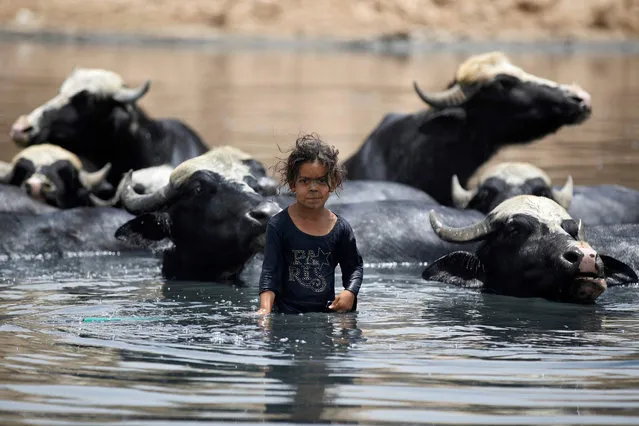
A young Iraqi shepherdess cools down buffaloes in wastewater filling the dried-up Diyala river which was a tributary of the Tigris, in the Al-Fadiliyah district east of Baghdad, on June 26, 2022. Iraq's drought reflects a decline in the level of waterways due to the lack of rain and lower flows from upstream neighboring countries Iran and Turkey. (Photo by Ahmad Al-Rubaye/AFP Photo)

A young Iraqi shepherdess cools down buffaloes in wastewater filling the dried-up Diyala river which was a tributary of the Tigris, in the Al-Fadiliyah district east of Baghdad, on June 26, 2022. Iraq's drought reflects a decline in the level of waterways due to the lack of rain and lower flows from upstream neighboring countries Iran and Turkey. (Photo by Ahmad Al-Rubaye/AFP Photo)
Details
07 Jul 2022 04:21:00