Loading...
Done
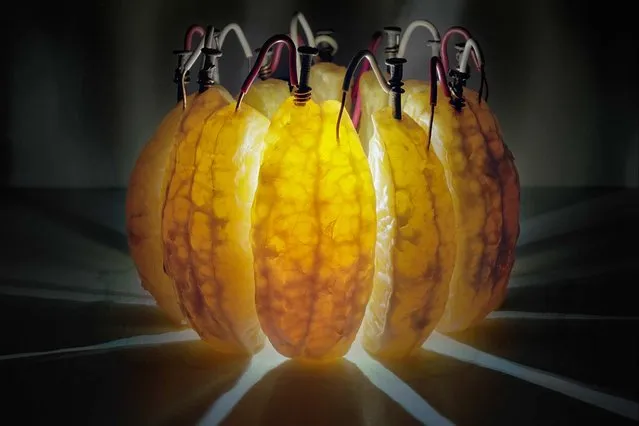
Wedges of an orange generate enough current and electrical juice – 3.5 volts – to power an LED. The fruit’s citric acid helps electrons flow from galvanized nails to copper wire in this 14-hour exposure. This image was published in September’s Visions of Earth, a trio of photos that appear in each issue of National Geographic. (Photo by Caleb Charland/National Geographic)

Wedges of an orange generate enough current and electrical juice – 3.5 volts – to power an LED. The fruit’s citric acid helps electrons flow from galvanized nails to copper wire in this 14-hour exposure. This image was published in September’s Visions of Earth, a trio of photos that appear in each issue of National Geographic. (Photo by Caleb Charland/National Geographic)
Details
06 Jan 2014 12:09:00
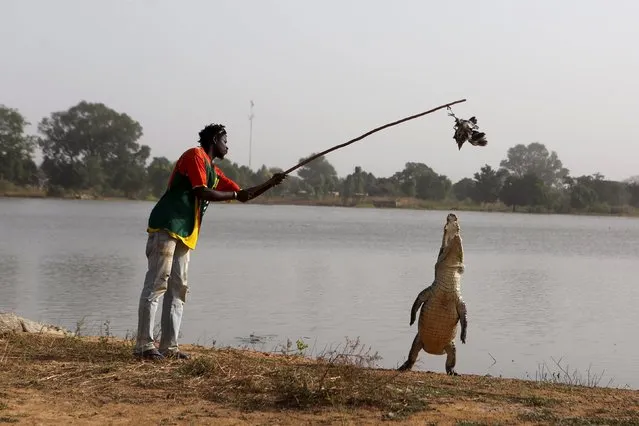
A guide dangles a live chicken in front of a crocodile in the village of Bazoule, Burkina Faso, December 4, 2015. The villagers believe the crocodiles that live there are sacred. (Photo by Joe Penney/Reuters)

A guide dangles a live chicken in front of a crocodile in the village of Bazoule, Burkina Faso, December 4, 2015. The villagers believe the crocodiles that live there are sacred. (Photo by Joe Penney/Reuters)
Details
07 Dec 2015 08:06:00
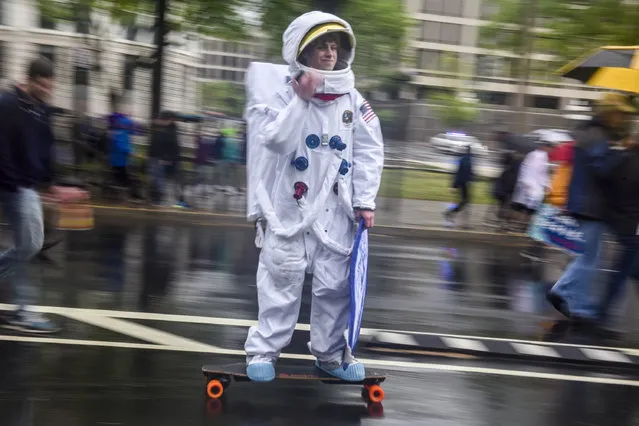
Max Gold, 20, of NYC, cruises on his skateboard as thousands gather on the National Mall for the March for Science on Saturday, April 22, 2017, in Washington, DC.  Activists and scientists descend on the nation's capital to rally for environmental causes and government policies rooted in scientific research as part of the Earth Day and March for Science rallies. (Photo by Jahi Chikwendiu/The Washington Post)

Max Gold, 20, of NYC, cruises on his skateboard as thousands gather on the National Mall for the March for Science on Saturday, April 22, 2017, in Washington, DC. Activists and scientists descend on the nation's capital to rally for environmental causes and government policies rooted in scientific research as part of the Earth Day and March for Science rallies. (Photo by Jahi Chikwendiu/The Washington Post)
Details
22 May 2017 07:38:00
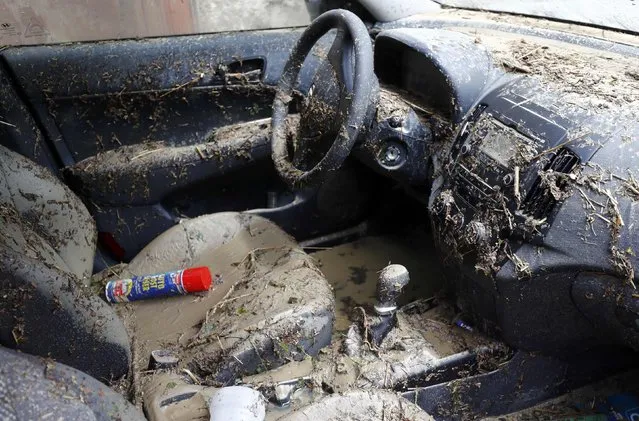
An interior of a car damaged by the floods is pictured in the town of Braunsbach, Germany, May 30, 2016. (Photo by Kai Pfaffenbach/Reuters)

An interior of a car damaged by the floods is pictured in the town of Braunsbach, Germany, May 30, 2016. The flood tore through Braunsbach, crushing cars, ripping corners of houses and flooding homes during a storm that hit southwestern Germany. Miraculously no one in Braunsbach was killed, though three people died as a result of the storm in other parts of the country. (Photo by Kai Pfaffenbach/Reuters)
Details
31 May 2016 11:35:00
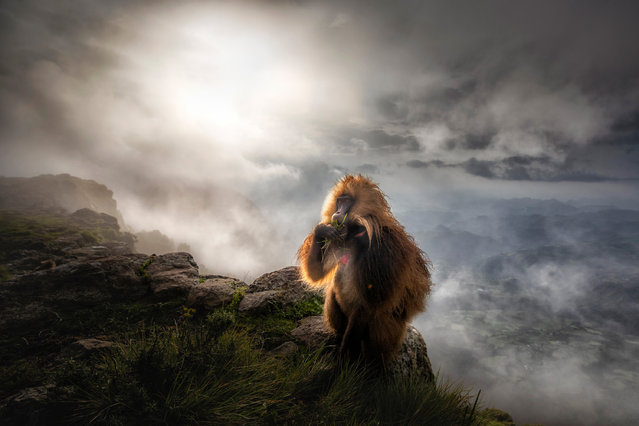
Highly commended, mammals: Gelada after the storm – Marco Gaiotti (Italy). “Gelada baboons are the only monkey species in the world that feed on grasses. They are native to the tableland of Ethiopia. Every morning large family groups wander from their sleeping places in the steep rock face, up to 1,000 metres high, to the feeding grounds at the tablelands. This image clearly depicts their feeding strategy: they pull out bunches of grass, sort the stalks and then lift them to their mouth. This shot was taken towards the end of the rainy season after a heavy storm”. (Photo by Marco Gaiotti/2019 GDT European Wildlife Photographer of the Year)

Highly commended, mammals: Gelada after the storm – Marco Gaiotti (Italy). “Gelada baboons are the only monkey species in the world that feed on grasses. They are native to the tableland of Ethiopia. Every morning large family groups wander from their sleeping places in the steep rock face, up to 1,000 metres high, to the feeding grounds at the tablelands. This image clearly depicts their feeding strategy: they pull out bunches of grass, sort the stalks and then lift them to their mouth. This shot was taken towards the end of the rainy season after a heavy storm”. (Photo by Marco Gaiotti/2019 GDT European Wildlife Photographer of the Year)
Details
31 Oct 2019 00:03:00
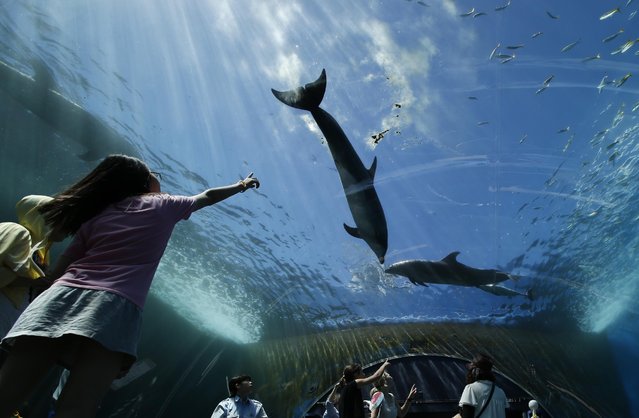
Bottlenose dolphins swim over visitors in water tank at the Hakkeijima Sea Paradise aquarium-amusement park complex in Yokohama, southwest of Tokyo, Tuesday, July 21, 2015. Temperatures in Tokyo's metropolitan area neared around 96 degree Fahrenheit, or 35 degree Celsius, on Tuesday. (Photo by Shuji Kajiyama/AP Photo)

Bottlenose dolphins swim over visitors in water tank at the Hakkeijima Sea Paradise aquarium-amusement park complex in Yokohama, southwest of Tokyo, Tuesday, July 21, 2015. Temperatures in Tokyo's metropolitan area neared around 96 degree Fahrenheit, or 35 degree Celsius, on Tuesday. (Photo by Shuji Kajiyama/AP Photo)
Details
22 Jul 2015 12:33:00


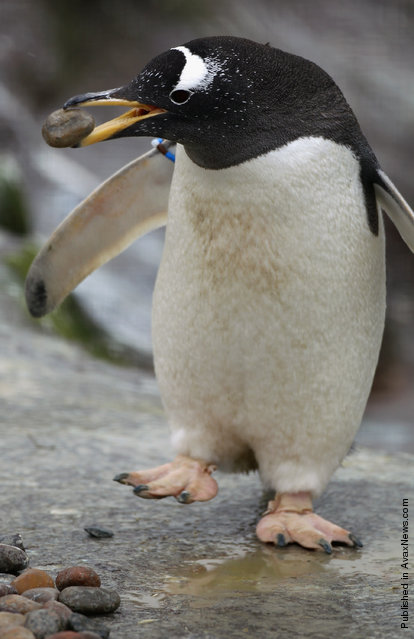
Gentoo penguins begin the breeding season at Edinburgh Zoo on March 1, 2011 in Edinburgh, Scotland. The zoo keepers have just installed the nest rings in the penguin enclosure. The male penguins will then collect pebbles and offer them to the females to fill nest rings with, this helps keep the eggs and chick up off the ground and is part of their courtship display. (Photo by Jeff J Mitchell/Getty Images)ю EDINBURGH, SCOTLAND – MARCH 01
Details
07 Mar 2011 13:54:00


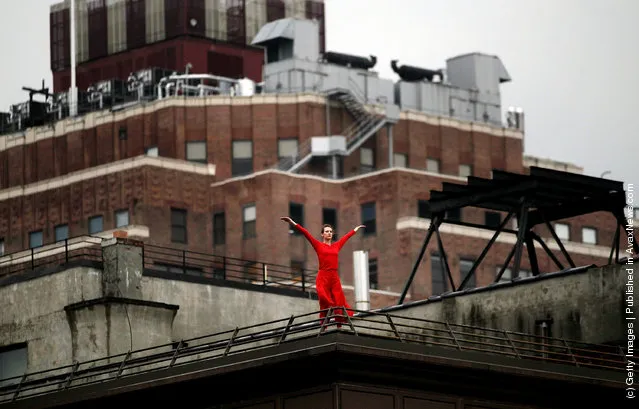
A dancer from the Trisha Brown Dance Company performs during “Roof Piece” above the High Line park June 9, 2011 in New York City. Roof Piece (1971) consists of nine dancers performing improvised movement signals to each other in a chain on various rooftops overlooking the city. This presentation marked the first full performance of the piece since 1973. (Photo by Mario Tama/Getty Images)
Details
10 Jun 2011 08:47:00