Loading...
Done
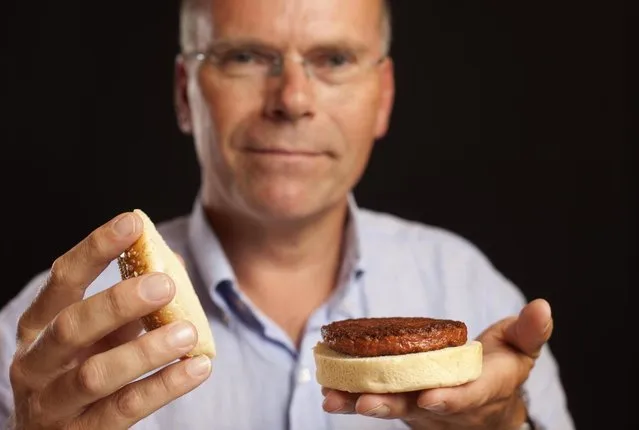
In this handout image provided by Ogilvy, a burger made from cultured beef, which has been developed by Professor Mark Post of Maastricht University in the Netherlands (pictured) is shown to the media during a press conference on August 5, 2013 in London, England. Cultured Beef could help solve the coming food crisis and combat climate change with commercial production of Cultured Beef beginning within ten to twenty years. (Photo by David Parry via Getty Images)

In this handout image provided by Ogilvy, a burger made from cultured beef, which has been developed by Professor Mark Post of Maastricht University in the Netherlands (pictured) is shown to the media during a press conference on August 5, 2013 in London, England. The in-vitro burger, cultured from cattle stem cells, the first example of what its creator says could provide an answer to global food shortages and help combat climate change, was fried in a pan and tasted by two volunteers. The burger is the result of years of research by Dutch scientist Mark Post, a vascular biologist at the University of Maastricht, who is working to show how meat grown in petri dishes might one day be a true alternative to meat from livestock.The meat in the burger has been made by knitting together around 20,000 strands of protein that has been cultured from cattle stem cells in Post's lab. (Photo by David Parry)
Details
06 Aug 2013 08:48:00
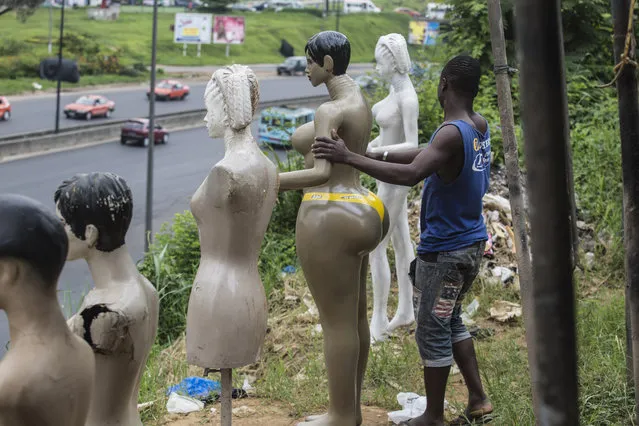
A curvy woman is considered prosperous, healthy and s*xy in Ivory Coast, photographer Joana Choumali explains. Here: An apprentice lines up his work on a roadside. (Photo by Joana Choumali)

Photographer Joana Choumali’s latest project explores body image and beauty by documenting the men building Abidjan’s clothing models. The “Awoulaba” mannequin is a customised model designed with the African ideal of beauty in mind, curvier than the stick-thin examples usually seen in the west. They first appeared in 2011, and have since become a familiar sight outside the numerous clothing shops dotted throughout Ivory Coast’s capital, Abidjan. Here: An apprentice lines up his work on a roadside. (Photo by Joana Choumali)
Details
06 Jun 2016 11:05:00
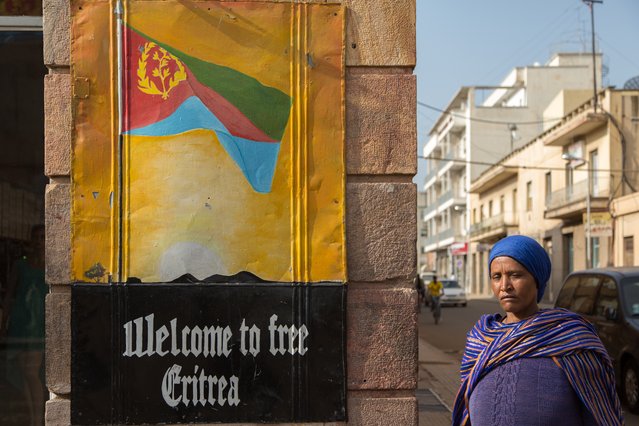
For her series “Dolce Vita in Hell”, Swiss photojournalist Stéphanie Buret headed to Eritrea and found a country struggling to haul itself out of oppression – but with its art deco buildings still looking stunning. (Photo by Stéphanie Buret/The Guardian)

For her series “Dolce Vita in Hell”, Swiss photojournalist Stéphanie Buret headed to Eritrea and found a country struggling to haul itself out of oppression – but with its art deco buildings still looking stunning. (Photo by Stéphanie Buret/The Guardian)
Details
04 Aug 2016 10:35:00
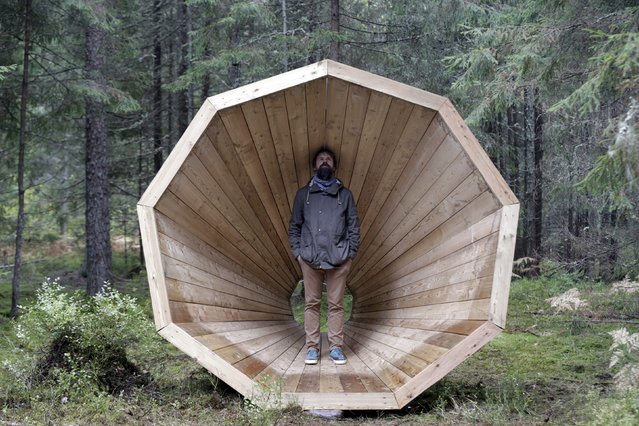
Head of the department of the interior architecture at Estonian Academy of Arts Hannes Praks poses for a picture in the wooden megaphone in the forest near Pahni village, Estonia, September 28, 2015. (Photo by Ints Kalnins/Reuters)

Head of the department of the interior architecture at Estonian Academy of Arts Hannes Praks poses for a picture in the wooden megaphone in the forest near Pahni village, Estonia, September 28, 2015. (Photo by Ints Kalnins/Reuters)
Details
02 Oct 2015 08:03:00
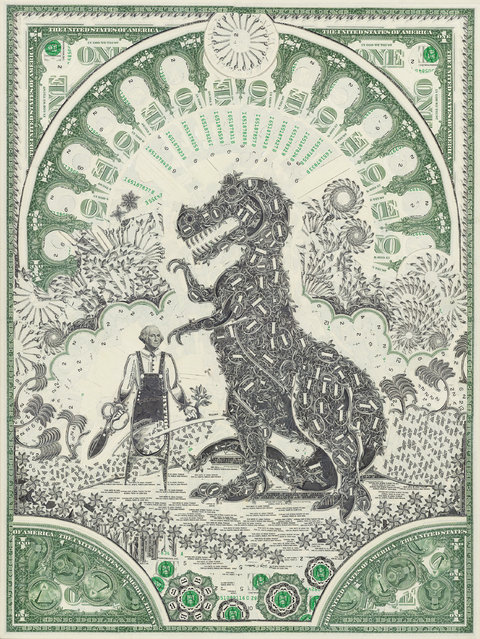
Way of the Dinosaur, cut one-dollar bills. (Photo by Mark Wagner)

Mark Wagner, the collage artist, challenges viewers to examine their relationship with money and the capitalist society in which we live. Photo: “Way of the Dinosaur”, cut one-dollar bills. (Photo by Mark Wagner)
Details
06 Jul 2014 09:17:00
A woman is tattooed by an artist during Warsaw Tattoo Convention 2014 in Warsaw November 29, 2014. (Photo by Kacper Pempel/Reuters)

A woman is tattooed by an artist during Warsaw Tattoo Convention 2014 in Warsaw November 29, 2014. (Photo by Kacper Pempel/Reuters)
Details
06 Dec 2014 12:12:00
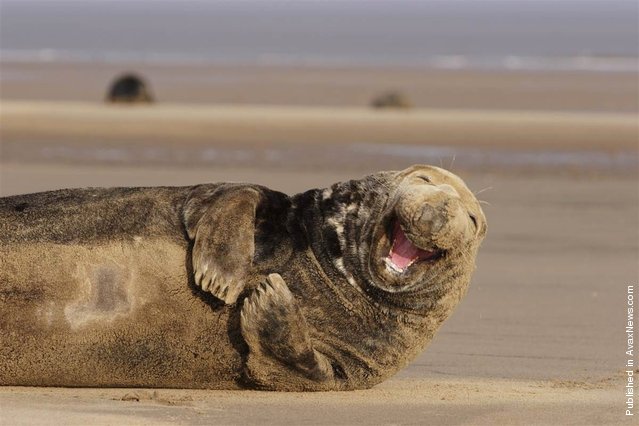
This grey adult male seal enjoys a good grin while lying on the beach

“This grey adult male seal enjoys a good grin while lying on the beach”. (Photo by Michael Hutch/SplashdownDirect via Rex USA)
Details
20 Apr 2012 13:30:00
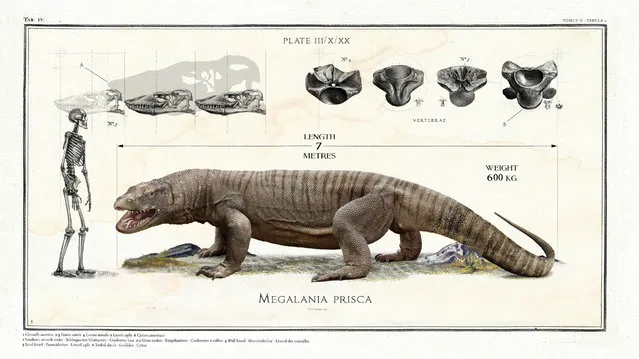
Fossil records indicate that this early lizard, Megalina prisca, was a whopping seven metres in length. (Photo by Sky TV/The Guardian)

Fossil records indicate that this early lizard, Megalania (Megalania prisca or Varanus priscus), was a whopping seven metres in length. They were part of a megafaunal assemblage that inhabited southern Australia during the Pleistocene. The youngest fossil remains date to around 50,000 years ago. The first aboriginal settlers of Australia might have encountered them and been a factor in their extinction. (Photo by Sky TV/The Guardian)
Details
12 Jun 2018 00:05:00