Loading...
Done
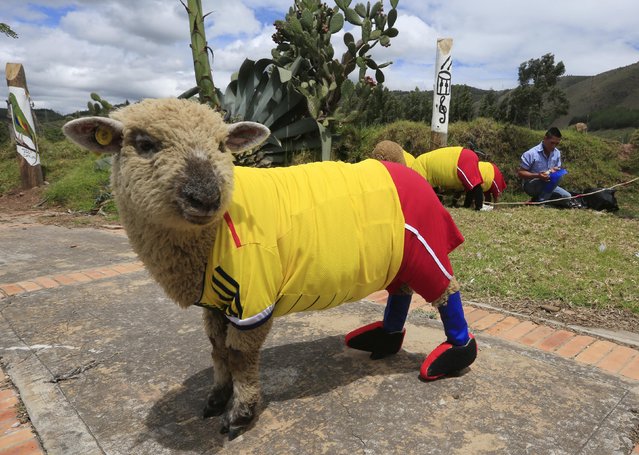
Furry Footie Fans

A sheep dressed in a jersey in the colors of the Colombian national soccer team is seen during a exhibition in Nobsa, Colombia June 1, 2014. The sheep is named Falcao, after the Colombian player. REUTERS/Jose Miguel Gomez
Details
12 Jun 2014 11:01:00
Cute Paper Cutouts By Lowra

Paper cutouts of cartoon characters have evolved into a meme known as Paper Child with a community on deviantART by the name of #paperchildREVOLUTION dedicated to the craft.
Details
06 Jul 2014 23:59:00
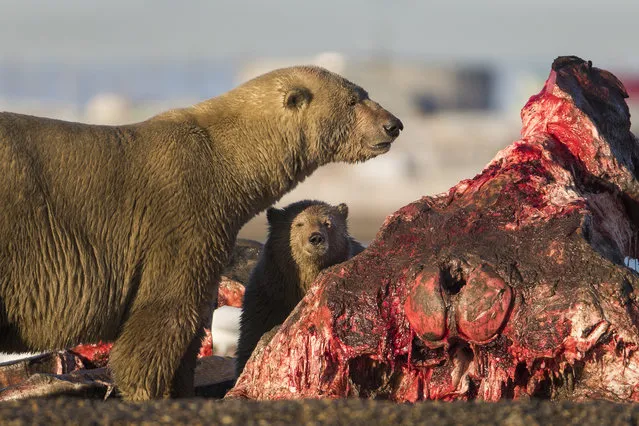
Polar bears prepare to feast on the remains of a bowhead whale, harvested legally by whalers during their annual subsistence hunt, just outside the Inupiat village of Kaktovik, Alaska, USA, 10 September 2017. (Photo by Jim Lo Scalzo/EPA/EFE)

Polar bears prepare to feast on the remains of a bowhead whale, harvested legally by whalers during their annual subsistence hunt, just outside the Inupiat village of Kaktovik, Alaska, USA, 10 September 2017. As climate change shrinks their natural habitat, polar bears are turning Kaktovik into their very own sanctuary city. (Photo by Jim Lo Scalzo/EPA/EFE)
Details
28 Sep 2017 07:33:00
Issues tackled in the show include gender, wealth, consumerism, the environment, protest and identity building. Here: David LaChapelle – October 2004. (Photo by David LaChapelle/The Guardian)

Vogue Italia is hosting a series of shows in Milan exploring how the magazine seeks to engage with hot social and political issues and provoke debate through images by top photographers. The Photo Vogue festival in Milan is hosting three exhibitions. The first, Fashion and Politics in Vogue Italia, looks at the magazine’s ambition to be a catalyst for change – in subtle and playful ways. Here: David LaChapelle – October 2004. (Photo by David LaChapelle/The Guardian)
Details
22 Nov 2017 06:10:00
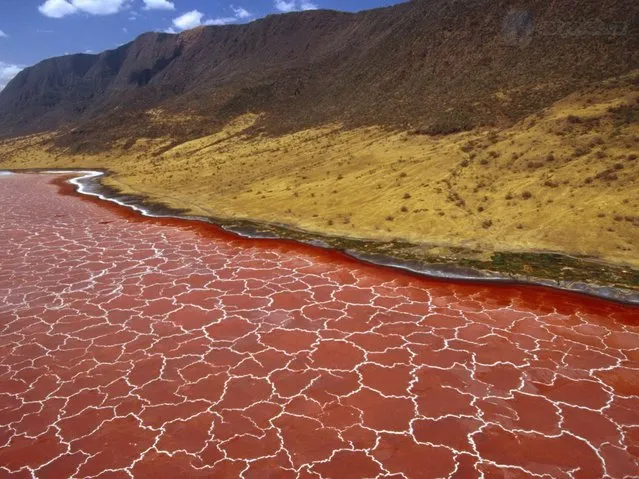
[Lake Natron in Tanzania

Lake Natron is a salt lake located in northern Tanzania, close to the Kenyan border, in the eastern branch of the East African Rift. The lake is fed by the Southern Ewaso Ng'iro River and also by mineral-rich hot springs. It is quite shallow, less than three meters (10 feet) deep, and varies in width depending on its water level, which changes due to high levels of evaporation, leaving concentrations of salt and other minerals, notably sodium carbonate (natron).
Details
05 Jun 2013 10:29:00
“Blow Job”: Gale-force Wind Portraits by Tadao Cern

“In spring of 2010 I wanted to try something new and stopped being an architect. That 'something new' turned out to be photography. Wedding photography – to be exact. Today I travel around the world with my personal projects and commissions knowing that there is a lot more exiting stuff to be tried out. Don't be afraid to change something in your life, because for me that was one of the best decisions”. – Tadao Cern (Photo by Tadao Cern)
Details
19 May 2012 12:48:00


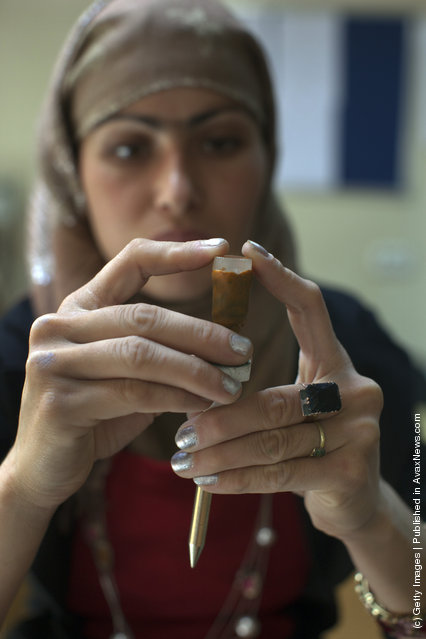
Student, Shoukria positions a stone for cutting at the Turquoise Mountain Gem cutting class on May 18, 2011, in Kabul, Afghanistan. The mineral resources of Afghanistan are relatively unexplored even with Afghanistan's mineral wealth of coal, copper, gold and iron ore, with precious and semiprecious stones, including high-quality emerald, lapis lazuli, red garnet and ruby. Given the country's remote and rugged terrain, on-going instability plus an inadequate infrastructure and transportation means that mining is still difficult. While many are trying to bring positive changes, Afghanistan's mining industry uses unregulated, primitive methods and outdated equipment. (Photo by Paula Bronstein/Getty Images)

Details
22 May 2011 09:11:00
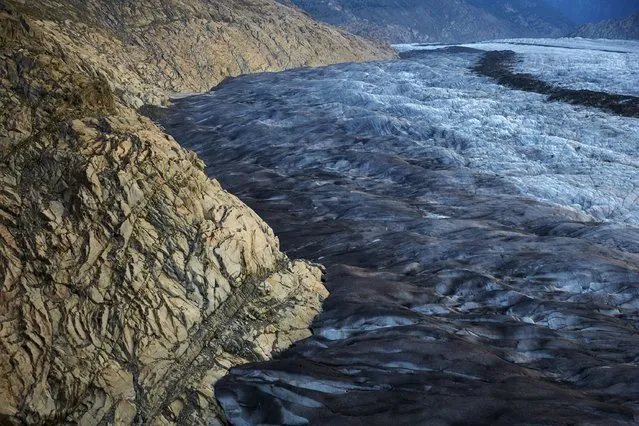
The Aletsch Glacier is pictured at dusk in Fiesch, Switzerland, August 11, 2015. (Photo by Denis Balibouse/Reuters)

The Aletsch Glacier is pictured at dusk in Fiesch, Switzerland, August 11, 2015. One of Europe's biggest glaciers, the Great Aletsch coils 23 km (14 miles) through the Swiss Alps – and yet this mighty river of ice could almost vanish in the lifetimes of people born today because of climate change. The glacier, 900 metres (2,950 feet) thick at one point, has retreated about 3 km (1.9 miles) since 1870 and that pace is quickening. (Photo by Denis Balibouse/Reuters)
Details
18 Oct 2015 08:05:00