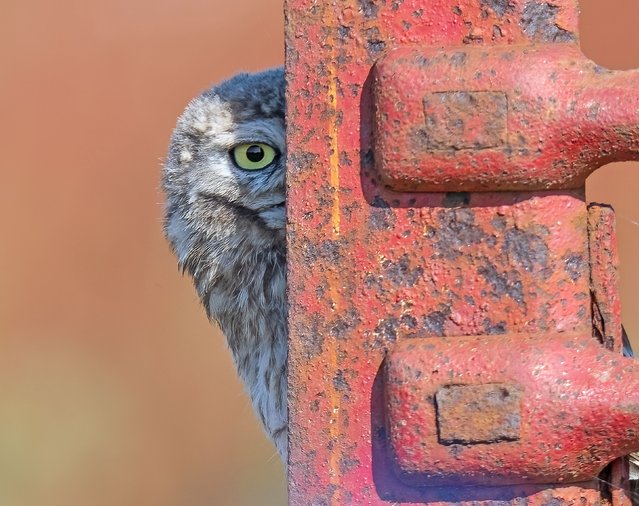
An owl peeps out from behind a rusty piece of farming equipment in Teddesley Park, Staffordshire, UK in the last decade of July 2025. (Photo by David Akers/Solent News & Photo Agency)
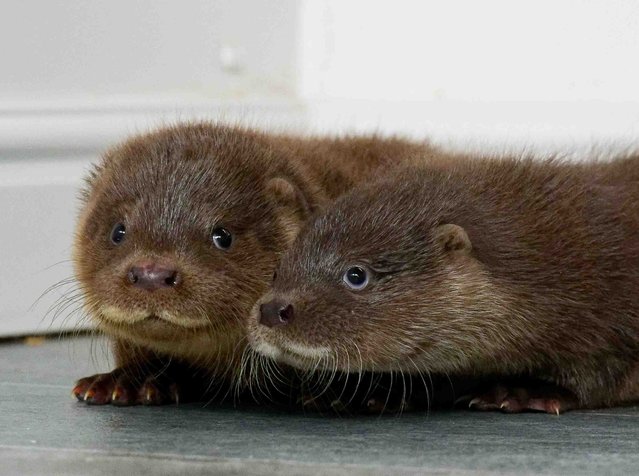
A rescued otter cub named Mingo is receiving specialist care after being found in July 2025 in the flamingo habitat at Colchester Zoo, far from where he should have been. He is being raised with two other cubs at the UK Wild Otter Trust’s centre in Devon, UK. (Photo by UK Wild Otter Trust/Cover Images)
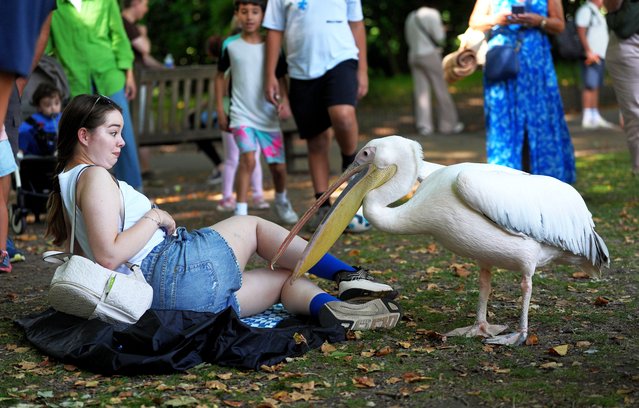
A Pelican attempts to take a persons belongings while they are sat in St James' Park, London on Monday, August 11, 2025. Temperatures will soar above 30°C in parts of the UK in the coming days, with another heatwave possible in some areas. (Photo by Yui Mok/PA Images via Getty Images)
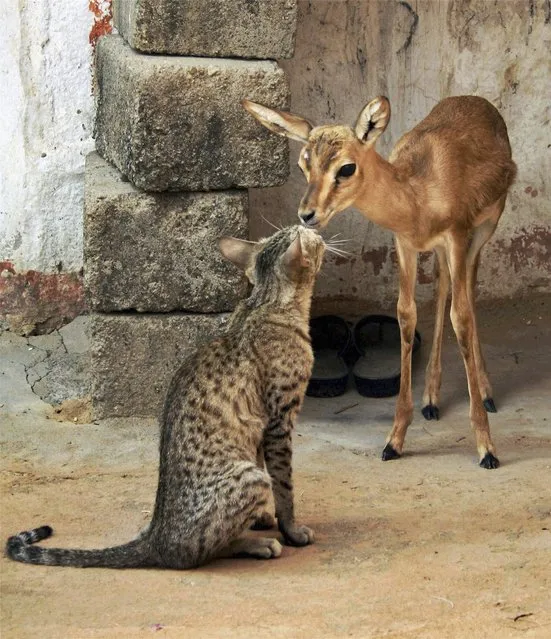
In this Wednesday, May 23, 2012 photograph, a young deer and a cat share a moment in Feench village near Jodhpur, Rajasthan state, India. (Photo by AP Photo)
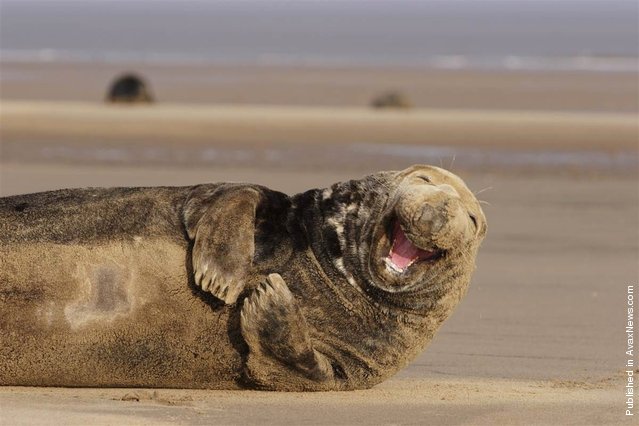
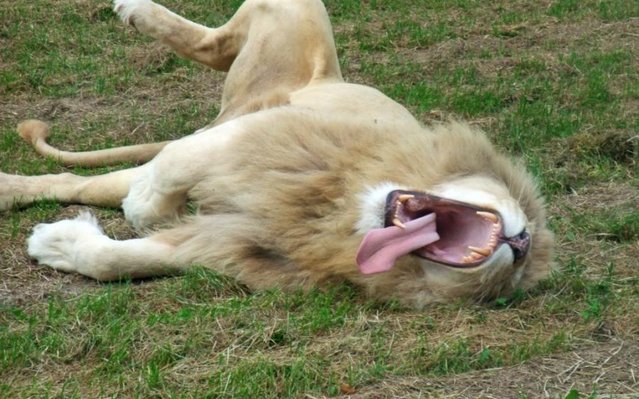
In animals, yawning can serve as a warning signal. For example, Charles Darwin, in his book The Expression of the Emotions in Man and Animals, mentioned that baboons yawn to threaten their enemies, possibly by displaying large canine teeth. Similarly, Siamese fighting fish yawn only when they see a conspecific (same species) or their own mirror-image, and their yawn often accompanies aggressive attack. Guinea pigs also yawn in a display of dominance or anger, displaying their impressive incisor teeth. This is often accompanied by teeth chattering, purring and scent marking.
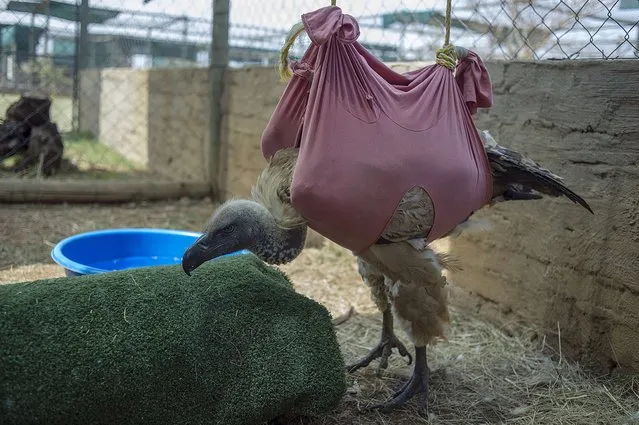
An injured vulture is treated at the VulPro Vulture Rehabilitation Centre in Hartebeepoortdam in the Magalisburg region on September 15, 2015. Confined to southern Africa, just under 4,000 breeding pairs of Cape Vultures remain in the wild, mostly in South Africa, Lesotho and Botswana. Unless conservation efforts are successful, Africa's largest vulture species may be facing eventual extinction. (Photo by Mujahid Safodien/AFP Photo)