Loading...
Done
Van cats, relatively large, have a chalky white coat, sometimes with ruddy coloration on the head and hindquarters, and have blue or amber eyes or have heterochromia, are seen at “Cat Villa”, established to protect the cats in Van, Turkey on January 20, 2021. Internationally valid “health certificate” is prepared for Van cats, visited by local and foreign tourists, within a project to protect their generations and increasing their numbers. Health certificates with information such as name, breed, gender, eye color, date of birth, tail feature, color, hearing status and identity are given to people who want to adopt cats. (Photo by Mesut Varol/Anadolu Agency via Getty Images)

Van cats, relatively large, have a chalky white coat, sometimes with ruddy coloration on the head and hindquarters, and have blue or amber eyes or have heterochromia, are seen at “Cat Villa”, established to protect the cats in Van, Turkey on January 20, 2021. Internationally valid “health certificate” is prepared for Van cats, visited by local and foreign tourists, within a project to protect their generations and increasing their numbers. Health certificates with information such as name, breed, gender, eye color, date of birth, tail feature, color, hearing status and identity are given to people who want to adopt cats. (Photo by Mesut Varol/Anadolu Agency via Getty Images)
Details
29 Jan 2021 09:43:00


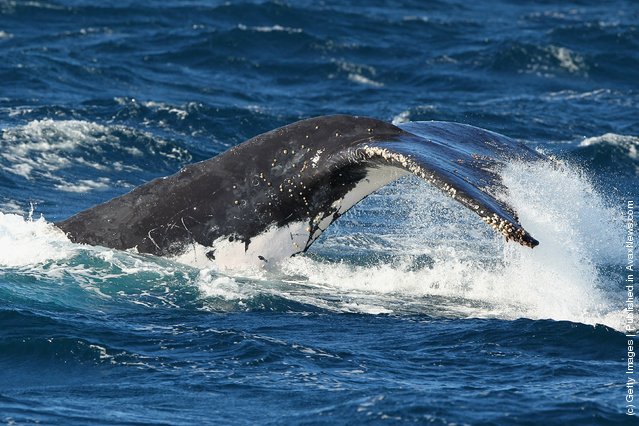
A humpback whale is seen at the beginning of whale watching season during a Manly Whale Watching tour on June 8, 2011 in Sydney, Australia. The first day of winter in New South Wales, June 1st, marks the start of the Humback and southern right whales migration from southern regions to the north to warmer waters. Whale watchers should expect tohave plenty to see with the whale population increasing each year. The migration north continues through July and with the whales returning between September and November. (Photo by Cameron Spencer/Getty Images)
Details
08 Jun 2011 09:49:00
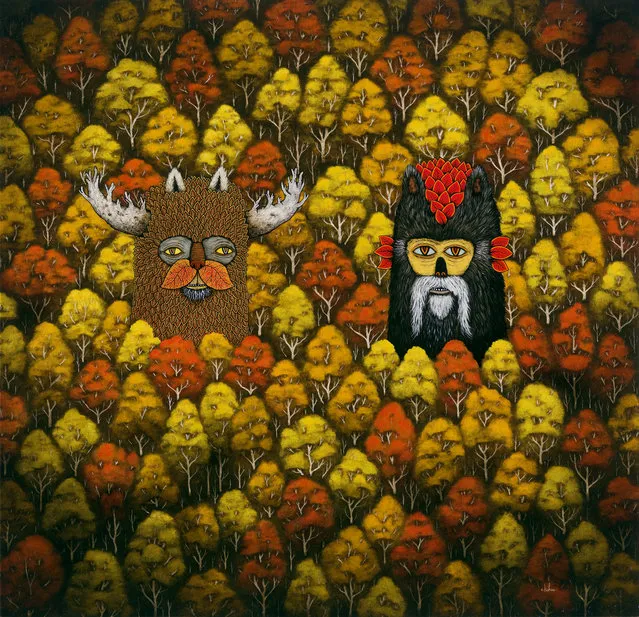
Strange Wanderings By Andy Kehoe

Andy Kehoe recently returned to New York for his third solo show with Jonathan LeVine Gallery. Entitled Luminous Reverie, this show explores the idea of experiencing a lucid moment while drifting along in a daydream. We enjoyed the works, which continued the new direction that he premiered during a show in Los Angeles last year (covered). Again, Kehoe explores the technique of painting layers upon layers of resin and creating a natural 3-D visual element for the viewers to enjoy. This show will be up until June 15th, so stop by and check it out if you’re in NYC.
Details
05 Feb 2014 11:28:00
A doll, placed by stranded Iranian migrant protesters, hangs from barbed wire in front of Madedonian police at the Greek-Macedonian border near to the Greek village of Idomeni November 29, 2015. The protesters were demonstrating against what they say is the closure of the border for Iranian migrants. (Photo by Yannis Behrakis/Reuters)

A doll, placed by stranded Iranian migrant protesters, hangs from barbed wire in front of Madedonian police at the Greek-Macedonian border near to the Greek village of Idomeni November 29, 2015. The protesters were demonstrating against what they say is the closure of the border for Iranian migrants. According to the demonstrators, the hanging toys and dolls represent the outcome of being unable to return, if they are sent back to Iran. (Photo by Yannis Behrakis/Reuters)
Details
30 Nov 2015 09:48:00
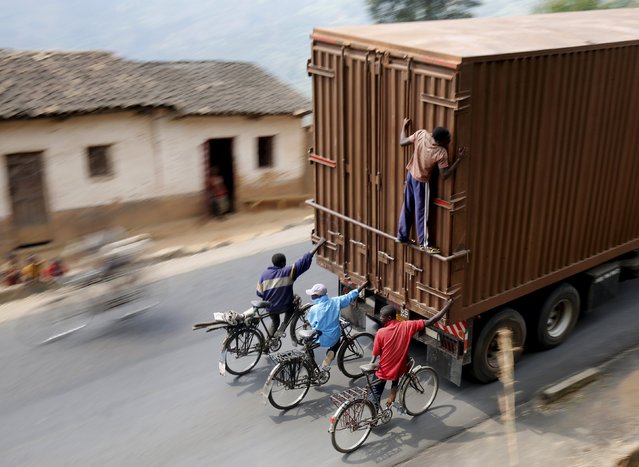
Cylists hang to the back of a truck outside the capital Bujumbura, July 19, 2015,  as the country awaits next week's presidential elections. (Photo by Mike Hutchings/Reuters)

Cylists hang to the back of a truck outside the capital Bujumbura, July 19, 2015, as the country awaits next week's presidential elections. Each day scores of cyclists make the 45 kilometer downhill journey at breakneck speed from Bugarama to sell bananas, often hanging from the back of trucks for the return uphill trip. (Photo by Mike Hutchings/Reuters)
Details
20 Jul 2015 10:06:00
Spectacular images offering insight into the lives of the Huaorani people in the Ecuadorian Amazon have been revealed showing how they use traditional methods to hunt monkeys for food. The stunning pictures were taken by conservation photographer Pete Oxford from Torquay, Devon in the Ecuadorian Amazon. “The Huaorani Indians are a forest people highly in tune with their environment. Many are now totally acculturated since the 1950s by missionaries”, said Pete. “Today they face radical change to their culture to the proximity of oil exploration within their territory and the Yasuni National Park and Biosphere Reserve, they are vastly changed. Some still live very traditionally and for this shoot, through my Huaorani friend, a direct relative of those photographed he wanted to depict them as close to their original culture as possible. They still largely hunt with blow pipes and spears eating a lot of monkeys and peccaries”. The Huaorani are also known as the Waorani, Waodani or the Waos and are native Amerindians. Their lands are located between the Curaray and Napo rivers and speak the Huaorani language. Pete says that during his visit he was welcomed into the group and hopes that ancient cultures can be saved. Here: The tribe were seen celebrating after a hunter returned to camp with a wild pig. (Photo by Pete Oxford/Mediadrumworld.com)

Spectacular images offering insight into the lives of the Huaorani people in the Ecuadorian Amazon have been revealed showing how they use traditional methods to hunt monkeys for food. The stunning pictures were taken by conservation photographer Pete Oxford from Torquay, Devon in the Ecuadorian Amazon. Here: The tribe were seen celebrating after a hunter returned to camp with a wild pig. (Photo by Pete Oxford/Mediadrumworld.com)
Details
20 Jan 2017 07:58:00
A statue of a Japanese Akita dog named “Hachiko” wearing a face mask is seen near Shibuya Station Wednesday, April 8, 2020, in Tokyo. Japanese Prime Minister Shinzo Abe declared a state of emergency on Tuesday for Tokyo and six other prefectures to ramp up defenses against the spread of the new coronavirus. Hachiko has waited for his owner University of Tokyo Prof. Eizaburo Ueno at the same place by the station every afternoon, expecting him to return home for nearly 11 years even after Ueno's death at work. (Photo by Eugene Hoshiko/AP Photo)

A statue of a Japanese Akita dog named “Hachiko” wearing a face mask is seen near Shibuya Station Wednesday, April 8, 2020, in Tokyo. Japanese Prime Minister Shinzo Abe declared a state of emergency on Tuesday for Tokyo and six other prefectures to ramp up defenses against the spread of the new coronavirus. Hachiko has waited for his owner University of Tokyo Prof. Eizaburo Ueno at the same place by the station every afternoon, expecting him to return home for nearly 11 years even after Ueno's death at work. (Photo by Eugene Hoshiko/AP Photo)
Details
15 Apr 2020 00:05:00
In this handout image provided by the Police of Swiss canton Valais the wreckage of a bus is seen after it crashed inside a motorway tunnel on March 13, 2012 in Sierre, Switzerland

In this handout image provided by the Police of Swiss canton Valais the wreckage of a bus is seen after it crashed inside a motorway tunnel on March 13, 2012 in Sierre, Switzerland. 28 people, including 22 children, returning from a skiing holiday died in this bus accident. (Photo by Police Cantonale Valaisanne via Getty Images)
Details
15 Mar 2012 13:20:00