Loading...
Done
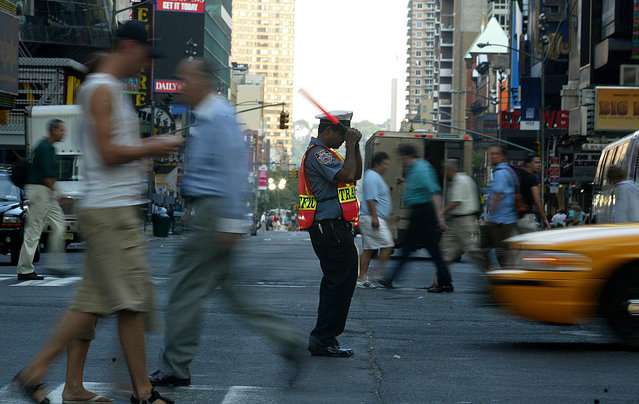
A policeman controls traffic at 42nd Street and 7th Avenue as New York City remains without electricity caused by a blackout that affected the entire city and most of the eastern part of the nation August 15, 2003 in New York, New York. More than 50 million people were affected by the outage, in Toronto, Detroit, Cleveland and New York City. (Photo by Jose Jimenez/Primera Hora/Getty Images)

A policeman controls traffic at 42nd Street and 7th Avenue as New York City remains without electricity caused by a blackout that affected the entire city and most of the eastern part of the nation August 15, 2003 in New York, New York. More than 50 million people were affected by the outage, in Toronto, Detroit, Cleveland and New York City. (Photo by Jose Jimenez/Primera Hora/Getty Images)
Details
17 Aug 2017 07:43:00
A women sell food under the wing of a plane wreckage being used as housing in M'Poko Internally Displaced Persons camp in Bangui, Central African Republic on Saturday, February 13, 2016. The M'Poko IDP camp, just outside the capitol's airport, currently houses close to 20,000 people displaced due to the ongoing conflict in Central African Republic. The camp was established in late 2013 and contained upto 70,000 people at the height of the crisis in 2014. (Photo by Jane Hahn/The Washington Post)

A women sell food under the wing of a plane wreckage being used as housing in M'Poko Internally Displaced Persons camp in Bangui, Central African Republic on Saturday, February 13, 2016. The M'Poko IDP camp, just outside the capitol's airport, currently houses close to 20,000 people displaced due to the ongoing conflict in Central African Republic. (Photo by Jane Hahn/The Washington Post)
Details
28 Feb 2016 11:09:00
An employee of cake shop prepares chocolate Easter bunnies with masks in Lykovrisi, northern Athens, on Wednesday, April 8, 2020. Cake shops and bakeries in Greece have remained open during a strict circulation ban in Greece to contain the spread of the COVID-19, but authorities have intensified a crackdown on lockdown violations ahead of Easter, which is celebrated by Orthodox Christians on April 19. Greece's Orthodox Church says it will not permit any public gatherings for Easter services. (Photo by Thanassis Stavrakis/AP Photo)

An employee of cake shop prepares chocolate Easter bunnies with masks in Lykovrisi, northern Athens, on Wednesday, April 8, 2020. Cake shops and bakeries in Greece have remained open during a strict circulation ban in Greece to contain the spread of the COVID-19, but authorities have intensified a crackdown on lockdown violations ahead of Easter, which is celebrated by Orthodox Christians on April 19. Greece's Orthodox Church says it will not permit any public gatherings for Easter services. (Photo by Thanassis Stavrakis/AP Photo)
Details
10 Apr 2020 00:07:00
Shortlisted: Pooyan Shadpoor, Houcheraghi. While walking along the shore of Larak, Iran – an island in the Persian Gulf – Shadpoor came across this luminous scene. The “magical lights of (the) plankton ... enchanted me so that I snapped the shot”, he writes. (Photo by Pooyan Shadpoor/2016 EPOTY)

Shortlisted: Pooyan Shadpoor, Houcheraghi. While walking along the shore of Larak, Iran – an island in the Persian Gulf – Shadpoor came across this luminous scene. The “magical lights of (the) plankton ... enchanted me so that I snapped the shot”, he writes. (Photo by Pooyan Shadpoor/2016 EPOTY)
Details
29 Jun 2016 11:02:00
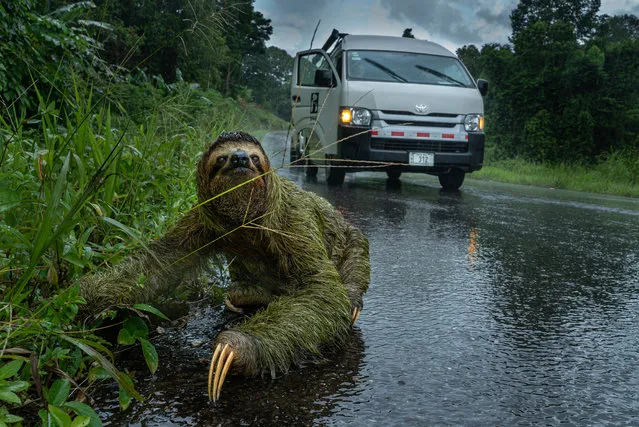
People and Nature category winner: Why did the sloth cross the road? by Andrew Whitworth (Osa Conservation and University of Glasgow), taken in Osa Peninsula, Costa Rica. “I was driving out from the Osa Peninsula, located on the southern Pacific coast of Costa Rica on a dark, stormy day. This female three-toed sloth (Bradypus variegatus) had luckily just about made it across the road, and the drivers of the Toyota on this occasion had spotted her in good time”. (Photo by Andrew Whitworth/2019 British Ecological Society Photography Competition)

People and Nature category winner: Why did the sloth cross the road? by Andrew Whitworth (Osa Conservation and University of Glasgow), taken in Osa Peninsula, Costa Rica. “I was driving out from the Osa Peninsula, located on the southern Pacific coast of Costa Rica on a dark, stormy day. This female three-toed sloth (Bradypus variegatus) had luckily just about made it across the road, and the drivers of the Toyota on this occasion had spotted her in good time”. (Photo by Andrew Whitworth/2019 British Ecological Society Photography Competition)
Details
30 Nov 2019 00:05:00
A guard stands at Dityatki checkpoint, marking a 30 km (18-mile) zone around the Chernobyl nuclear power plant April 23, 2013. Ukraine will mark the 27th anniversary of the Chernobyl disaster, the world's worst civil nuclear accident, on April 26. (Photo by Gleb Garanich/Reuters)

A guard stands at Dityatki checkpoint, marking a 30 km (18-mile) zone around the Chernobyl nuclear power plant April 23, 2013. Ukraine will mark the 27th anniversary of the Chernobyl disaster, the world's worst civil nuclear accident, on April 26. (Photo by Gleb Garanich/Reuters)
Details
27 Apr 2013 09:27:00
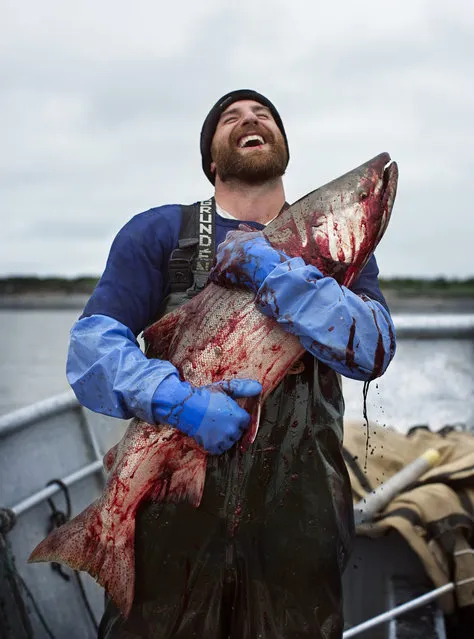
Corey Arnold – Pictures From The Sea

Well before Corey Arnold ever thought about photography, he fished. As a child, he dressed as a fisherman for four consecutive Halloweens, and once brought a dead 3-foot Mako shark to school for show-and-tell. He knew he wanted to be a professional fisherman, even if he didn’t understand what that actually meant.
Details
17 May 2014 12:40:00
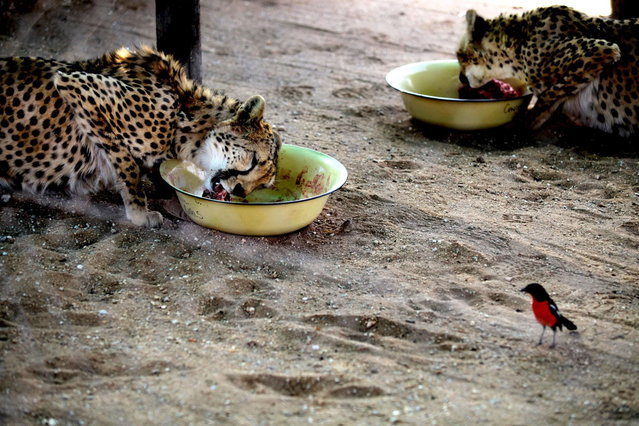
Young cheetahs eat meat at The Cheetah Conservation Fund (CCF) center in Otjiwarongo, Namibia, on August 13, 2013. The CCF started breeding Anatolian livestock dogs to promote cheetah-friendly farming after some 10,000 big cats – the current total worldwide population – were killed or moved off farms in the 1980s.  Up to 1,000 cheetahs were being killed a year, mostly by farmers who saw them as livestock killers. But the use of dogs has slashed losses for sheep and goat farmers and led to less retaliation against the vulnerable cheetah. (Photo by Jennifer Bruce/AFP Photo)

Young cheetahs eat meat at The Cheetah Conservation Fund (CCF) center in Otjiwarongo, Namibia, on August 13, 2013. The CCF started breeding Anatolian livestock dogs to promote cheetah-friendly farming after some 10,000 big cats – the current total worldwide population – were killed or moved off farms in the 1980s. Up to 1,000 cheetahs were being killed a year, mostly by farmers who saw them as livestock killers. But the use of dogs has slashed losses for sheep and goat farmers and led to less retaliation against the vulnerable cheetah. (Photo by Jennifer Bruce/AFP Photo)
Details
29 Aug 2013 10:56:00