Loading...
Done
Kyla Drumm, 5, waits after receiving the Pfizer-BioNTech coronavirus disease (COVID-19) vaccine in Skippack, Pennsylvania, U.S., November 3, 2021. (Photo by Hannah Beier/Reuters)

Kyla Drumm, 5, waits after receiving the Pfizer-BioNTech coronavirus disease (COVID-19) vaccine in Skippack, Pennsylvania, U.S., November 3, 2021. (Photo by Hannah Beier/Reuters)
Details
09 Nov 2021 07:18:00
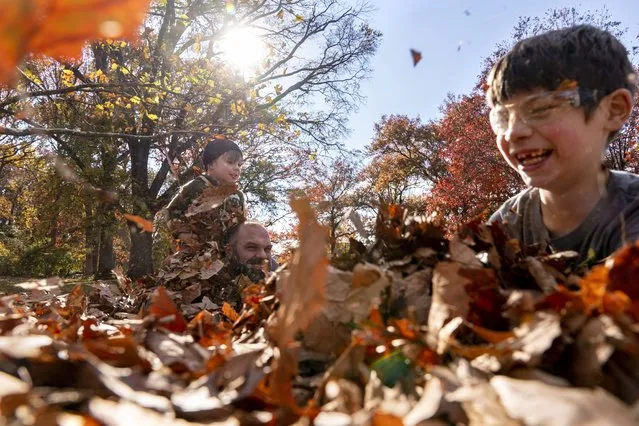
Off from school due to the Thanksgiving holiday this week, Felix Naranch, 7, right, and his brother Asa Naranch, 3, play with their father Stu Naranch in a pile of fall leaves that they raked together in a park, Tuesday, November 23, 2021, in Washington. (Photo by Jacquelyn Martin/AP Photo)

Off from school due to the Thanksgiving holiday this week, Felix Naranch, 7, right, and his brother Asa Naranch, 3, play with their father Stu Naranch in a pile of fall leaves that they raked together in a park, Tuesday, November 23, 2021, in Washington. (Photo by Jacquelyn Martin/AP Photo)
Details
30 Nov 2021 08:52:00
An armoured vehicle surrounded by Chicago cops at the time of the American depression, 1933. (Photo by Rolls Press/Popperfoto/Getty Images)

An armoured vehicle surrounded by Chicago cops at the time of the American depression, 1933. (Photo by Rolls Press/Popperfoto/Getty Images)
Details
10 Feb 2017 00:02:00
Bikini Contest in Daytona Beach, Florida, USA. (Photo by Evan Hurd/Sygma/Sygma via Getty Images)

Bikini Contest in Daytona Beach, Florida, USA. (Photo by Evan Hurd/Sygma/Sygma via Getty Images)
Details
27 Mar 2017 08:42:00
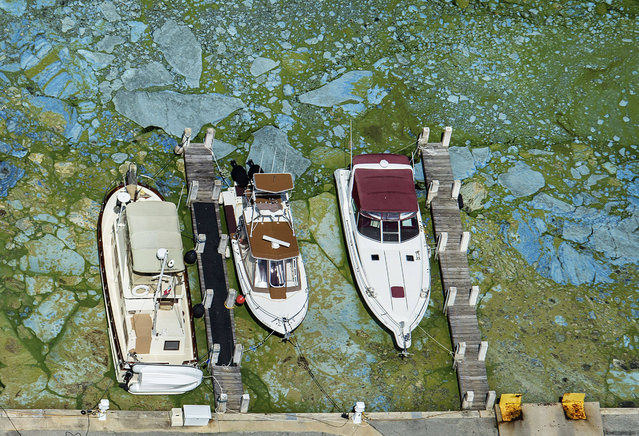
In this June 29, 2016 file photo, boats docked at Central Marine in Stuart, Fla., are surrounded by blue green algae. The 153-mile-long Indian River Lagoon has been plagued by harmful algae blooms. Water quality testing data analyzed by the AP showed the average phosphorous level – a byproduct of fertilizers and human waste that algae thrive on, rose nearly 75 percent between 2000 and 2016. (Photo by Greg Lovett/The Palm Beach Post via AP Photo)

In this June 29, 2016 file photo, boats docked at Central Marine in Stuart, Fla., are surrounded by blue green algae. The 153-mile-long Indian River Lagoon has been plagued by harmful algae blooms. Water quality testing data analyzed by the AP showed the average phosphorous level – a byproduct of fertilizers and human waste that algae thrive on, rose nearly 75 percent between 2000 and 2016. (Photo by Greg Lovett/The Palm Beach Post via AP Photo)
Details
11 May 2017 07:26:00
Auxiliary Territorial Service (ATS) plotters at work at Coastal Artillery Headquarters in Dover, December 1942. (Photo by Ted Dearberg/IWM/PA Wire)

Auxiliary Territorial Service (ATS) plotters at work at Coastal Artillery Headquarters in Dover, December 1942. The Auxiliary Territorial Service was the women's branch of the British Army during the Second World War. It was formed on 9 September 1938, initially as a women's voluntary service, and existed until 1 February 1949, when it was merged into the Women's Royal Army Corps. The ATS had its roots in the Women's Auxiliary Army Corps (WAAC), which was formed in 1917 as a voluntary service. During the First World War its members served in a number of jobs including clerks, cooks, telephonists and waitresses. The WAAC was disbanded after four years in 1921. (Photo by Ted Dearberg/IWM/PA Wire)
Details
13 Jul 2017 07:52:00
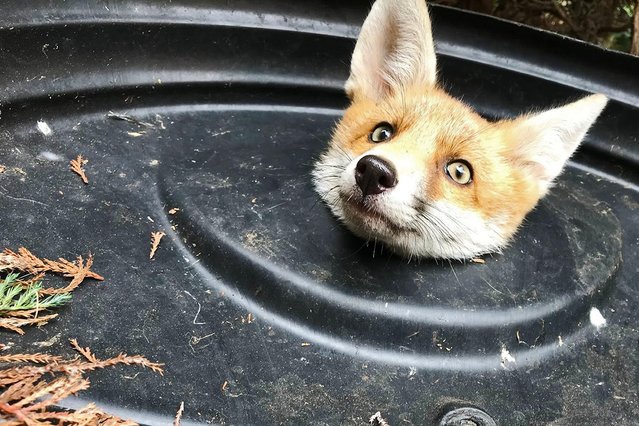
Rummaging in a bin for scraps, this fox in Barnet, north London, England found itself trapped in the lid on May 23, 2019. Luckily the Royal Society for the Prevention of Cruelty to Animals were able to free it. (Photo by RSPCA/PA Wire Press Association)

Rummaging in a bin for scraps, this fox in Barnet, north London, England found itself trapped in the lid on May 23, 2019. Luckily the Royal Society for the Prevention of Cruelty to Animals were able to free it. (Photo by RSPCA/PA Wire Press Association)
Details
26 May 2019 00:03:00
Kawakanih Yawalapiti, 9, Upper Xingu region of Mato Grosso, Brazil, 2018: Kawakanih lives with her tribe, the Yawalapiti, in Xingu national park, a preserve in the Amazon basin of Brazil. The Yawalapiti collect seeds to preserve species unique to their ecosystem, which lies between the rain forest and savannah. Kawakanih’s diet is simple, consisting mainly of fish, cassava, porridge, fruit and nuts. “It takes five minutes to catch dinner”, says Kawakanih. “When you’re hungry, you just go to the river with your net”. (Photo by Gregg Segal/The Guardian)

Photographer Gregg Segal travelled the world to document children and the food they eat in a week. Partly inspired by the increasing problems of childhood obesity, he tracked traditional regional diets as yet unaffected by globalisation, and ironically, found that the healthiest diets were often eaten by the least well off. (Photo by Gregg Segal/The Guardian)

Details
03 Jul 2019 00:03:00