Loading...
Done


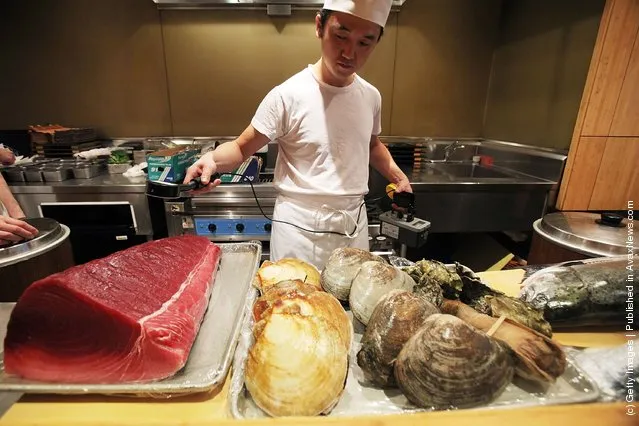
Sushi chef Mitsuru Tamura uses a radiation detector on seafood before it is prepared in Manhattan's Sushi Yasuda restaurant April 8, 2011 in New York City. The restaurant has begun using the detector as a precautionary measure due to consumer concerns over possible radiation contamination in seafood from the nuclear emergency in Japan. Health officials believe contamination is unlikely to threaten the food supply chain and none has been found in this restaurant. (Photo by Mario Tama/Getty Images)
Details
09 Apr 2011 08:52:00
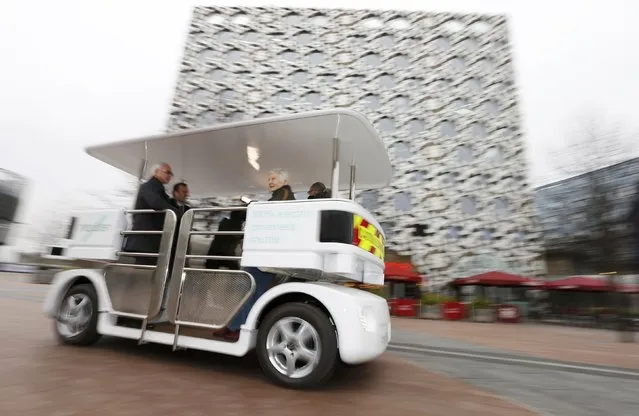
People ride a prototype of a driverless vehicle as it is moves through a pedestrian area in Greenwich, east London, February 11, 2015. (Photo by Suzanne Plunkett/Reuters)

People ride a prototype of a driverless vehicle as it is moves through a pedestrian area in Greenwich, east London, February 11, 2015. Britain has begun testing driverless cars in four cities, launching the first official trials ahead of a series of planned rule reviews to accommodate the new technology. (Photo by Suzanne Plunkett/Reuters)
Details
12 Feb 2015 13:16:00
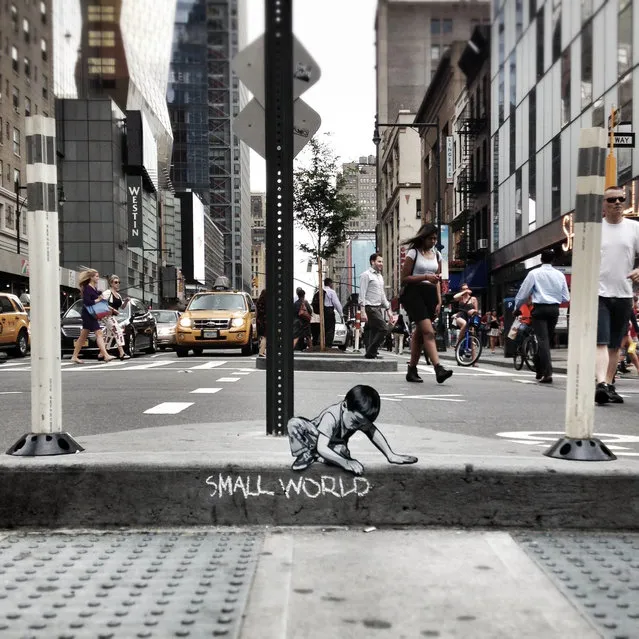
“Small World”. (Photo by Joe Lurato)

New Jersey based artist, Joe Iurato creates art using hand-cut paper and spray paint to make small wood cutout figures and placed in public spaces. According to Iurato, “a puddle can become a lake, a small crack in a cement wall can become a magnificent climb, a planter box can become a place for a child to play, and a shadow might be a tangible space for a few seconds a day”. Photo: “Small World”. (Photo by Joe Lurato)
Details
22 Mar 2014 23:50:00
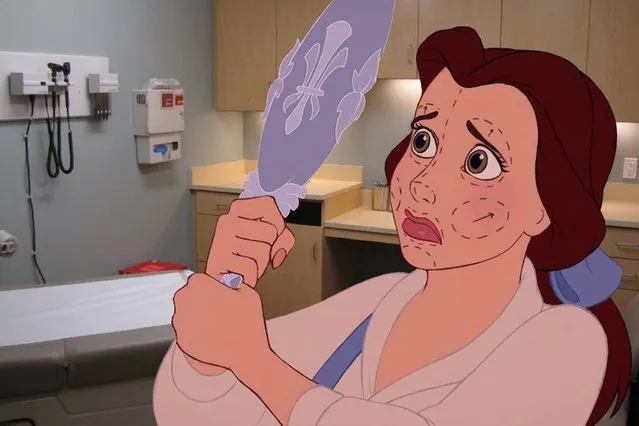
Beauty is everything for this belle of the ball. (Photo by Jeff Hong)

An animation artist has thrown a group of Disney characters into the real world – and it's not pretty. Jeff Hong, from New York, has taken the childhood favourites and turned their lives upside down. In a series of nightmarish pictures on his Tumblr, the cartoons who once lived happily ever after are now facing up to reality. And judging from these images they're not adjusting well. Photo: Beauty is everything for this belle of the ball. (Photo by Jeff Hong)
Details
22 May 2014 07:48:00
The Ballerina Project by Photographer Dane Shitagi

For over 14 years, photographer Dane Shitagi has been photographing beautiful, strong, and powerful women dancing all over New York City. The juxtaposition of the incredible strength of the dancers’ bodies plus a seemingly devoid urban landscape creates a captivating visual experience. When social media emerged, Shitagi took advantage, creating pages for his photo series on Facebook, Instagram, Tumblr, Pinterest, and Twitter. Currently, it is the largest dance photography page on Facebook with 850,000 “likes” and its Instagram account has about 500,000 followers. (Photo by Dane Shitagi)
Details
06 Aug 2014 10:58:00
“Tic Tac and Tootsie (twin sisters Carrol and Shelly McKean)”. Taylor Wessing photographic portrait prize 2010. (Photo by Jeffrey Stockbridge)

“The National Portrait Gallery, London's annual photographic portrait prize was established in 2003 as the Schweppes Photographic Portrait Prize. In the years 2006 and 2007 it was referred to simply as the Photographic Portrait Prize, while from 2008 new sponsors have resulted in the name, Taylor Wessing Photographic Portait Prize”. – Wikipedia. Photo: “Tic Tac and Tootsie (twin sisters Carrol and Shelly McKean)”. Taylor Wessing photographic portrait prize 2010. (Photo by Jeffrey Stockbridge)
Details
21 Feb 2013 11:53:00
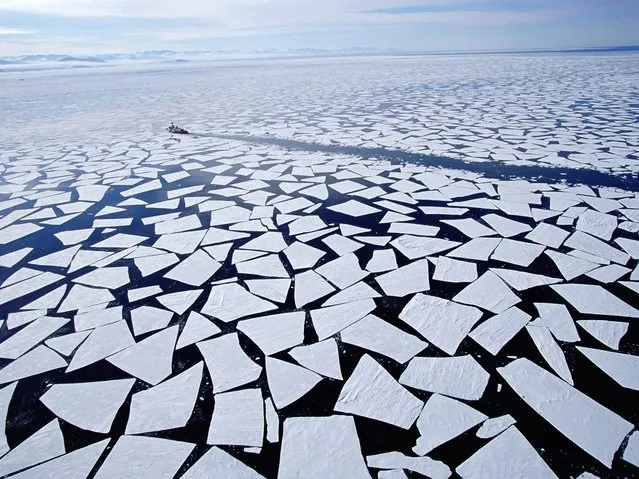
McMurdo Station Antarctic

McMurdo Station is a U.S. Antarctic research centre located on the southern tip of Ross Island, which is in the New Zealand-claimed Ross Dependency on the shore of McMurdo Sound in Antarctica. It is operated by the United States through the United States Antarctic Program, a branch of the National Science Foundation. The station is the largest community in Antarctica, capable of supporting up to 1,258 residents, and serves as the United States Antarctic science facility. All personnel and cargo going to or coming from Amundsen–Scott South Pole Station first pass through McMurdo.
Details
05 Sep 2013 10:18:00
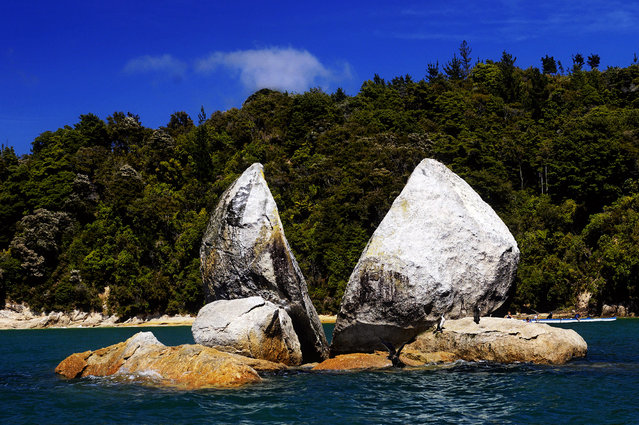
Split Apple Rock

Split Apple Rock is a geological rock formation in The Tasman Bay off the northern coast of the South Island of New Zealand. Made of granite, it is in the shape of an apple which has been cut in half. It is a popular tourist attraction in the waters of the Tasman Sea approximately 50 metres off the coast between Kaiteriteri and Marahau. The rock sits in shallow water at low tide and is accessible by wading. It is also a point of interest for the many tourist boats and pleasure craft which operate along the shores of the Abel Tasman National Park. The cleft to produce two sides of the 'apple' was a natural occurrence. It is unknown when this happened and therefore the cleaving of the rock has attracted mythological explanations.
Details
19 Oct 2013 10:58:00