Loading...
Done


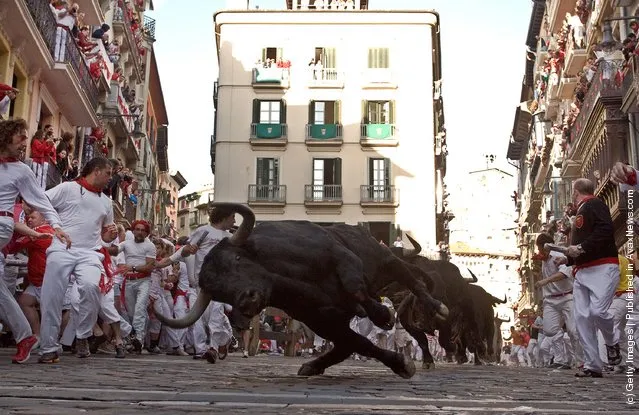
A fighting bull loses its balance during the third day of the San Fermin running-of-the-bulls on July 8, 2011 in Pamplona, Spain. Pamplona's famous Fiesta de San Fermin, which involves the running of the bulls through the historic heart of Pamplona for eight days starting July 7th, was made famous by the 1926 novel of U.S. writer Ernest Hemmingway called “The Sun Also Rises”. (Photo by Denis Doyle/Getty Images)
Details
08 Jul 2011 10:45:00
A woman made up as a skull participates in Day of the Dead festivities in Mexico City, Thursday, October 27, 2016. (Photo by Marco Ugarte/AP Photo)

A woman made up as a skull participates in Day of the Dead festivities in Mexico City, Thursday, October 27, 2016. The holiday honors the dead as friends and families gather in cemeteries to decorate their loved ones' graves and hold vigil through the night on Nov. 1 and 2. (Photo by Marco Ugarte/AP Photo)
Details
29 Oct 2016 12:06:00


A model walks the runway at the Iris Van Herpen Haute Couture autumn winter 2011 fashion show during Paris Haute Couture Week on July 4, 2011 in Paris, France. (Photo by Nathalie Lagneau/Catwalking/Getty Images)
Details
06 Jul 2011 10:44:00
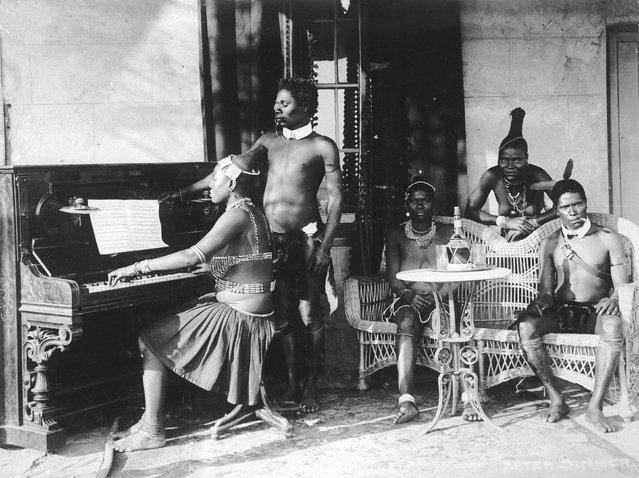
circa 1925:  A Zulu woman playing the piano while a group of others sit and listen.  (Photo by General Photographic Agency/Getty Images)

“The Zulu are the largest South African ethnic group, with an estimated 10–11 million people living mainly in the province of KwaZulu-Natal. Small numbers also live in Zimbabwe, Zambia, and Mozambique. Their language, Zulu, is a Bantu language; more specifically, part of the Nguni subgroup. The Zulu Kingdom played a major role in South African history during the 19th and 20th centuries. Under apartheid, Zulu people were classed as third-class citizens and suffered from state-sanctioned discrimination. They remain today the most numerous ethnic group in South Africa, and now have equal rights along with all other citizens”. – Wikipedia.

Photo: A Zulu woman playing the piano while a group of others sit and listen (to put it briefly, Englishmen scoff over Zulu). South Africa, circa 1925. (Photo by General Photographic Agency)

Details
03 Feb 2014 09:40:00
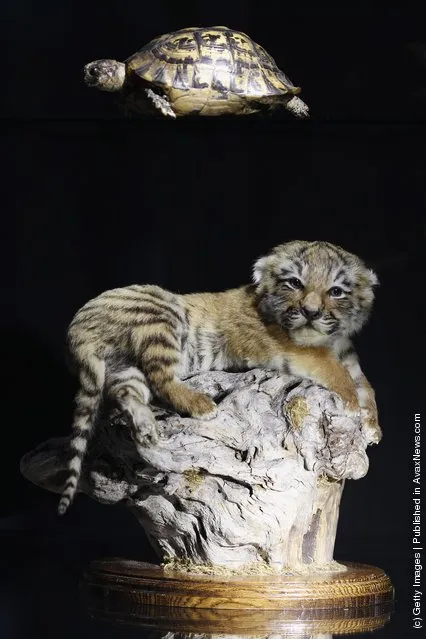
A 10 week old stuffed Tiger cub and a Tortoise

A 10 week old stuffed Tiger cub and a Tortoise are displayed in a cabinet at an “Endangered Species” exhibition at London Zoo on September 12, 2011 in London, England. The exhibition is organised by “Operation Charm”, a Metropolitan Police partnership aimed at tackling the illegal trade in endangered wildlife and runs for one month at London Zoo. Items include the tooth of a sperm whale, Ivory carvings, and a stuffed Tiger. (Photo by Dan Kitwood/Getty Images)
Details
13 Sep 2011 11:24:00
Commuters wear protective face masks as they walk through a subway station, in Sao Paulo, Brazil, Wednesday, December 1, 2021, amid the COVID-19 pandemic. Brazil joined the widening circle of countries to report cases of the omicron variant. (Photo by Andre Penner/AP Photo)

Commuters wear protective face masks as they walk through a subway station, in Sao Paulo, Brazil, Wednesday, December 1, 2021, amid the COVID-19 pandemic. Brazil joined the widening circle of countries to report cases of the omicron variant. (Photo by Andre Penner/AP Photo)
Details
02 Dec 2021 09:59:00
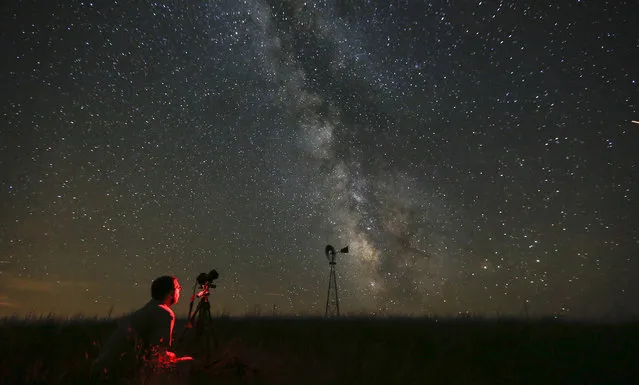
In this Wednesday, July 23, 2014 file photo, Omaha photographer Lane Hickenbottom photographs the night sky in a pasture near Callaway, Neb. With no moon in the sky, the Milky Way was visible to the naked eye. More than one-third of the world’s population can no longer see the Milky Way because of man-made lights, according to a scientific paper by Light Pollution Science and Technology Institute's Fabio Falchi and his team members, published on Friday, June 10, 2016. (Photo by Travis Heying/The Wichita Eagle via AP Photo)

In this Wednesday, July 23, 2014 file photo, Omaha photographer Lane Hickenbottom photographs the night sky in a pasture near Callaway, Neb. With no moon in the sky, the Milky Way was visible to the naked eye. More than one-third of the world’s population can no longer see the Milky Way because of man-made lights, according to a scientific paper by Light Pollution Science and Technology Institute's Fabio Falchi and his team members, published on Friday, June 10, 2016. (Photo by Travis Heying/The Wichita Eagle via AP Photo)
Details
11 Jun 2016 12:37:00
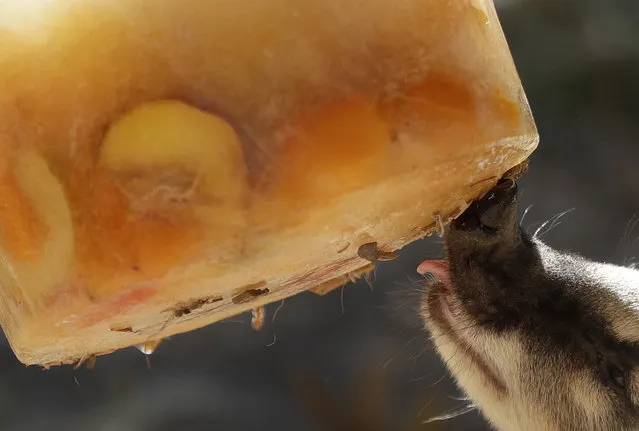
A lemur licks a block of ice containing fruit at Rome's Bioparco zoo, Wednesday, July 5, 2017. Zookeepers at the Bioparco often give animals ice blocks with either fruit or meat on hot summer days. (Photo by Gregorio Borgia/AP Photo)

A lemur licks a block of ice containing fruit at Rome's Bioparco zoo, Wednesday, July 5, 2017. Zookeepers at the Bioparco often give animals ice blocks with either fruit or meat on hot summer days. (Photo by Gregorio Borgia/AP Photo)
Details
09 Jul 2017 07:44:00