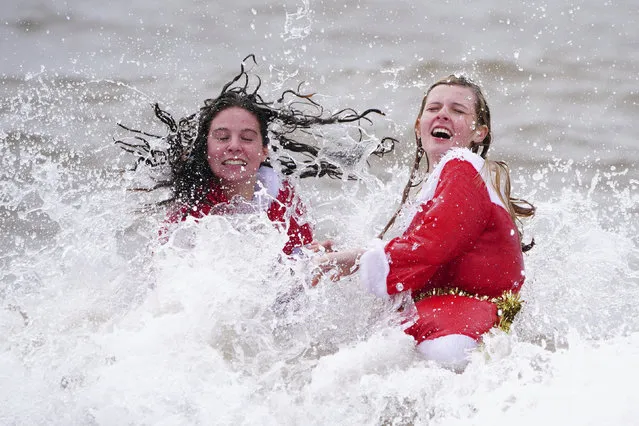
Swimmers in fancy dress take part in a Christmas Day dip at Exmouth, Devon, England, Saturday, December 25, 2021. (Photo by Ben Birchall/PA Wire via AP Photo)
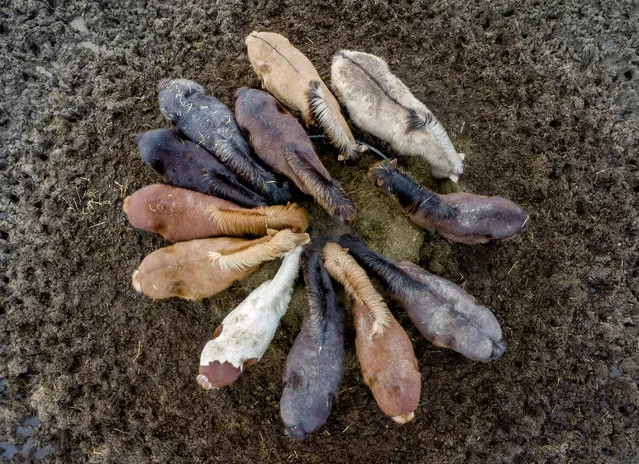
Icelandic stallions eat hay from a box at a stud farm in Wehrheim near Frankfurt, Germany, Wednesday, March 2, 2022. (Photo by Michael Probst/AP Photo)
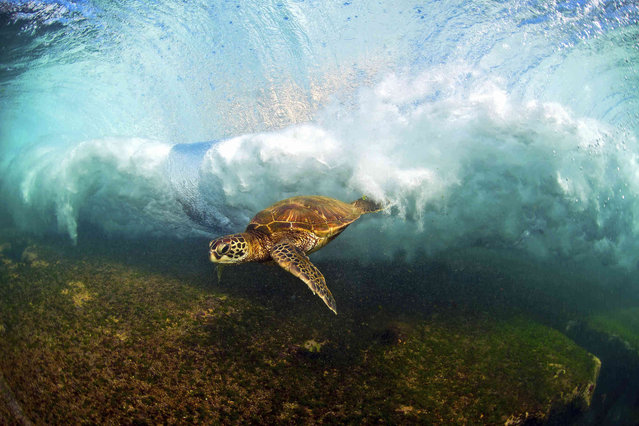
In this undated photo entitled “Close Call”, a Hawaiian green sea turtle swims through a breaking wave on the North Shore of Oahu near Haleiwa, Hawaii. The image appears in photographer Clark Little's new book, “The Art of Waves”. (Photo by Clark Little via AP Photo)
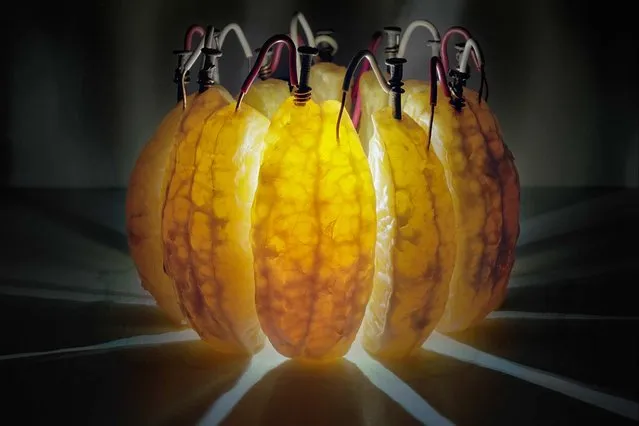
Wedges of an orange generate enough current and electrical juice – 3.5 volts – to power an LED. The fruit’s citric acid helps electrons flow from galvanized nails to copper wire in this 14-hour exposure. This image was published in September’s Visions of Earth, a trio of photos that appear in each issue of National Geographic. (Photo by Caleb Charland/National Geographic)
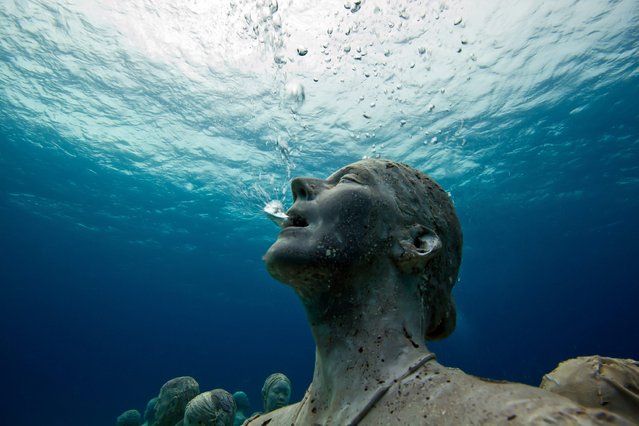
“In 2009 a monumental underwater museum called “MUSA” (Museo Subacuático de Arte) was formed in the waters surrounding Cancun, Isla Mujeres and Punta Nizuc. The project founded by Jaime Gonzalez Cano of The National Marine Park, Roberto Diaz of The Cancun Nautical Association and Jason deCaires Taylor consists of over 450 permanent life-size sculptures and is one of the largest and most ambitious underwater artificial art attractions in the world”. – UnderwaterSculpture (Photos by Jason deCaires Taylor/Intrepidacious/Kozy and Dan Kitchens)
A group of people wearing Santa Claus hats and swimming suits participate in the 13th charity Great Santa Claus Run in downtown Budapest, Hungary, Sunday, December 11, 2016. (Photo by Balazs Mohai/MTI via AP Photo)
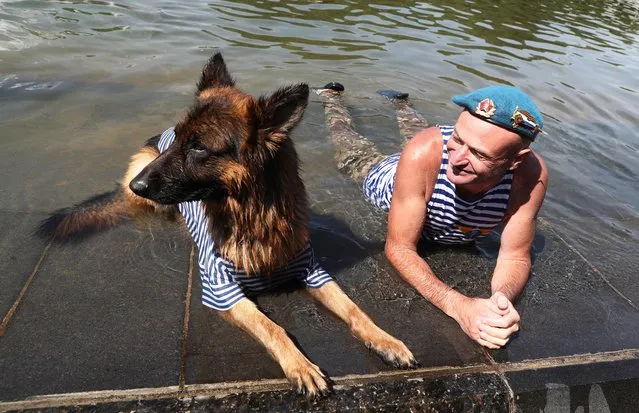
A man and a dog bathe in a fountain during celebrations of Paratroopers' Day in Moscow' s Gorky Park on August 2, 2017. Russia' s Airborne Troops (Blue Berets) celebrate their professional holiday on the Day of Elijah the Prophet, their Patron. (Photo by Stanislav Krasilnikov/TASS)
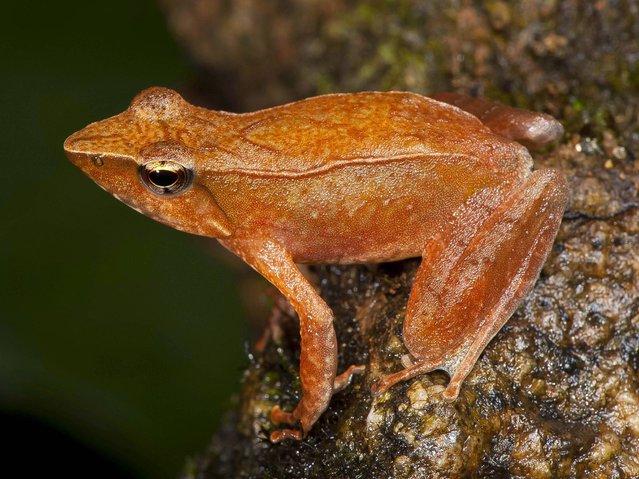
This undated photograph shows one of the 14 new species of so-called dancing frogs discovered by a team headed by University of Delhi professor Sathyabhama Das Biju in the jungle mountains of southern India. The study listing the new species brings the number of known Indian dancing frogs to 24 and attempts the first near-complete taxonomic sampling of the single-genus family found exclusively in southern India's lush mountain range called the Western Ghats, which stretches 1,600 kilometers (990 miles) from the west state of Maharashtra down to the country's southern tip. (Photo by Satyabhama Das Biju/AP Photo)