Loading...
Done
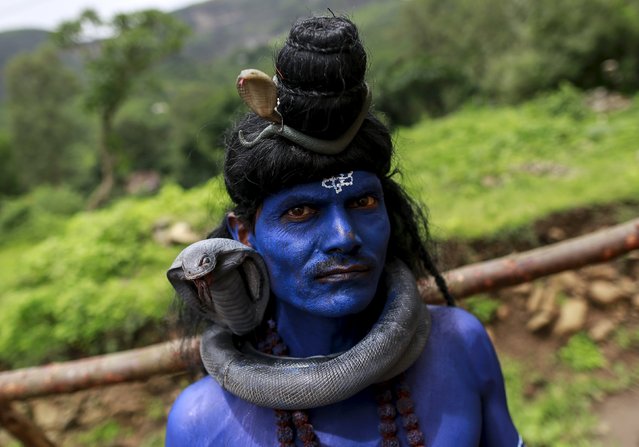
A devotee dressed as Hindu Lord Shiva waits to participate in a parade during “Kumbh Mela” or the Pitcher Festival in Trimbakeshwar, India, August 18, 2015. The Kumbh Mela takes place four times every 12 years at four different river bank locations in India. (Photo by Danish Siddiqui/Reuters)

A devotee dressed as Hindu Lord Shiva waits to participate in a parade during “Kumbh Mela” or the Pitcher Festival in Trimbakeshwar, India, August 18, 2015. The Kumbh Mela takes place four times every 12 years at four different river bank locations in India. (Photo by Danish Siddiqui/Reuters)
Details
19 Aug 2015 12:23:00
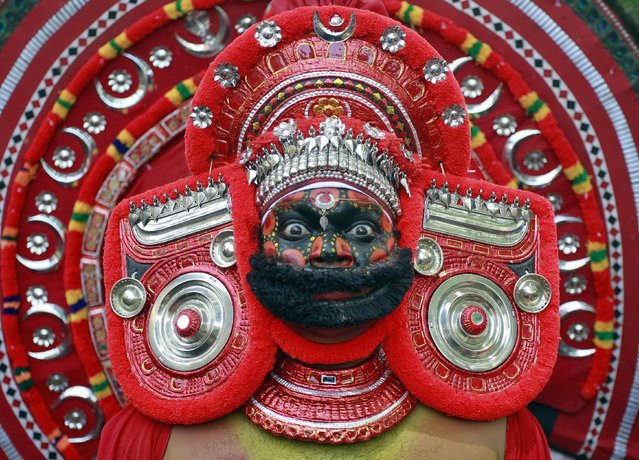
A dancer waits to perform during festivities marking the start of the annual harvest festival of “Onam” in Kochi, India, August 19, 2015. The ten-day-long Hindu festival is celebrated annually in India's southern coastal state of Kerala to commemorate the return of King Mahabali to his beloved subjects. (Photo by Sivaram V/Reuters)

A dancer waits to perform during festivities marking the start of the annual harvest festival of “Onam” in Kochi, India, August 19, 2015. The ten-day-long Hindu festival is celebrated annually in India's southern coastal state of Kerala to commemorate the return of King Mahabali to his beloved subjects. (Photo by Sivaram V/Reuters)
Details
26 Aug 2015 09:35:00
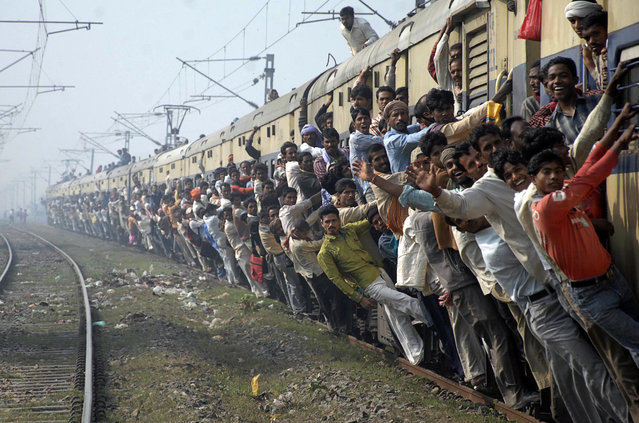
Passengers travel in an overcrowded train in the eastern Indian city of Patna, February 23, 2010. (Photo by Krishna Murari Kishan/Reuters)

Passengers travel in an overcrowded train in the eastern Indian city of Patna, February 23, 2010. (Photo by Krishna Murari Kishan/Reuters)
Details
26 Feb 2016 10:20:00
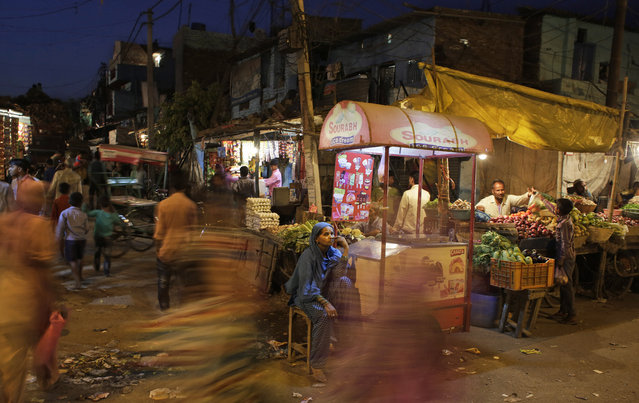
A roadside ice-cream vendor waits for customers at a market in New Delhi, India, April 7, 2016. The Indian economy is characterized by the existence of a vast majority of informal or unorganized labor employment. (Photo by Altaf Qadri/AP Photo)

A roadside ice-cream vendor waits for customers at a market in New Delhi, India, April 7, 2016. The Indian economy is characterized by the existence of a vast majority of informal or unorganized labor employment. (Photo by Altaf Qadri/AP Photo)
Details
10 Apr 2016 10:34:00
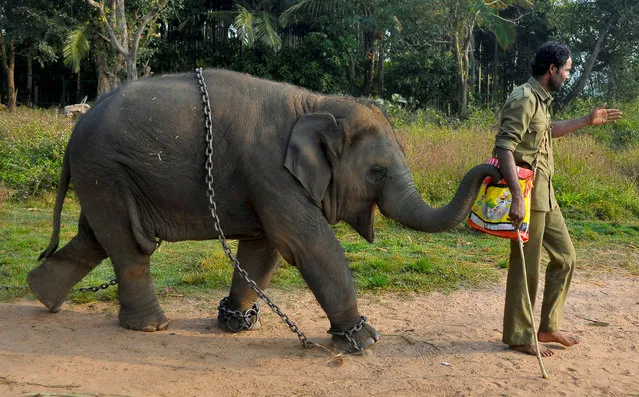
A mahout leads an elephant calf to the river Tunga for bathing at the Sakrebailu Elephant Camp in Sakrebailu in the southern state of Karnataka, India, November 12, 2016. (Photo by Abhishek N. Chinnappa/Reuters)

A mahout leads an elephant calf to the river Tunga for bathing at the Sakrebailu Elephant Camp in Sakrebailu in the southern state of Karnataka, India, November 12, 2016. (Photo by Abhishek N. Chinnappa/Reuters)
Details
13 Nov 2016 09:48:00
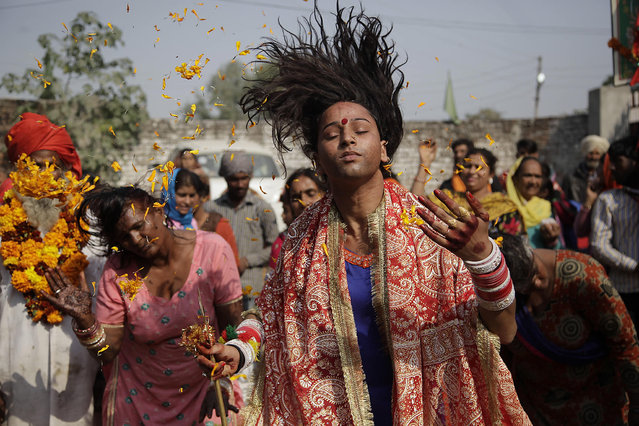
Devotees whirl their head as a ritualistic performance during the annual Jhiri Fair at Kanachack village, outskirts of Jammu, India, Monday, November14, 2016. According to the villagers,  the fair is held in memory of Baba Jitu, an honest farmer who killed himself since he was not prepared to submit to the unjust demands of a landlord who wanted him to part with his crop. (Photo by Channi Anand/AP Photo)

Devotees whirl their head as a ritualistic performance during the annual Jhiri Fair at Kanachack village, outskirts of Jammu, India, Monday, November14, 2016. According to the villagers, the fair is held in memory of Baba Jitu, an honest farmer who killed himself since he was not prepared to submit to the unjust demands of a landlord who wanted him to part with his crop. (Photo by Channi Anand/AP Photo)
Details
17 Nov 2016 11:19:00
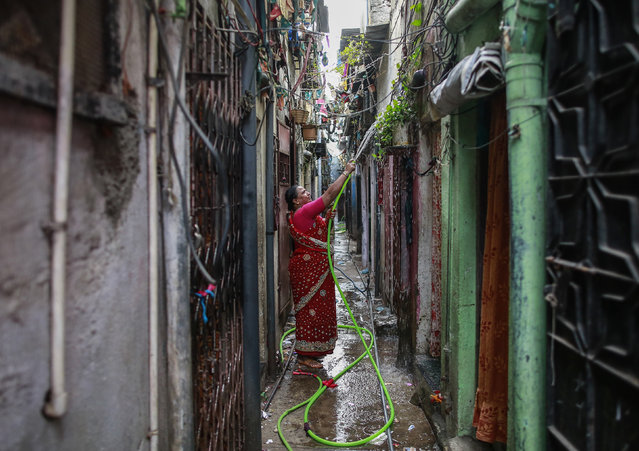
A woman waters the plants outside her house in an alley at a slum in Mumbai October 28, 2014. (Photo by Danish Siddiqui/Reuters)

A woman waters the plants outside her house in an alley at a slum in Mumbai October 28, 2014. (Photo by Danish Siddiqui/Reuters)
Details
29 Oct 2014 11:55:00
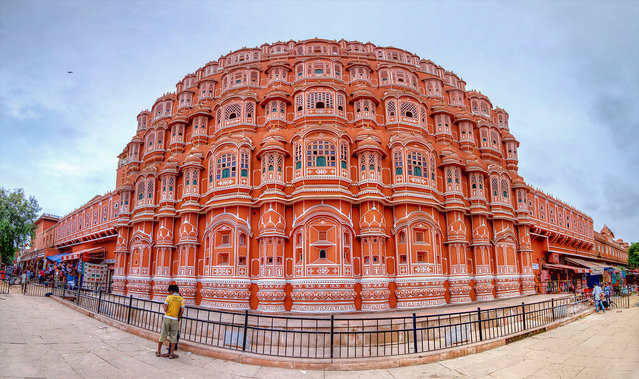
Hawa Mahal India

Hawa Mahal, which translates as the Palace of Winds, was built in 1799 by Maharaja Sawai Pratap Singh. The design of the palace was created by Shreyansh Jain to resemble the crown of Krishna. The design of this unique five-story building is akin to a honeycomb. The main purpose of this building was to allow royal ladies to watch the street below while remaining unseen, since during those times they had a strict code of dressing, which meant covering their faces. The palace was designed to produce the Venturi effect, which created natural air conditioning and kept the interior relatively cool during hot summers.
Details
22 Nov 2014 13:22:00